

The real test of a team's home-court edge isn't a policy announcement. It's a man in Queens who spent over $18,000 to buy almost 100 Sixers-Knicks playoff tickets for out-of-town Knicks fans. That's the kind of money that tells you the demand is real. When tickets for Game 3 start at $220 a pop and top $1,000 in the lower bowl, you know people are willing to pay a premium for a seat in the middle of the action.
The Philadelphia 76ers tried to kick the tires on that demand by restricting sales to local residents. Their logic was simple: keep the games for the home team's loyal fans. But the secondary market, where this man made his bet, is a different animal. It's a direct challenge to the team's restrictions. If fans are willing to pay that kind of cash, the team's policy is essentially a sign that says "we're afraid" to the other side. As one Knicks fan put it, the Sixers are "afraid of the Knicks takeover".
The setup is classic. The 76ers want a home-court advantage, but the Knicks have a history of bringing their own crowd to Philly. The team's geo-fencing policy is a well-worn tactic, but it's like building a fence around a house with a dozen unlocked windows. The real-world utility of the ticket is what matters, not a billing address. When the secondary market moves that fast and that high, it's a clear signal: demand will find a way.
The Setup: Why the Arena Feels Like a Road Game
The real problem for the Sixers isn't just a lack of tickets. It's the feeling that the arena will be a road game before a single fan even walks through the door. Joel Embiid laid it out plainly after the Celtics series: "Last time we played the Knicks, it felt like [Philadelphia] was Madison Square Garden East." That visceral memory is why he pleaded with local fans not to sell their tickets, warning it would be a repeat of that overwhelming, hostile atmosphere.
The team's response was a classic, if desperate, tactic. They announced that tickets for Games 3 and 4 would be restricted to residents of the Greater Philadelphia area, based on credit card billing address. The logic is simple: keep the games for the home team's loyal base. It's a move many teams use, but it's a policy built on paper, not on the ground. As Knicks forward Josh Hart put it, "Good thing about New Yorkers, man, they're persistent." They don't care about a billing address; they care about getting to the game.
The Knicks, for their part, didn't just ignore the Sixers' restrictions. They leaned into the rivalry with a hype video that doubled as a direct counter-message. In it, Karl-Anthony Towns said, "This is playoff basketball and we get to go home to the best fans in basketball." That wasn't just fan appreciation; it was a strategic acknowledgment that their traveling supporters are a known, powerful force. The video framed the fanbase not as a nuisance, but as a key part of their identity and energy.
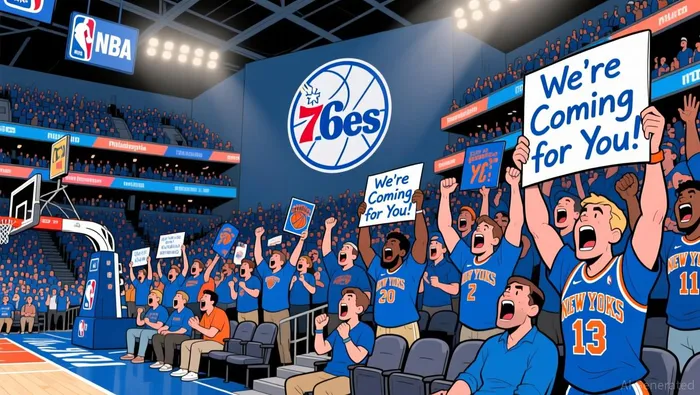
This is the common-sense clash. The Sixers are trying to protect a home-court advantage that, in practice, is already compromised. Their geo-fencing policy is like putting up a sign that says "No Outsiders" on a door that's already been kicked in. The secondary market proves it: tickets are selling for hundreds, even thousands, of dollars. That kind of demand doesn't vanish because of a billing address rule. It finds a way. The setup now is clear. The arena will feel like a road game not because of a policy, but because of a fanbase that has already proven it can show up, and pay to do so.
The Real-World Math: What the Numbers Really Mean
The policy is a paper tiger. The real numbers tell the story. For Game 3, tickets started at $220 a pop and topped $1,000 in the lower bowl on the secondary market. That's not a sign of weak demand; it's a screaming signal that people are willing to pay a premium for a seat in the middle of the rivalry. The Sixers' geo-fencing rule is a side note to that price tag.
The math is simple. If fans are selling their tickets for hundreds or thousands, it suggests a weaker emotional connection to the team than to the rivalry itself. As Knicks forward Josh Hart noted, "Good thing about New Yorkers, they're persistent." They don't care about a billing address; they care about getting to the game. And the evidence shows they're already deep in Philly, as one fan put it, "New Yorkers are already deep in Philly lol." The policy is a speed bump, not a barrier.
The bottom line is brand loyalty. When the financial incentive is high enough, the loyalty to the home team can crack. The Sixers are trying to protect a home-court advantage that, in practice, is already compromised. Their restrictions are a classic case of trying to manage a problem with a tool that doesn't fit the lock. The secondary market prices prove the demand is real, and the fan behavior proves the policy is easily circumvented. In the end, the numbers on the ground tell a clearer story than any billing address check.
The Bottom Line: What This Means for the Team and the Game
The Sixers' geo-fencing policy is a classic defensive play. It's a stopgap to protect a home-court advantage that, in practice, is already compromised. The real test, however, is whether the team can win on the court and keep fans loyal. Right now, the scoreboard says they're failing that test. Down 2-0 in the series after a recent loss without Joel Embiid, the distraction of this ticket battle is a costly one. The team is fighting a war on two fronts: the physical one on the hardwood, and a public relations one about fan loyalty.
The long-term risk is that this tactic becomes a permanent, visible sign of fan disengagement. When the secondary market prices tickets at hundreds or thousands of dollars, it's a clear signal that the emotional connection to the home team is cracking. As Knicks fans have shown, they're persistent and willing to pay. The policy, which tries to shut the front door while leaving all the windows open, only highlights that the team is afraid. That fear is a brand vulnerability. It tells local fans that management doesn't trust them to keep their seats, which can erode that very loyalty they're trying to protect.
Viewed another way, this is a classic "kick-the-tires" moment. The policy is a paper solution to a real-world problem. The real test is on the court, where Embiid's health and the team's execution matter far more than a billing address. The bottom line is simple: if the Sixers can't win the series and keep their core fanbase engaged, then the ticket restrictions are just a distraction. They might buy a few extra seats for local fans, but they won't change the feeling in the arena. The game will still feel like a road game if the fans don't show up, and the team's brand will suffer for it.