

SK Hynix shares have surged more than 900% over the past year, pushing the South Korean memory-chip maker past a $1 trillion market capitalization. Reports of aggressive wafer capacity expansion plans pushed the stock higher again in late May. The narrative is seductive: AI demand is structural, HBM (high-bandwidth memory, the specialized chip used in AI accelerators) is a bottleneck, and SK Hynix is the king.
The problem isn't whether AI demand is real. The problem is what the market is no longer pricing: the cycle.
Memory is the most structurally cyclical industry in semiconductors. Every boom triggers capacity expansion. Every expansion ends in oversupply. The timing is what kills investors who bought at the top.
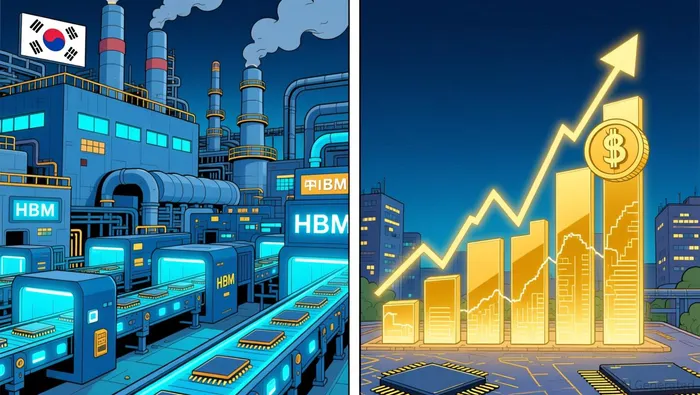
The Earnings Are Real - But So Is the Cycle
SK Hynix reported record Q1 2026 results: ₩52.6 trillion ($39 billion) in revenue, up 198% year-over-year. Operating profit hit ₩37.6 trillion, net profit ₩40.3 trillion - a near 5x jump. Earnings per share beat consensus by 41%. There is no disputing that the company is printing cash.
But these numbers describe a peak, not a plateau. Memory pricing is driven by supply discipline and demand urgency. Both are transient. DRAM and NAND prices are currently elevated because major producers - SK Hynix, Samsung, and Micron - collectively restricted supply through 2024 and 2025 while AI demand created a demand spike. That combination doesn't last. It can't.
The reason: each of these three companies is simultaneously planning aggressive capacity expansion. When that new capacity comes online - and it will - the pricing power that produced these Q1 numbers evaporates.
Capex Tells the Story the Headlines Miss
SK Hynix is expected to invest approximately ₩20 trillion - roughly $13.3 billion on equipment alone this year. That's before you add the reported tripling of wafer capacity plans. This capital expenditure is largely tied to HBM expansion, and management says these investments are order-backed, which reduces the immediate oversupply risk for HBM specifically.
But here's what the order-backing argument doesn't address: it addresses HBM, not the broader memory portfolio. SK Hynix still manufactures standard DRAM and NAND at massive scale. When the cycle turns for commodity memory - and it always does - that capex burden sits on a balance sheet earning declining margins.
Fitch Ratings upgraded SK Hynix to BBB+ in April 2026, citing robust EBITDA and positive free cash flow. The upgrade is correct for today's cycle position. It doesn't survive a pricing downturn.
The balance sheet shows ₩30 trillion in liabilities due within 12 months and ₩19 trillion beyond that. The company sits on net cash right now because the cycle is at a peak. That net cash position is exactly what disappears when the cycle turns.
The Valuation Question
At a $1 trillion market cap, SK Hynix trades at approximately 17x trailing earnings. That sounds disciplined until you consider what those trailing earnings represent: a cyclical peak.
Buying a cyclical company at peak earnings is the equivalent of buying at the highest possible P/E compression point. When prices fall - and they will - earnings fall faster, and the effective multiple expands in reverse. A 17x multiple at peak earnings becomes 30x, 40x, or higher as the cycle softens. The math works against you, even if the company is well-managed.
The reported US listing plan - a potential $9.6 billion to $14.4 billion raise to fund South Korean factories - is a signal worth watching. Companies don't typically raise that scale of equity capital unless they expect equity valuations to stay elevated. That timing implies management sees a window. Windows close.
What This Means for a Retirement Portfolio
This isn't a holding built for income and compounding. SK Hynix doesn't pay a meaningful dividend. It carries no yield. It is a cyclical growth story dressed in AI narrative, and at $1 trillion, it's a crowded one.
For a retirement portfolio, the question isn't whether AI demand will persist for the next decade. It's whether this stock's price reflects the inevitable downturn that follows today's peak. The answer at current levels is yes - it reflects perfection.
The issue isn't the HBM moat or the NVIDIA relationship or the capacity expansion plan. It's whether the multiple makes sense for a company whose earnings will decline when the cycle turns, and whose balance sheet is strongest precisely because the cycle is at its peak.
Rating: Avoid
SK Hynix is a well-executed company riding the best cycle in memory industry history. That's not a reason to buy at the top. The $1 trillion valuation has no margin for error. When capacity expansion meets cycle normalization - and it will - the earnings that justify today's multiple will contract.
The gate is simple: can the company sustain pricing power as new capacity from all three major producers comes online simultaneously? If pricing holds, the story extends. If pricing normalizes, a 900% gain gives back fast.
This isn't a retirement compounder. It's a cyclical peak priced like a secular winner. At these levels, the risk/reward is inverted.