

The rally in SK Hynix shares is a direct reflection of a fundamental physical imbalance. The demand for high-speed memory, driven by artificial intelligence, has simply outstripped the world's ability to produce it. This isn't a temporary spike; it's a multi-year crunch that industry leaders are warning will persist.
The scale of the demand is immense. Modern AI systems require enormous amounts of high-bandwidth memory (HBM) to feed data to powerful GPUs and accelerators. This technology, which stacks memory dies vertically for maximum speed, is critical for AI infrastructure. As a result, major tech firms are racing to secure supply, with some offering to fund new production lines and help finance costly equipment like ASML's extreme ultraviolet (EUV) lithography machines. The sheer volume of these offers signals that available chipmaking capacity has effectively run out. As one source noted, "available capacity is essentially zero right now."
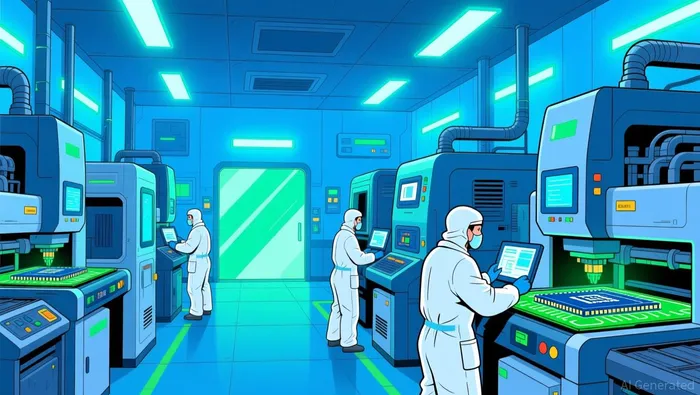
This physical constraint is backed by stark industry warnings. Just a week before SK Hynix's record high, Samsung's memory chief warned that "significant shortages" across memory products are expected to continue through at least 2027. This aligns with SK Hynix's own position, as the company is already facing severe production constraints. The effect is a shift in manufacturing priorities, with capacity being reallocated from conventional DRAM to high-margin AI memory, which risks tightening supply for other markets.
The bottom line is a classic commodity crunch. Unprecedented demand for a specialized product has met a hard ceiling on production. With customers offering to finance expansion and manufacturers warning of multi-year shortages, the market is pricing in a prolonged period where supply cannot keep up with demand.
Production Lag: Capacity Expansion Timelines
The market's confidence in SK Hynix's record high is built on a simple truth: the physical supply of AI memory is years away from catching up to demand. While companies are moving quickly to build new capacity, the timelines reveal a structural mismatch. The new facilities that will eventually ease the crunch are still years from production.
The key facilities are slated for operation in 2027 and 2028. SK Hynix's dedicated HBM plant, the M15X facility, is now targeted for utilization by mid-2027. Samsung's more complex, integrated P5 facility in Pyeongtaek is not expected to be operational until 2028. These dates are critical. They mean that even with aggressive construction, the new capacity will only begin to flow into the market in the second half of 2027, long after the current shortage has been in place for years.
This lag is why the industry forecasts a prolonged crunch. The shortage is being described as one that could last up to two years. Given that the current peak demand is already here, this suggests the tightest constraints will persist well into 2027, with relief only beginning to materialize in 2028. The expansion plans are a necessary response, but they are a long-term solution to a near-term crisis.
SK Hynix's massive investment underscores the scale of the build-out, but also highlights the timeline gap. The company recently approved an additional investment of approx. KRW 21.6 trillion (~ USD 15 billion) to complete its first fab in Yongin, with the final cleanroom not expected until the end of 2030. This is a multi-year commitment to secure future market share, not a near-term fix. The funds will support the final phases of construction, but the first production lines are still years away from running. In other words, the company is betting on a future market that will be much larger, but the near-term shortages will be eased only by the M15X facility in mid-2027.
The bottom line is a race against time. The industry is investing heavily to close the gap, but the physical reality of building semiconductor fabs means supply will remain constrained for the foreseeable future. The record high in SK Hynix shares reflects the market's belief that the company is positioned to capture the premium pricing and market share during this extended shortage. The capacity expansion is the answer, but it arrives years after the question.
Financial Impact: Translating Shortages to Profit
The physical crunch in AI memory is now a powerful financial engine for SK Hynix. The company's latest quarterly results show a direct translation of supply tightness into record profitability, even as revenue missed expectations.
In the first quarter, SK Hynix posted an operating profit of 37.61 trillion won, a figure that nearly doubled from the previous quarter and rose fivefold year-over-year. This surge was driven by the same forces pushing prices higher: robust AI demand and a constrained supply chain. The company's operating margin hit an all-time high of 72%, a clear signal of pricing power. While revenue of 52.58 trillion won fell slightly short of forecasts, it still nearly tripled from the same period last year and surpassed 50 trillion won for the first time. The miss may reflect a mix of timing or conservative guidance, but the overwhelming story is one of exceptional profitability.
This financial strength is underpinned by a dominant market position. SK Hynix is the world's second-largest DRAM supplier with a 33% market share and the second-largest NAND supplier. This scale, combined with its leadership in high-margin HBM, gives the company significant leverage. As an executive noted during the earnings call, "customers are prioritizing procurement over price" amid the persistent supply-demand imbalance. This dynamic allows SK Hynix to command premium pricing, turning a commodity shortage into a powerful profit driver.
The market's verdict on this setup is reflected in the company's valuation. SK Hynix's market capitalization has surged to $817.28 billion, making it the world's 16th most valuable company. This valuation reflects not just current profits, but the expectation of sustained premium pricing for years to come. The financial impact is clear: a structural supply shortage, coupled with a commanding market share, is fueling record earnings and a valuation that rewards the company for being in the right place at the right time.
Catalysts, Risks, and What to Watch
The current thesis of sustained tightness is now a live trade, with the market pricing in years of premium pricing. The key question for investors is what could validate that story-or challenge it. Three forward-looking factors will be critical.
First, execution on announced capacity expansions is paramount. The industry's long-term solution is now in motion, but the timeline is everything. SK Hynix's M15X facility is slated for utilization by mid-2027, while Samsung's more complex P5 facility is not expected to be operational until 2028. Any significant delay to these projects would directly prolong the shortage and the associated profit windfall. Conversely, on-time or accelerated startup would be the first tangible sign that the crunch is easing. The recent acceleration of SK Hynix's first cleanroom launch to February 2027 is a positive signal, but it is only one piece of a much larger puzzle.
Second, investors must watch for signs of demand softening from the major tech firms driving this boom. The Q1 earnings context showed demand persisting through a typical seasonal downturn, with executives noting customers are prioritizing procurement over price. This is a powerful indicator of urgency. However, if spending on AI infrastructure slows or shifts priorities-perhaps toward more efficient architectures that require less memory-demand could cool before supply catches up. The scale of recent data center build-outs has already caught the market off guard, so any shift in that trajectory would be a major catalyst.
Finally, the competitive landscape is a source of potential relief. Samsung is aggressively scaling, with plans to expand its HBM production capacity by around 50 percent in 2026. Micron has also made a strategic pivot, exiting consumer memory to focus on AI data centers. This means the supply response is not limited to SK Hynix. The competitive dynamic could lead to faster capacity growth, but it also introduces execution risk for all players. The market will be watching for any shift in the competitive balance, particularly Samsung's ability to close the gap with SK Hynix's 53 percent share of the HBM market in Q3 2025.
The bottom line is that the current setup is a high-stakes race between supply ramp-up and demand durability. The record high in SK Hynix shares reflects confidence in the company's execution and its position in the queue. But the path forward depends on hitting those 2027 and 2028 milestones, maintaining AI spending, and navigating a competitive build-out. Any stumble on any of these fronts could quickly alter the commodity balance.