

Oil prices are hovering near recent highs, with Brent crude at $98.51 a barrel and U.S. crude just below $90. This level, while down from a peak above $119, remains well above pre-conflict prices and signals that the physical supply disruption from the Strait of Hormuz blockage is far from resolved. The market is caught in a tug-of-war between this underlying risk and flickering diplomatic hopes.
Asian equity markets are reacting to this volatility as a direct signal of commodity supply risk. The response was sharply mixed on Wednesday. Japan's Nikkei 225 gained 0.5%, while Australia's S&P/ASX 200 fell 0.9%. This divergence highlights how different regional economies are positioned relative to oil price shocks. Japan's tech-heavy market, which benefits more from lower input costs, found relief in softer prices. In contrast, Australia's resource-dependent economy faces a more complex picture where lower oil prices can ease inflation but also pressure commodity exporters.
The bottom line is that oil price moves are a key input for the entire region. For now, the slight pullback offers temporary relief, but the persistent geopolitical tension and the strategic importance of the Strait of Hormuz mean the uncertainty-and the sensitivity of markets to any new disruption-remains high.
Oil Supply-Demand Balance: The Physical Shock and Diplomatic Hopes
The core of the current oil market is a severe physical supply shock. The U.S. blockade and Iran's closure of the Strait of Hormuz have effectively cut off a critical artery, with the strait handling about one-fifth of the world's oil and liquefied natural gas flows. This has created a tangible disruption to the global commodity balance, with analysts at Societe Generale noting that the higher prices caused by the closure have cut oil demand by about 3% so far. That is a significant drag on economic activity, translating directly into reduced consumption as businesses and consumers adjust to the new reality.
The scale of the disruption is immense. If the strait remains closed for another month, total supply losses could climb to about 1.3 billion barrels, a figure that underscores the magnitude of the shock. The market's reaction has been volatile, with prices swinging on the hope of diplomatic resolution. Yet the underlying balance remains tight, as evidenced by record highs in the physical spot market, where crude for immediate delivery to Europe has traded near $150 a barrel.
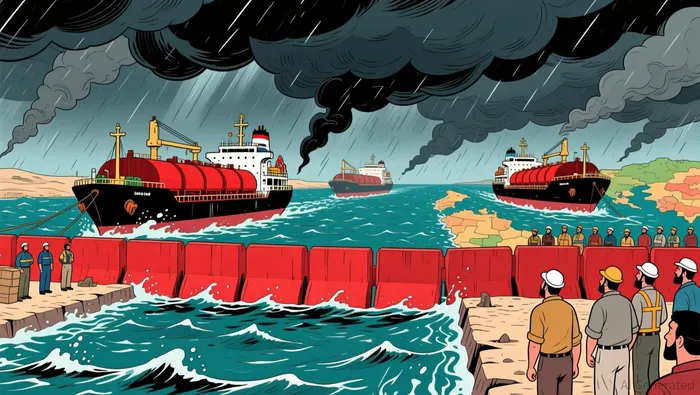
Analysts see this as a prolonged issue, not a short-term blip. Societe Generale expects "full normalization" of supply only by late 2026. This forward view suggests the market is pricing in a long period of elevated risk and potential for further disruption. The current diplomatic overture-peace talks between the U.S. and Iran-offers a potential path to de-escalation, with some analysts leaning toward an agreement this week. However, the process is fraught with uncertainty, as Iran's participation is not guaranteed and its top negotiator has reiterated it will not negotiate under threats.
This tension between a fragile ceasefire and the threat of renewed conflict keeps futures traders cautious. The market is caught between the immediate physical supply shock and the unpredictable political statements from key players. For now, the commodity balance is under severe stress, with demand already paying the price through a 3% cut, and the path to a return to normalcy stretching well into the second half of next year.
Impact on Asian Economies and Market Sentiment
The direct economic benefit of lower oil prices is clear. When the market eases, it helps reduce input costs for businesses and eases pressure on global economies. This provides a tangible relief valve for Asian manufacturing and transportation sectors, which are sensitive to energy costs. The slight pullback in oil prices earlier this week offered that kind of relief, contributing to a mixed but generally positive reaction in some Asian equity markets.
Yet the market response was far from uniform, highlighting that oil prices are just one factor in a complex equation. Japan's Nikkei 225 rose about 0.5%, lifted by strong gains in heavyweight tech stocks. In contrast, Australia's S&P/ASX 200 fell 0.9%, and Hong Kong's Hang Seng dropped 1.3%. This divergence suggests that while lower oil prices offer a direct benefit, other regional pressures are at play. For Japan, the tech-driven rally may have outweighed the oil price relief, while for Australia and Hong Kong, concerns about local growth, currency movements, or broader geopolitical risks appear to have dominated sentiment.
The risk of a prolonged blockade also introduces a secondary, more systemic threat. Any extended closure of the Strait of Hormuz could trigger a fertilizer shortage, one of the vital commodities that normally passes through the strait. This adds a significant secondary supply chain risk for Asian importers, particularly those dependent on agricultural inputs. The potential for a global food security shock, as seen in the rise of Chicago wheat futures, introduces another layer of economic vulnerability that could weigh on regional economies and markets in the longer term.
The bottom line is that Asian economies and markets are caught between a direct, positive input shock from lower oil prices and a looming, negative supply shock from a potential fertilizer shortage. This dual pressure creates a fragile setup where sentiment remains volatile, balanced on the knife-edge of geopolitical developments. For now, the easing of oil prices provides temporary relief, but the underlying physical disruption to global trade routes ensures that the risk to economic activity-and market stability-remains elevated.
Forward Outlook: Catalysts and Key Watchpoints
The path forward for oil prices hinges on a single, immediate event: the outcome of the U.S.-Iran talks in Pakistan. The market is now waiting to see if the two sides can agree to extend their ceasefire, which is set to expire soon. This diplomatic overture is the primary catalyst for the next major move. A successful extension would provide a clear window for supply normalization and likely keep prices under pressure. In fact, the mere consideration of a two-week extension has already knocked crude prices lower, with Brent falling to a 3-week low. The market is pricing in a temporary reprieve.
Conversely, any failure to reach an agreement would reignite the core supply shock. The U.S. blockade and Iran's closure of the Strait of Hormuz would resume, cutting off a critical artery for global trade. This would trigger a sharp repricing of risk, likely sending prices soaring again toward the recent peak of $119. The volatility seen in recent days-where prices swung on the hope or fear of talks-is a direct reflection of this binary setup. The ceasefire extension is not a permanent solution, but it is the essential near-term condition for avoiding a new spike.
For Asian markets, the stakes are high. A renewed conflict would not only spike oil prices but also deepen the secondary risk of a fertilizer shortage, threatening agricultural supply chains. This would add another layer of economic pressure, likely weighing on regional equity indices that are already sensitive to energy cost shocks. The mixed reaction earlier this week-where Japan's tech-heavy market rose while Australia's fell-shows how differently economies are exposed. A new price surge would amplify the downside for commodity exporters and importers alike.
The key watchpoint is therefore the ceasefire's fate. Investors should monitor for any sign of renewed conflict, which would trigger a swift and severe repricing. For now, the two-week extension offers a fragile window of stability. But the underlying physical disruption to the global commodity balance remains, and the market's next major move will be dictated by whether diplomacy can hold or if the blockade returns.