

Sony just announced a record profit forecast for the year ahead, but the real story is in the details. The company is projecting a full-year net profit of 1,160 billion yen, a 12.5% jump from the prior year. That's the headline number investors want to see. Yet, the year that just ended tells a more nuanced tale. For the fiscal year that ended in March, Sony's operating profit came in at 1.45 trillion yen, which was actually below analyst estimates of 1.56 trillion yen. That's a key pressure point.
The shift happened in the third quarter. After a strong finish, Sony raised its annual outlook. In that quarter, operating profit climbed 22% to 515 billion yen, beating expectations. That surge, despite flat sales, is what fueled the optimism. The central question for any investor is whether this profit growth is built on durable demand or temporary factors.
The numbers show a company leaning on its strengths. The gaming division, a key profit driver, saw its operating profit rise 19%. Sales of image sensors for smartphones jumped 21%, and the music business grew 13%. These are businesses where Sony has brand loyalty and recurring revenue streams. The company is also taking steps to offset headwinds, like a weaker yen and rising memory chip costs, by focusing more on software and services.
So, the setup is clear. Sony is guiding to record profits, but it's doing so after a year where its core operating profit missed the mark. The recent quarter's strength is real, but the sustainability of that profit growth-especially in a high-cost component environment-will be the real test.
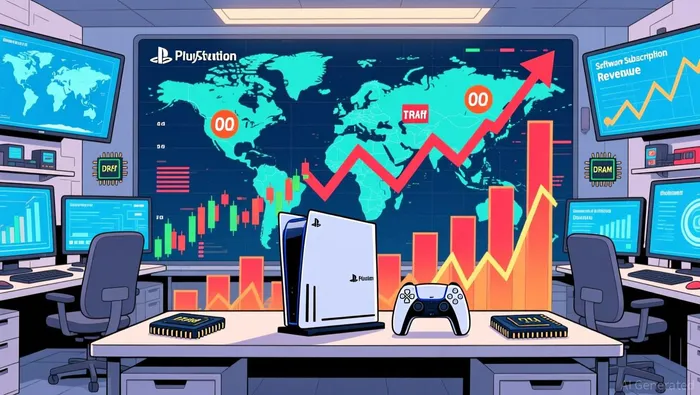
The Engine: Is the Demand Real? (Gaming & Entertainment)
The forecast for record profits rests squarely on the health of its entertainment businesses. For all the talk of margins and supply chains, the bottom line depends on whether people are still buying and playing. The numbers here tell a story of solid, if not explosive, momentum.
Look at the hardware. The PS5 is still moving. In the latest quarter, PS5 hardware sales increased 4.1% to 2.5 million units. That's a steady beat, not a sprint. More importantly, the console has now shipped over 80.3 million units total. That's a massive installed base, a sign of sustained demand that's hard to fake. A company doesn't ship that many units without real consumer interest.
The real engine, however, is the software ecosystem. This is where the sticky, recurring revenue lives. Game & Network Services sales rose 8% year-on-year, and the PSN monthly active users grew to 123 million. That's a healthy, growing community. It means people aren't just buying the console; they're paying to play, to subscribe, to stay connected. The software sales reached 65.9 million units, up 23% YoY, a powerful signal that the games themselves are in demand. This is the kind of ecosystem that can weather hardware cycles.
Yet, there are cracks. The PC port revenue has decreased 23% YoY, a reminder that not all segments are winning. More broadly, the gaming business faces a looming cost wall. PlayStation consoles rely on DRAM chips, and those are getting dramatically more expensive. Contract prices are projected to jump 90% to 95% in the current quarter. That's a direct hit to margins, a headwind the company is already factoring in, even as it raises its profit forecast.
So, the demand is real, but it's under pressure. The hardware is selling, the user base is growing, and software sales are booming. That's the durable foundation. But the high cost of the components that make the console work is a constant friction. The company is trying to offset this by shifting production away from China for the U.S. market, a move that's now complete. The question is whether the pricing power from a loyal user base can keep pace with these rising input costs. For now, the engine is running, but the fuel gauge is getting low.
The Headwinds: Costs, Cuts, and Competition
The optimistic profit forecast is being built against a backdrop of tangible pressures. One is a direct, measurable cost: Sony expects a 50 billion yen hit to operating profit from tariffs. That's not a vague worry; it's a line item that eats into the bottom line, forcing the company to adjust its guidance accordingly. This is a real-world friction, a price paid for navigating global trade.
Within its entertainment businesses, the picture is mixed. The film and TV unit saw its operating income fall 11% for the year. That decline was partly masked by a strategic cut: the shutdown of its loss-making visual effects firm, Pixomondo. Without that impairment charge, the unit's profit actually increased. It's a classic corporate move-cutting a weak segment to make the core look stronger. The underlying business showed some resilience, with quarterly income jumping 36% and revenue up 31%. Yet, the motion picture division's revenue fell 18%, a reminder that blockbuster success is inconsistent.
Internally, Sony is making structural changes to sharpen its focus. The company is folding Bungie into PlayStation Studios, a move that signals a shift away from independence. This integration is now underway, with the goal of making the studio a more cohesive part of the gaming ecosystem. The company is also launching a new game, Marathon, within the current fiscal year. These are not just organizational tweaks; they are attempts to streamline and accelerate development, likely in response to the competitive and cost pressures the company faces.
The bottom line is that Sony's path to record profits is not without friction. It's navigating tariff costs, making tough cuts in its film business, and restructuring its game studios. The company is trying to offset these headwinds by shifting production and leaning on software, but the pressure is real. For the forecast to hold, Sony must successfully manage these internal and external challenges without sacrificing the momentum in its core gaming and entertainment engines.
Catalysts and What to Watch
The record profit forecast is a promise. The real test is in the coming quarters, where a few key metrics will confirm if the momentum is durable or a one-time surge. Investors should keep their eyes on the ground.
First, watch the hardware. The PS5 is still shipping, but the trend is critical. The latest quarter saw PS5 hardware sales increase 4.1% to 2.5 million units. That's a solid beat, but the company sold 8 million PlayStation 5 consoles in the quarter, down 16% from a year earlier. This is the tension: strong quarterly sales versus a year-over-year decline. The bottom line is whether the installed base of over 80.3 million units can keep driving software sales. The 23% jump in software sales to 65.9 million units is a powerful sign of ecosystem strength, but it needs a steady hardware pipeline.
Then there's the new content. The launch of Marathon within the fiscal year is a near-term catalyst. It's a chance to see if Sony can generate another first-party hit to boost the software engine. The performance of this title will be a direct read on ongoing console demand and the health of the PlayStation Studios pipeline.
On the cost side, the pressure is real and measurable. The company is bracing for a 50 billion yen hit to operating profit from tariffs, a tangible drag. More importantly, the DRAM chip costs are projected to jump 90% to 95% in the current quarter. This is the biggest near-term risk. Sony's plan to offset this through services is logical, but the margin squeeze is unavoidable. Watch the quarterly operating profit margin; any sign it's cracking under component costs would contradict the optimistic thesis.
Finally, monitor the segments that are already showing strain. The film business saw its operating income fall 11% for the year, even with the benefit of cutting its loss-making VFX unit. The motion picture division's revenue fell 18%. The question is whether this decline is a cyclical dip or a sign of broader challenges in content monetization. If these segment-specific declines widen, it will be harder for gaming and imaging to fully compensate for the flat overall revenue.
The setup is clear. The strong Q3 momentum in gaming and imaging is the foundation. But the path to record profits depends on maintaining that hardware and software momentum while navigating a brutal cost.