

Last week, crypto Twitter lit up with a rumor: PlayStation Network was supposedly going to accept XRP payments. Then, almost as quickly, the rumor died. Sony, Ripple, and the XRPL Foundation all had nothing to say because there was nothing to say - no partnership existed, no integration was planned.
It's the kind of headline that makes XRP holders do a little nervous double-take. But if you think the denial is the story, you're reading the wrong layer.
Here's what Sony is actually doing: Sony Bank, the online banking arm of the Japanese conglomerate, plans to launch a USD-pegged stablecoin in early 2026. It will be used to buy games, streaming subscriptions, and anime content across Sony's US entertainment platforms. The goal is straightforward - cut payment processing fees and give US consumers a new rail. Sony chose Bastion, a stablecoin infrastructure provider, to build it.
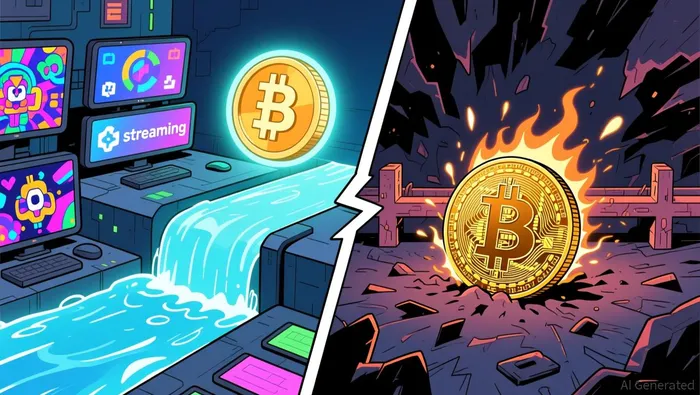
No mention of Ripple. No mention of XRP.
That's the real story here. Not the rumor denial, but the quiet signal that when a major consumer company wants to enter digital money, it reaches for stablecoins, not bridge currencies.
The company-token problem
This is the structural fault line in XRP, and it's been there since the beginning. Ripple the company builds payment infrastructure for financial institutions - messaging, settlement, compliance tooling. The flagship product, RippleNet, offers a service called xCurrent that handles bank-to-bank messaging and settlement without using XRP at all. XRP the token sits on a separate ledger called XRPL and is supposed to act as a bridge currency for cross-border liquidity. The company sells the infrastructure. The token hopes the infrastructure needs it.
They're the same brand, but they're not the same thing. This is the distinction that matters when you're trying to figure out what XRP is actually worth.
Ripple has been working for years to blur the line - at the XRP-Tokyo 2026 conference in April, the messaging centered on enterprise adoption and cross-border settlement. XRP ETFs launched last November and pulled in $1.3 billion in assets within 50 days. And the XRP Ledger itself is seeing real activity: daily payments hit a 12-month high of over 2.7 million in March, up from roughly 1 million in late 2025.
But here's the catch. Much of that XRPL activity is stablecoin volume and decentralized finance, not XRP being used as a cross-border bridge. The ledger has become a venue for digital cash and tokenized assets. The token it was built around is playing a smaller role in its own ecosystem than the narrative suggests.
Why this keeps happening
Sony isn't the first example. Every time a real company gets asked whether it will "adopt" XRP for payments, the answer tends to follow the same pattern. The company wants predictable, dollar-pegged settlement. XRP is a volatile asset that sits at around $1.35 right now - it has been hovering there for weeks. No one is building a consumer payment rail on a token whose price can swing 30% in a month.
Stablecoins solve the payment problem. XRP doesn't. That's not a flaw in XRP so much as a category mismatch. It was designed as a bridge currency for institutional liquidity flows, not as something a gamer in Ohio uses to buy a $70 game.
This is where the constituency map gets interesting. Ripple has two audiences that want different things. Institutional clients want reliable infrastructure - they care about settlement speed, compliance, and cost, and most of their contracts with Ripple don't require XRP at all. Token holders want adoption that drives price - they need to see XRP used at scale, ideally as a medium of exchange. These are not the same outcome.
I think the tension is becoming harder to hide. The XRP ETF influx showed that institutional capital wants exposure to the asset, and the XRPL activity numbers look impressive if you read them fast enough. But neither one answers the question that Sony's stablecoin plans make obvious: when an enterprise actually needs digital payments, what does it pick?
What changes, what doesn't
The Sony rumor denial doesn't change anything for XRP because the rumor never should have been plausible. Sony's stablecoin move, though, is a data point in a longer pattern. Across payments, commerce, and settlement, the institutional direction is toward stablecoins - regulated, yield-generating, dollar-pegged. That's where the capital is flowing, and that's what companies are building.
XRP isn't dying. The XRPL is active, the ETFs are real, and Ripple's conference calendar is full. But the token's core promise - that it would become the default bridge asset for global payments - competes in a world where the bridge asset that enterprises actually choose is the stablecoin.
What would change my mind here? I'd want to see a material shift in how RippleNet structures its enterprise deals - something where XRP usage is a contractual requirement, not an optional feature. Or a regulatory environment that makes stablecoin rails so expensive or restricted that bridge currencies become the cheaper alternative. Neither of those things looks likely in the next year or two.
The Sony question isn't really about Sony. It's about what happens when XRP's narrative meets the plumbing of how digital money actually works at scale. So far, the plumbing wins.