

Crypto ETF outflows are weakening bitcoin's main institutional bid
Crypto ETFs just lost $1.47B in a week. That matters because bitcoin still has not rebuilt the kind of fresh demand needed to defend the market. The clearest institutional bid has weakened just when bulls needed more conviction.
April looked like a reset, with $1.97B in April inflows reversing the year's soft start. May flipped that rebound into something much worse: $2.30B exited in May, the biggest monthly outflow of 2026. The rebound was quickly overshadowed by a larger exit.
That is why the latest streak matters. U.S. spot bitcoin ETFs have now logged the longest withdrawal streak since launch. For bears, the message is straightforward: money is leaving before price has fully broken down. For bulls, the trigger is simple too-fresh ETF inflows need to return.
Why bitcoin still cannot clear the $78,000 area
A spot bitcoin ETF is more than a stock-like wrapper. When new cash comes in, the fund buys bitcoin to back those shares. That is why ETF flows matter so directly: inflows become spot bids, and outflows remove that steady source of demand.
IBIT's inflow streak ending matters
Earlier this week, IBIT's 71-day inflow run ended. That does not prove a lasting trend by itself, but it does show the main link between paper demand and real bitcoin buying has stalled.
Because of that, about $78,000 keeps acting as a ceiling. Glassnode's read is that demand is too weak to force a clean move above that level, which has become the average cost basis for recent buyers. In practice, that means rallies still run into selling from holders looking to exit at breakeven, while softer ETF demand leaves less new cash to absorb it.
The price damage is already visible
Over the nine consecutive trading days of net outflows, bitcoin fell from roughly $80,000 to $73,000. That is the practical impact of a softer bid.
April showed the market can rebound. The current debate is about who shows up next. Past stretches of ETF outflows have sometimes coincided with local bottoms, but that does not guarantee an immediate V-shaped recovery. It does mean the market is still waiting for fresh money to replace the bid that has faded.
What would confirm weakness-or a turn
The flow damage is already there. The next question is whether price can earn back support.
The key level and the key condition
First, confirmation of weakness would be another failure below $73,869. If bitcoin cannot reclaim that area, the setup stays vulnerable.
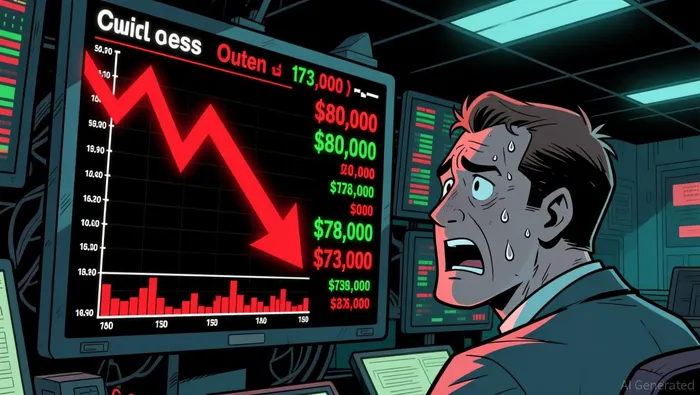
Second, the flow backdrop still argues for caution. U.S. spot bitcoin ETFs have logged nine consecutive trading days of net outflows, the longest withdrawal streak since launch. That does not mean every stretch of selling ends in a rebound, but it does mean the market still lacks the fresh ETF demand bulls need to turn this into a clean reversal.
The bearish read weakens only if inflows return. Until then, the main message is simple: the market's strongest institutional bid has softened, and bitcoin still has not forced a breakout above the level recent buyers see as resistance.