

South Korea's stock market is navigating a period of intense turbulence, characterized by historic foreign liquidations and a sharp correction in its most prominent tech stocks. The benchmark KOSPI index recently suffered its worst single-day performance since March 2020, shedding more than 8% as overseas investors accelerated their exit from the country's equities. This massive exodus has fundamentally altered the market's liquidity landscape, creating a stark divergence between foreign selling and aggressive domestic buying. As global risk appetite shifts and bond yields climb, understanding the mechanics behind this sell-off is crucial for investors assessing the resilience of Asian technology and export-driven economies.
Why Are Foreign Investors Dumping South Korean Stocks Despite Strong Performance?
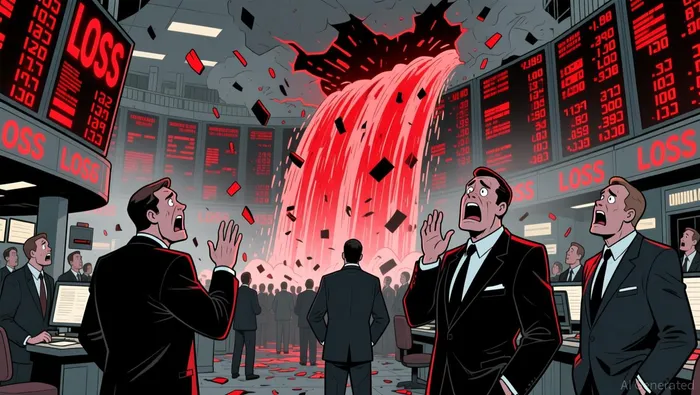
The sheer scale of the foreign selling in South Korea is baffling to many observers, given that the KOSPI has emerged as one of the best-performing global equity markets this year. Foreign investors have sold approximately $75 billion of KOSPI-listed shares year-to-date, marking 30th consecutive session of net selling. This relentless liquidation culminated in a devastating $13.2 billion outflow in a single week, driving Kospi Volatility Index to levels not seen since early March. The immediate trigger for the most recent crash was a broader global tech rout, heavily influenced by Broadcom's fiscal second-quarter revenue missing market estimates, which caused cascading declines across semiconductor and AI-linked firms .
However, market strategists at Goldman Sachs and Nomura argue that this selling is largely mechanical rather than a vote of no confidence in the Korean economy. As Korean stocks have rallied, their weightings in global and emerging-market benchmarks have increased significantly, forcing active fund managers to trim positions to adhere to strict portfolio and risk limits. Investors are also bumping against regulatory restrictions on ownership of individual large-cap stocks, such as Samsung Electronics and SK Hynix, after their valuations soared . This dynamic mirrors patterns seen in other high-growth Asian markets, where domestic retail participation has effectively crowded out foreign investors. To support this view, domestic retail and institutional investors have purchased an estimated $69 billion in stocks over the same period, acting as primary liquidity providers during the foreign exodus.
How Is The South Korea Stock Market Reacting To Global Tech Selloffs?
The South Korean market is deeply intertwined with the global artificial intelligence trade, making it highly vulnerable to shifts in U.S. tech sentiment. The recent sell-off erased approximately $1.8 trillion in S&P 500 market capitalization, dragging down Asian tech giants alongside their American counterparts . Memory chip leaders Samsung Electronics and SK Hynix fell sharply, contributing to the 8% plunge in the KOSPI index . This volatility is particularly pronounced because these two companies control an estimated 80% to 90% of the High Bandwidth Memory (HBM) chip market, a critical component for AI data centers. When U.S. giants like Nvidia and Broadcom face earnings scrutiny or valuation concerns, the ripple effect is immediately felt in Seoul.
Despite the brutal selloff, the fundamental drivers of the Korean market remain distinct from the broader U.S. tech narrative. The KOSPI had previously surged past the 8,000 mark, fueled by a combination of AI-linked stocks and robust retail momentum . While the immediate trigger for the decline was the Broadcom earnings miss, the underlying concern is that soaring global bond yields and geopolitical tensions are pressuring Asia's best-performing markets . The U.S. Labor Department reported a robust May jobs report that eliminated near-term expectations for Federal Reserve rate cuts, pushing the 10-year Treasury yield to 4.54%. This tightening of financial conditions increases the cost of capital and puts downward pressure on high-growth, high-valuation sectors like semiconductors. Consequently, the KOSPI has been forced to absorb the shock of a global risk-off environment, even as corporate earnings in the memory chip sector remain structurally strong.
What Are The Economic Headwinds And Long-Term Prospects For The Korean Market?
Beyond the immediate tech selloff, the South Korean economy faces significant structural and macroeconomic headwinds that complicate the investment thesis. A primary concern is the value of the Korean won, which languishes near 17-year lows against the U.S. dollar. While a weaker currency traditionally boosts export competitiveness, the current environment is complicated by the ongoing conflict in the Middle East. The U.S.-Iran conflict has blocked crude oil shipments through the Strait of Hormuz, pushing Brent crude to $93.09 per barrel . For an import-dependent, export-centric economy like South Korea, soaring energy costs exacerbate inflation and limit the central bank's ability to provide stimulus, creating a difficult policy trilemma .
Nevertheless, long-term institutional investors remain cautiously optimistic about the structural reforms underway in South Korea. The government's 'Value Up' program is actively addressing the persistent 'Korea Discount,' a historical phenomenon where Korean companies traded at a significant valuation gap compared to global peers . These reforms mandate greater shareholder returns, increased share liquidity, and improved capital allocation, which are beginning to attract institutional capital . Goldman Sachs has raised its 12-month KOSPI target to 12,000, forecasting that earnings could rise by 300% as corporate governance improves . Furthermore, the anticipated inclusion of South Korean bonds in the FTSE World Government Bond Index is expected to draw $50 billion to $70 billion in passive flows, providing a significant counterbalance to the equity outflows . While the near-term path remains volatile, the combination of AI hardware dominance, currency tailwinds, and regulatory reforms suggests that the Korean market's long-term growth trajectory remains intact despite the current turbulence.