

The new space ETF isn't really about the space economy. It's about a purity test.
VanEck launched the WARP ETF this week to tap what it calls the $600 billion space economy. The fund tracks companies in satellites, AI, and space infrastructure. But look at what it actually holds, and you'll see something different.
The index requires companies to derive at least 50% of their revenues from space-related activities. That sounds reasonable-who wants diluted exposure? The problem is what it filters out.
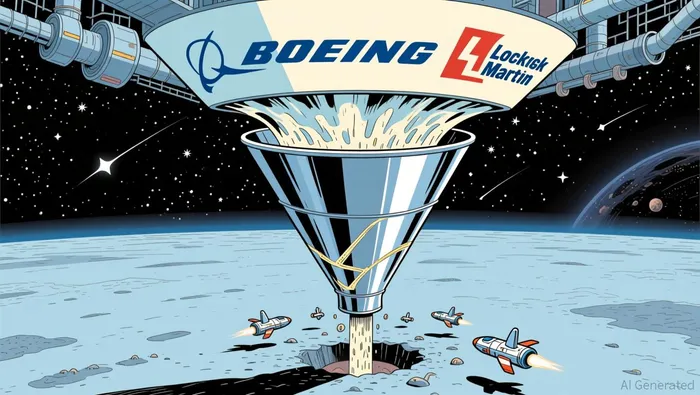
Most of the economic activity in space happens at companies like Boeing, Lockheed Martin, and Northrop Grumman. They build satellites, rockets, and defense systems. But space is only part of their business. They don't pass the 50% test. So they're not in the ETF.
What's left? A handful of pure-play companies. MDA Space appears to be about 49% of the index. EchoStar, AST SpaceMobile, and a few others make up most of the rest. The portfolio has just 20 components.
This isn't investing in the space economy. It's investing in companies that happen to be pure enough. The test becomes the thesis.
Then there's the AI part. The marketing mentions AI-powered Earth observation. The actual market for AI analysis of satellite data is about $3.8 billion this year, growing to maybe $4.2 billion by 2030. That's less than 1% of the $600 billion space economy. The AI is decoration.
The way to think about this ETF is not as exposure to the space economy. It's as a bet on specialization. Either you believe the future of space belongs to focused companies that do nothing but space, or you don't.
There's a pattern here. When a new category emerges, the first investment products often define it too narrowly. They want something clean, something pure. But the real economic activity might be messier. It might be at the conglomerates, the diversified players, the companies that do space as part of other things.
The testable question isn't whether space will grow. It's whether pure-play space companies can scale while staying pure. If a satellite company succeeds, will it expand into adjacent businesses? Will its space revenue drop below 50%? If so, it gets kicked out of the index.
I suspect the more interesting companies in space won't pass this test. They'll be the ones that start in space and expand, or the established players that increase their space business but never reach 50%. The purity requirement might filter out exactly the companies you'd want to own.
The ETF's approach reminds me of early internet funds that only invested in ".com" companies. They missed Amazon when it was just books, Microsoft when it was moving online, Walmart when it started e-commerce. The pure-play test looked smart until it didn't.
So here's what to watch: not whether the space economy grows to $1.8 trillion by 2035, as McKinsey projects. Watch whether the companies in this ETF can grow while staying pure. And watch whether the real economic winners end up being the companies this ETF excludes.