

SpaceX's IPO asks investors to justify a much higher starting valuation
The real question is not whether SpaceX is impressive. It is whether investors will pay a belief-driven price before public-market fundamentals have had time to establish themselves. At the current structure, the offering looks less like a clean valuation anchor and more like a test of market appetite.
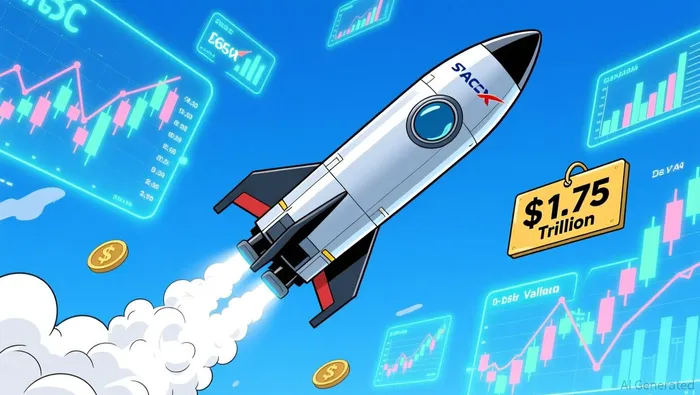
Reports say SpaceX plans to raise $75 billion by selling 555.6 million shares at $135, targeting a $1.75 trillion valuation. That sits above the $1.25 trillion valuation earlier this year and follows earlier $2 trillion-plus rhetoric. Before investors have seen a public-market earnings rhythm, they are being asked to accept a materially higher starting point.
The pace of the process only makes that more salient. Reuters has reported a prospectus public as early as next Wednesday, with a roadshow targeted for June 4 and a possible debut as early as June 12. In a compressed window, momentum and fear of missing out can influence demand as much as fundamentals do.
Bulls can argue the higher target reflects stronger demand and a company that may deserve a new valuation category. Bears can counter that an IPO can be highly popular and still be expensive. Either way, buying here means accepting that a lot of future expectation is already embedded in the price.
Why demand looks strong: share access, timing, and a very marketable story
SpaceX is combining structural incentives with a narrative that lines up with several of today's biggest market themes.
The offering structure may broaden and accelerate demand
A filing says SpaceX has reserved up to 5% of stock for certain employees and persons in a direct share program managed by Morgan Stanley. At the same time, SpaceX could allocate 30% of its shares to retail investors, which is described as at least three times the typical allocation. That broadens the buyer base beyond traditional institutional bookbuilding and may help pull in more retail participation.
The timeline also leaves less room for hesitation. The prospectus could go public as early as next Wednesday, the roadshow is targeted for June 4, and debut is possible as early as June 12. When the window is this short, early signs of demand can snowball quickly.
The narrative hits several major market themes at once
The filing and surrounding coverage point to Musk's control and vision, including Mars colonization, while also highlighting Starlink and reusable rockets as revenue drivers. Add in ambitions around AI-related space projects, and the company becomes easy to frame as a future infrastructure winner.
That framing can create a halo effect. Reuters has also noted that part of the valuation case rests on technology that hasn't been proven to work. That does not weaken the operating story, but it does mean some of the upside investors may be paying for is still ahead of public-market verification.
A useful signal will be subscription strength. If the offering is oversubscribed even with broad retail access, it will suggest demand is driven by more than casual interest.
The bear case is not a weak business; it is a rich price for future optionality
The cleaner bear argument is not that SpaceX is failing. It is that the IPO price may be treating a promising, dominant operator like a fully proven empire.
What the evidence does support
The operating case is real enough. NASA's report on Boeing's Starliner found severe technical and leadership failures that left two astronauts nine months stuck on the ISS before returning on SpaceX's Dragon. That does not prove every part of SpaceX's future plan, but it does reinforce the company's practical importance to U.S. human spaceflight.
That helps explain why bulls can reasonably view SpaceX as more than a launch company. Reuters has highlighted investor interest tied to Musk's control and vision, including Mars colonization, while also pointing to Starlink and reusable rockets as revenue drivers. In that reading, SpaceX is becoming a broader platform spanning launch, connectivity, and space infrastructure.
Where the valuation gets harder to defend
The pressure point is that not every piece of the story is yet proven. Reuters has reported that part of the valuation case rests on technology that hasn't been proven to work. That keeps the debate focused on how much of that future upside should already be in the IPO price.
Bulls see a portfolio of future advantages: launch dominance, satellite internet, Mars ambition, and possibly AI-related infrastructure. Bears see valuable businesses mixed with longer-dated optionality that may be getting bundled into a single premium setup. At an IPO structured to raise $75 billion through 555.6 million shares at $135, that is the real split.
Watch three things: - Whether public-market scrutiny shows that some revenue assumptions depend on systems that still need validation - Whether investors continue to support a broad platform-company view, or start paying more conservatively for the core businesses - Whether SpaceX's strategic importance remains a durable advantage rather than fading as a headline-driven tailwind
What the secondary market and early trading may reveal
The secondary-market spread is one of the first useful signals. One published reference sits near $119.92; recent consensus approaches $191.87. With a $75 billion IPO being built around a $1.75 trillion valuation, that gap is not trivial. It reflects a live debate over how much of the story is backed by present-day business strength versus the broader narrative tied to Musk's control and vision, including Mars colonization.
What to watch in the first week of trading
The clearest test will come after the listing. If the stock holds after a narrative-driven debut, investors are signaling that they are comfortable paying for the broader vision. If the market quickly re-rates the shares lower, it may suggest that buyers want the core operating engine more than the distant ambitions.
For now, the filing, subscription demand, and early trading should do more work than the headline valuation alone.