

SpaceX successfully deployed 25 Starlink satellites on April 14, 2026, utilizing a reusable Falcon 9 booster for its 21st mission. The launch from Vandenberg Space Force Base reinforces the company's high-frequency cadence and cost-efficient operational model. This mission expands the world's largest satellite constellation, directly supporting revenue growth in the commercial broadband sector. Reusability remains the key financial driver, allowing SpaceX to lower access costs while servicing both government and commercial clients. Community engagement regarding sonic booms at Vandenberg continues as launch activity intensifies across the region.
SpaceX has once again demonstrated its operational dominance with a successful mission that underscores the economic viability of its reusable rocket technology. On April 14, 2026, the company launched 25 Starlink satellites from Vandenberg Space Force Base in California, marking a significant milestone for its first-stage booster. This mission is not merely a routine deployment but a critical component of a broader strategy to lower the cost of space access and expand global internet coverage. For investors, the success of this flight reinforces the robustness of SpaceX's business model, which relies on rapid turnaround and high launch cadence to drive profitability.
The Falcon 9 rocket, designed for reliability and reusability, completed its 21st flight before landing on the "Of Course I Still Love You" drone ship in the Pacific Ocean. This achievement highlights the company's ability to reuse its most expensive components, a practice that has fundamentally altered the economics of the space industry. With over 624 missions completed and 543 reflights to date, SpaceX has established a level of operational efficiency that few competitors can match. The Starlink constellation, now comprising nearly 10,000 satellites, continues to grow, serving millions of customers with high-speed, low-latency broadband internet.
What Happened During The Recent SpaceX Launch Today?
The mission on April 14, 2026, targeted the deployment of 25 Starlink satellites into low-Earth orbit at an altitude of approximately 550 kilometers. Although the launch was initially delayed from a 7:40 p.m. PT slot to 9:29 p.m. PT, the operation proceeded smoothly, achieving its primary objective of expanding the satellite network. The first-stage booster, which had previously supported missions such as USSF-62, OneWeb Launch 20, and NROL-145, executed a precise landing on the drone ship, demonstrating the maturity of SpaceX's recovery systems. This successful reflight is a testament to the company's rigorous testing and engineering protocols, which minimize the risk of failure while maximizing asset utilization . according to CBS News.
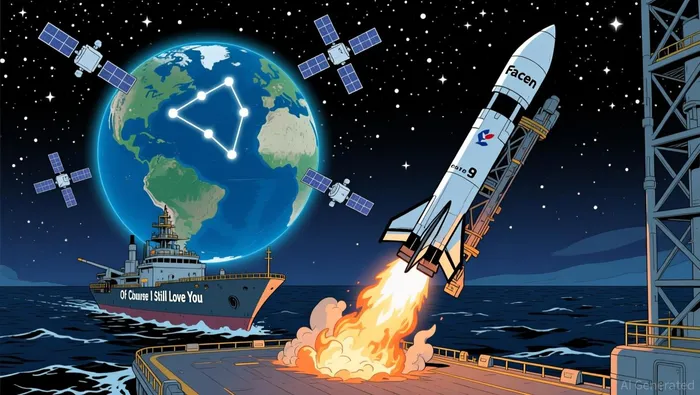
The launch took place from Space Launch Complex 4 East at Vandenberg Space Force Base, a facility that has become a vital hub for polar orbit missions and national security launches. The base serves as a critical infrastructure point for the Department of Defense and NASA, providing assured access to space for classified payloads and crewed missions. The increased activity at Vandenberg has led to discussions with local communities regarding the impact of sonic booms, prompting the base to hold engagement events to foster transparency. Despite these community considerations, the strategic importance of the location for expanding the Starlink constellation remains undeniable as reported by Edhat.
Why Does The SpaceX Falcon 9 Reusability Matter For Investors?
Reusability is the cornerstone of SpaceX's financial strategy, allowing the company to significantly reduce the cost of launching payloads into orbit. By recovering and reusing the first-stage booster, SpaceX can offer competitive pricing for both commercial and government clients, thereby increasing market share and driving revenue growth. The Falcon 9's ability to complete multiple flights without major refurbishment translates directly into higher profit margins and a more sustainable business model. This cost advantage is particularly relevant in the satellite internet sector, where the deployment of thousands of satellites requires frequent, affordable launches according to CBS News.
The Starlink business unit has emerged as a significant revenue driver, leveraging SpaceX's unique capability to deploy satellites using its own reusable rockets. The constellation aims to deliver high-speed internet to remote and underserved areas, creating a new market for global connectivity. With over 6,750 satellites currently in orbit and serving millions of customers, the network's expansion is a clear indicator of growing demand and operational success. The company's ability to maintain a high launch cadence while managing costs positions it as a leader in the emerging space economy as reported by AOL.
How Is SpaceX Expanding Its Starlink Constellation From Vandenberg?
SpaceX is systematically expanding its Starlink constellation through high-frequency launches from Vandenberg Space Force Base, a location ideal for polar orbits. The April 14 mission deployed 25 satellites to an altitude of roughly 341 miles, enabling high connection speeds and access to rural areas with limited internet infrastructure. This expansion is part of a broader initiative to build a robust, high-uptime broadband network capable of supporting streaming, gaming, and video calls globally. The company's strategy relies on a continuous stream of launches to replenish and upgrade the constellation, ensuring long-term service reliability according to CBS News.
The increased launch activity at Vandenberg has also highlighted the base's role in national security and advanced air and space testing. Base officials are working to address local concerns through community engagement efforts, including a "Mission Update" speaker series scheduled throughout 2026. These events aim to provide transparency regarding the impact of launches, including sonic booms, while emphasizing the economic and strategic benefits of the space program. As the Starlink network grows, the partnership between SpaceX and the Space Force base continues to strengthen, reinforcing the symbiotic relationship between commercial and government space activities as reported by Edhat.
What Are The Key Market Implications Of This Launch?
The successful launch of 25 Starlink satellites reinforces SpaceX's position as a dominant player in the commercial space industry. The company's ability to execute frequent, cost-effective missions is a key differentiator in a market that is increasingly competitive. Investors are closely watching the Starlink business unit, which has become a major source of revenue and a driver of long-term growth. The expansion of the constellation suggests a strong demand for satellite internet, which could lead to further investment in infrastructure and technology.
Furthermore, the reusability of the Falcon 9 rocket provides a significant competitive advantage, allowing SpaceX to maintain high margins even as the space industry evolves. The company's track record of successful missions and its ability to innovate rapidly make it a compelling investment opportunity. As the Starlink network continues to grow, the potential for new applications and services expands, creating additional revenue streams for the company. The success of the April 14 launch is a clear signal that SpaceX is well-positioned to capitalize on the growing demand for space-based connectivity according to AOL.
Looking ahead, the focus will remain on the company's ability to sustain its launch cadence and continue expanding the Starlink network. The success of the reusable rocket technology will be critical in maintaining cost efficiency and driving profitability. Investors should also monitor the ongoing community engagement at Vandenberg, as any regulatory or public relations challenges could impact future launch schedules. However, the current trajectory suggests that SpaceX is on a strong path to continued growth and market leadership in the space sector according to CBS News.