

Reuters reports SpaceX IPO demand at 3.5x to 4x oversubscribed
The order book is unusually strong
SpaceX is not just large; it is unusually large for a private company heading public. Investor demand has reached more than $250 billion against a planned $75 billion offering, pushing oversubscription to 3.5x to 4x the size of the deal. Reuters said final allocations will be set at pricing, so this book is still a strong signal rather than a final tally.
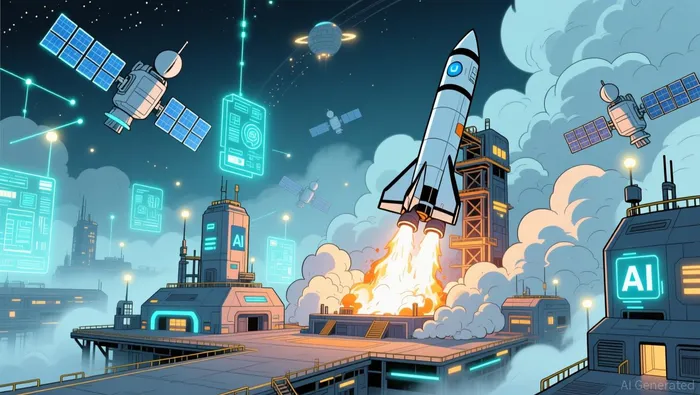
That kind of demand pushes the conversation past a simple rocket-company comparison. Investors are being asked to judge whether SpaceX can become an infrastructure layer across launch, global connectivity, and a still-unclear set of AI-related space services.
Why investors are chasing SpaceX now
The bull case is about repeated use, not just current earnings
Bulls are buying a platform story, not just the current income statement. SpaceX is pricing with a $1.75 trillion valuation and a $135 per share target price, but the larger argument is that the company could control several adjacent rails at once: launch capacity, Starlink, and potentially AI infrastructure in space.
That case gets support from operating cadence. Earlier this month, SpaceX flew its 50th dedicated Starlink mission of 2026, with a constellation of more than 10,000 spacecraft in orbit. The same booster used for that mission, B1082, was on its 22nd flight. Reuse, frequency, and a growing satellite network can reinforce each other if the model keeps scaling.
What bulls need to stay true
- Reuse keeps lowering cost per launch.
- Starlink grows from connectivity into a broader services platform.
- Newer AI-related ideas become real revenue streams instead of roadmap slides.
If those steps happen, investors may keep treating SpaceX as a platform. If they slip, the company risks trading at platform multiples before those markets are proven.
The bear case: dominant today, uncertain tomorrow
Reuters flagged the valuation's biggest assumption
The sharper bear case is not that SpaceX is weak. It is that the valuation may be assuming dominance in markets that do not fully exist yet. Reuters said SpaceX's pricing relies on it dominating technologies and markets that do not yet exist, including AI data centers in space.
That is different from ordinary execution risk. It is the risk that investors are paying for a completed future before demand has been clearly demonstrated.
SpaceX's current dominance is real
Bears do not have to dispute SpaceX's present position in launch. It accounted for 87% of the country's orbital launches in 2024, which helps explain why the bull case commands a premium. But today's dominance does not automatically justify paying for every future space-market possibility up front.
Why Rocket Lab matters as a benchmark
Rocket Lab may be a distant second in launch, but it still carries a market capitalization of roughly $68.8 billion even as the industry's next layer of value is still being defined. That suggests the market is willing to pay up for optionality in space. The debate is whether that willingness is rational or already stretching toward late-cycle infrastructure pricing.
What pricing needs to show next
Demand can still change before shares are priced
The next catalyst is not more headline demand. It is how that demand converts into supply at pricing for 555.6 million shares. With investor demand is still subject to change before pricing, late institutional orders can still shift the outcome.
That matters because a hot book does not guarantee a stable aftermarket. If most of the interest comes from investors who end up receiving little or no stock, the early trade can still get shaky.
What to watch in the final book
- Whether enough shares go to longer-term holders.
- Whether the retail tranche stays supportive without making the early tape too emotional.
- Whether the final mix creates a tradable float that can sustain momentum.
What would weaken the thesis
Even a strong pricing can prove fragile if rivals are catching up faster than Starlink adoption deepens, or if AI-in-space remains more concept than customer base. For now, the central question is simple: how much of the future should the market pay for before the markets themselves exist?