

The market had already written off Spirit Airlines. The stock, trading as SAVEQ on the OTC markets, was a ghost of its former self, hovering around a dollar. This wasn't a sign of hope; it was a valuation of near-total equity wipeout. The bearish consensus, with ratings of "Sell" or "Strong Sell," reflected a deep-seated expectation that the common shareholders would receive little to nothing from the bankruptcy process. In this context, the airline's actual shutdown was a reality check, not a surprise.
The expectation of failure was baked into the narrative long before the final days. Spirit had already filed for Chapter 11 bankruptcy protection twice in under two years, a pattern that signaled severe, already-discounted financial strain. Each filing reset the clock on its viability, and the market had priced in the high probability of a permanent end. The stock's delisting from major exchanges and its move to the OTC market underscored this terminal status, trading in a realm of extreme volatility and low liquidity where the shares were more a speculative bet than a fundamental investment.
Yet, there was one critical piece of the puzzle that remained unpriced: the blocked $3.8 billion merger with JetBlue. This deal represented a potential lifeline, a path to stability through a strategic combination. Its failure, blocked by a federal judge, removed a major source of upside that the market had not fully accounted for. In the weeks leading up to the shutdown, Spirit had appeared to be on a credible path to emerge from bankruptcy, with a restructuring plan and court agreements in place. The expectation gap here was that the market had priced in the bankruptcy but not the specific failure of that merger as a catalyst for collapse. The final blow was the sudden, catastrophic spike in jet fuel prices due to the Iran conflict, which the airline's recovery plan had not accounted for. This created a perfect storm where the already-weak financials were overwhelmed by an external shock the market had not anticipated.
The bottom line is that the shutdown confirmed what the market had long suspected. The stock's penny-stock status and the repeated bankruptcies had priced in the endgame. The blocked merger was the last unpriced-in failure, but the ultimate trigger was an unforeseen external shock. For investors, this was a classic case of the expectation gap closing: the reality of the shutdown matched the market's grim forecast, leaving no new information to drive a price move.
The Catalyst: Fuel Prices and the Bailout Miss
The final, unpriced-in shock arrived as a one-two punch of cost and cash. While the market had braced for a difficult Chapter 11 exit, it did not anticipate a sudden, massive expense surge that would overwhelm the airline's already razor-thin financial position.
The first blow was a catastrophic spike in jet fuel prices. Due to the Iran conflict, the average price for a gallon of jet fuel in major U.S. hubs hit $4.88 in early April. That figure is nearly double what it was when the hostilities began in late February. For an airline where fuel is its second-largest expense, this was a direct hit to the core of its business. J.P. Morgan analyst Jamie Baker estimated that sustained prices at this level would add about $360 million in extra costs to Spirit's 2026 operating budget. That number is staggering when set against the airline's projected cash position of just $337 million at year-end. The fuel shock transformed a difficult but manageable recovery plan into an impossible math problem.
The second blow was a failed lifeline. In a last-ditch effort, Spirit sought a $500 million federal bailout from the Trump administration. The White House floated a "final proposal" for a taxpayer-funded takeover, but key creditors did not accept it. This left no external funding to bridge the gap between Spirit's depleted cash and the new, crushing fuel bill. The blocked bailout was the final expectation gap: the market had not priced in the failure of this specific rescue attempt, which was the last potential source of capital to stabilize the carrier.
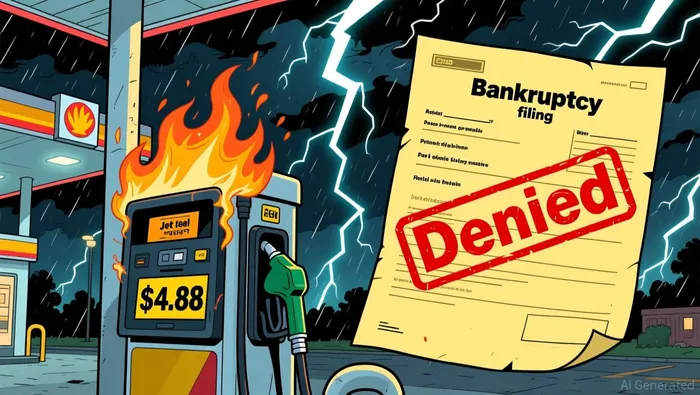
Together, these events created a perfect storm. The sudden, massive cost shock from fuel prices broke the financial model that Spirit's reorganization plan had been built upon. The simultaneous failure of the bailout deal removed any hope of a capital infusion to cover the shortfall. With no funding to absorb the $360 million in extra costs, the airline had no choice but to cease operations. The catalyst was not a single event, but the combination of an unforeseen external shock and the collapse of a critical rescue plan. This was the final, unpriced-in reality that forced the wind-down.
The Aftermath: Refunds, Industry Impact, and What's Next
The immediate financial fallout is a standard bankruptcy wind-down, not a new burden. Spirit's plan to automatically process refunds for card purchases is a routine procedure, not an unexpected cost. The airline has set up a dedicated website to handle customer inquiries, and the process for unused flights is straightforward: refunds will be processed within seven business days. This is the expected playbook for a carrier ceasing operations. The real financial impact is already in the past, absorbed by the company's depleted cash and the failed bailout.
The competitive landscape, however, is where the new reality hits. Spirit's closure removes a major competitor from the ultra-low-cost market. This is a long-term positive for surviving carriers, who will likely see less pricing pressure and could pass on higher costs to consumers. The industry's response, with major airlines capping fares for stranded passengers and offering preferential interviews to crew, is a pragmatic move to manage the disruption. But it also signals a shift in market power. With one of the most aggressive cost-cutters gone, the remaining players have more room to raise fares and improve margins. The expectation gap here is that the market had already priced in Spirit's weakness, but not the specific competitive benefit of its exit.
The key watchpoint now is the liquidation value of Spirit's assets. This will determine if any recovery is possible for creditors, but not for common shareholders. The bankruptcy court will oversee the sale of the fleet, gates, and routes. Given the airline's history of debt reduction through restructuring, the liquidation value is likely to be modest. For the common equity holders, who have already seen their shares trade as a penny stock, the outlook remains bleak. The market's reaction was appropriate: the stock's collapse to near-zero value before the shutdown reflected the near-total wipeout of equity value. The final liquidation will confirm what was already priced in.
In the end, the aftermath confirms the expectation gap was closed. The financial mechanics of the shutdown were predictable, and the competitive shift is a logical consequence. The market had already written off the common shares. What mattered was the sequence of events-the blocked merger, the fuel shock, the failed bailout-that made the collapse inevitable. The final chapter is about settling the books, not about new surprises.