

Japan stake-sale talks arrive as confidence in Starbucks' turnaround improves
The key question for SBUX is not whether Japan is in trouble. It is whether a possible Japan stake sale looks like capital-light optionality on top of improving operations, or like a liquidity move just as investors start to give the turnaround more credit.
The bull case: a mature market could add strategic optionality
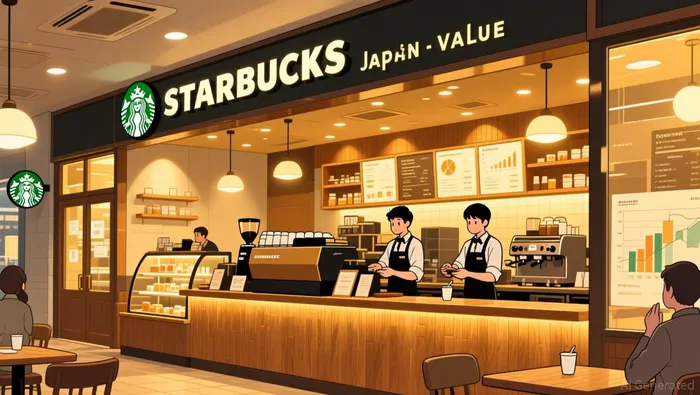
Starbucks has held preliminary talks on a Japan stake sale that could reach ¥400 billion to ¥500 billion. That is a meaningful range for one of its largest overseas markets, which has about 2,100 stores and is mostly company-operated.
The timing matters because investor confidence has improved. Shares rose 5% after the company raised its annual forecast, and management said the quarter reflected progress under its turnaround plan. If Starbucks can monetize part of Japan without giving up strategic control, that would add upside optionality to an improving operating story.
The bear case: repeated monetization could look like harvesting, not rebuilding
The skeptical read is simpler: after disposing of a majority interest in China, Starbucks appears to be exploring a similar move in another mature Asian market. That does not prove Japan is weak, but it does raise questions about why management wants to unlock cash now and what it means for investor alignment.
If the market decides management is extracting value rather than reinvesting it, some of the turnaround premium could fade.
Japan looks valuable, but limited disclosure keeps the debate unresolved
Japan has value on its own
Japan should be framed as a high-value asset, not a distress case. Starbucks has about 2,100 stores there, mostly company-operated, and the reported valuation range suggests this is a substantial business, not a side project.
That scale implies an established footprint, mature operations, and brand recognition. It also helps explain why management previously moved to full control: Starbucks bought the remaining joint-venture stake in 2014, according to reporting on the market's history.
Operating signs are not obviously weak
This does not look like a market in clear distress. A recent report noted that CEO Brian Niccol described Japan's latest quarter as "outstanding", citing strong holiday sales, tourism, and product launches. Bulls can reasonably argue that a business performing at that level is being considered for monetization, not rescued or abandoned.
That leaves the real question: are investors being offered a one-time liquidity event, or are they being asked to back a future in which Japan keeps compounding without fresh capital?
Disclosure remains the weak point
Starbucks still does not break out Japan's financial performance, so investors cannot cleanly assess whether a potential sale would reflect fair value or simply reduce exposure in a mature market. That opacity matters because any new capital action will be judged against incomplete information.
China is a precedent, not proof
The China transaction matters because it sets a template. That deal closed in April and valued the business at US$4 billion. Whether that was strategic renewal or an early signal of asset recycling is still debatable, but it gives investors a reason to watch Japan closely.
The watchpoint is disclosure. If Starbucks keeps the process private, this may remain a speculative optionality story. If it opens up the process or broadens the options, the valuation debate becomes more concrete.
The real investment question: capital recycling or less skin in the game?
The smart-money question is not whether Japan is weak. It is whether Starbucks is recycling a mature asset to strengthen the core, or pulling back from proven markets just as the turnaround starts to look credible.
Why bulls can still make the case
Bulls do not need Japan to be in trouble. They need evidence that management is freeing up capital from a mature market to support the broader turnaround. Recent operating progress supports that view in principle: Starbucks has reported 21,000 company-operated stores and 19,000 licensed locations worldwide as of late 2024, and the company is executing its "Back to Starbucks" plan.
If proceeds from Japan were reinvested where returns are higher, the move could read as disciplined capital allocation rather than retreat.
Why bears will focus on timing
Bears will focus less on Japan's current demand and more on what another monetization says about management's appetite for owning mature markets through a recovery. After China, a similar step in Japan can look less like optimization and more like balance-sheet management.
That is why the margin-recovery timeline matters. Starbucks has warned that profit margins can recover slowly as turnaround costs rise. If Japan monetization arrives before that catch-up shows up, the narrative can shift quickly from strategic recycling to asset harvesting.
What to watch next
- Whether talks remain preliminary or move toward a defined process
- Whether Starbucks provides more operating or financial detail on Japan
- Whether management explains how proceeds would support the core turnaround rather than simply increase cash optionality