

MYHC looks like a niche 2029 ladder tool, not a stand-alone high-yield pick
MYHC does not look compelling on a stand-alone basis. The income is real, but the fee-to-income math is weak and the trading environment leaves little room for error. With a monthly dividend of 0.1475, a 0.39% gross expense ratio, a market price of 25.06, and NAV of 25.17, the fund is easiest to view as a deliberate 2029 income bucket rather than a broad high-yield core holding.
Why some investors may still want it
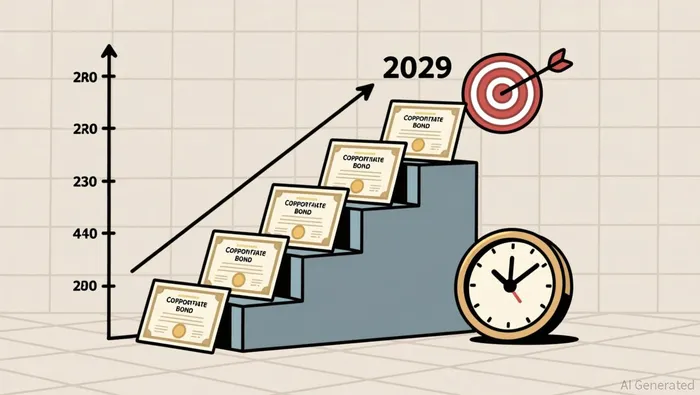
The main appeal is the structure. MYHC is a target maturity strategy designed to liquidate and distribute remaining principal on or about December 15, 2029, which can fit usefully into a bond ladder. The fund is also actively managed, so investors are not just buying a static maturity basket.
Why the appeal is limited
The costs and execution risk are the bigger issue. A 0.39% gross expense ratio is meaningful against a 1.86% dividend yield, especially when the fund's average management tenure is 0.18 years. Liquidity is another concern: Yahoo shows trading volume of just 2, and CNBC lists 10-day average volume at 0.00M. For investors who need efficient high-yield income, that combination can dull the appeal.
The 2029 maturity matters more than the monthly check
MYHC is built as a ladder rung first and an income vehicle second. At the current market price of 25.06, the dividend yield is only 1.86%, even though the fund is paying a monthly dividend of 0.1475. That means investors are not buying a particularly rich, self-funding coupon stream. They are buying a fund that must work hard enough to offset fees, trading friction, and credit risk before the 2029 liquidation event.
What the active layer is supposed to do
MYHC uses a bottom-up selection process within high-yield corporates and seeks to overweight attractive sectors and issuers. In theory, that gives the manager room to be more selective than a benchmark constrained by size and composition rules. The fund also sits inside a suite built for custom bond ladder portfolios, which reinforces the idea that its main job is cash-flow timing as much as income generation.Implement a long-only strategy for MYHC over the past 2 years. Entry: Price closes above the 50-day SMA. Exit: Price closes below the 50-day SMA, or after 20 trading days, or TP +8%, SL -4%.
Why the cost hurdle remains high
Active management can help, but only if it adds something over a passive maturity sleeve. That is harder to assume here given the team's very short average tenure and the fund's concentration profile. MYHC is nondiversified, and the top 10 holdings constitute 13.5% of the ETF's assets. If the managers cannot improve risk-adjusted outcomes inside the 2029 window, the expense ratio becomes a heavy hurdle.
Best portfolio fit: a 2029 cash-flow bucket, not a yield upgrade
MYHC only makes sense for investors who specifically want 2029 maturity exposure and are willing to accept thin liquidity to get it. In that narrow role, the fund can work as portfolio plumbing. It is actively managed, uses a bottom-up selection process, and is part of a suite built for custom bond ladder portfolios.
It is a weaker fit if you are looking for:
- maximum high-yield income
- easy trading or flexible exit options
- diversification or hedging against broader market stress
MYHC still lives in high-yield credit, so it should behave more like a credit sleeve than a negative-correlation offset. The mandate is to maximize current income while seeking preservation of capital, not to protect the portfolio during a spread-widening episode.
What would weaken the case further
The thesis breaks down quickly if the fund stops functioning as a 2029 maturity bucket in practice. Near-term watchpoints include:
- persistent liquidity constraints
- fee drag that eats most of the income benefit
- weak manager continuity given the average management tenure of 0.18 years
- concentration risk from a nondiversified portfolio where the top 10 holdings constitute 13.5% of the ETF's assets
For the right investor, MYHC can fill a narrow job. For most investors seeking high-yield income, better options likely exist.