

- U.S. stocks closed mixed on Tuesday as a rally in AI chip stocks lost momentum, with the Nasdaq Composite dropping about 1% and the S&P 500 falling 0.3%.
- Renewed geopolitical tensions between the U.S. and Iran sparked fears of persistent inflation, pushing oil prices higher and complicating the Federal Reserve's interest rate outlook.
- Investors are now turning their attention to Wednesday's Consumer Price Index (CPI) report, which will provide crucial clues about whether the central bank will need to raise rates to combat sticky inflation.
- Market leadership remains narrow, with gains concentrated in a small group of large AI-tied stocks, while major corporate events like the potential SpaceX IPO continue to draw attention.
The U.S. stock market faced a volatile session on Tuesday as investors rotated out of semiconductor stocks that had surged in recent days. The Nasdaq Composite, which had climbed 0.86% the previous day, fell approximately 1% to close at 25,678.82, while the S&P 500 dropped 0.26% to 7,386.65. The Dow Jones Industrial Average bucked the trend, rising roughly 0.2% to 50,786.01, supported by defensive sectors and late-day buying. This divergence highlighted AI optimism and short-term headwinds.
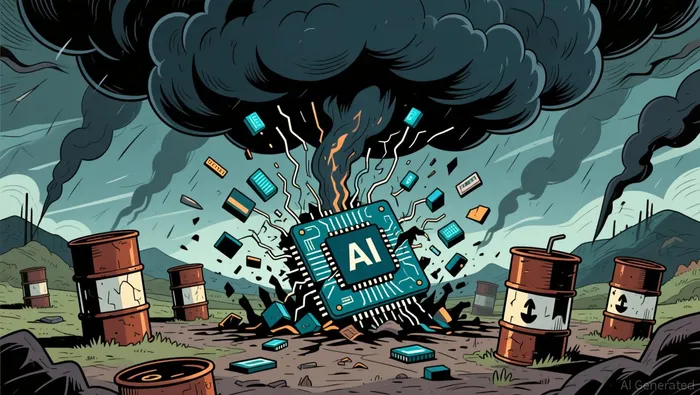
The primary driver of the sell-off was a sharp reversal in chipmaker stocks. Shares of Micron Technology, Nvidia, and Broadcom fell significantly, paring back earlier gains and raising questions about the sustainability of the current AI trade. Brian Kersmanc, portfolio manager at GQG Partners, noted that many chip companies function as commodities, and memory chip price increases are unsustainable in the long term. This sentiment was echoed by Morningstar analysts, who suggested that tech valuations have stretched excessively, warranting a shift toward a barbell strategy that balances deep-value stocks with growth-oriented AI leaders.
Why Is The Stock Market Down Today Amid Rising Inflation Fears?
Beyond the tech rotation, broader market sentiment was weighed down by renewed geopolitical tensions in the Middle East. The fragile ceasefire between the U.S. and Iran was called into question following a reported missile attack and the downing of a U.S. military helicopter near the Strait of Hormuz. The U.S. responded with proportional strikes on Iranian air defense and radar sites, escalating tensions just as peace talks appeared to be gaining traction.
This geopolitical flare-up has significant implications for inflation and the Federal Reserve's monetary policy. Oil prices, which had been volatile due to the 100-day conflict, saw Brent crude trade near $93 a barrel, while West Texas Intermediate (WTI) futures fluctuated around $89.25. The UCLA Anderson Forecast recently identified an Iran-related oil shock as the leading inflation risk to the U.S. economy, effectively replacing tariffs as the dominant concern. With the Consumer Price Index already hitting an annual rate of 3.8%, the prospect of further energy price spikes adds pressure to the central bank's inflation-fighting efforts.
The rising cost of capital is another critical factor weighing on equities. Yields on the 10-Year and 30-Year U.S. Treasury Notes climbed above 4.5% and 5%, respectively, reflecting investor expectations of higher rates for longer. This environment is particularly challenging for growth-dependent AI companies that require significant capital to fund massive buildouts. Morgan Stanley's Global Investment Committee has warned that rising long-term rates pose headwinds, noting that market gains are narrow and concentrated in a small group of large AI-tied stocks.
What Is Next For The Nasdaq And S&P 500?
As the market digests these developments, investors are positioning for a crucial economic data release later in the week. Wednesday's Consumer Price Index reading is expected to provide the first clear indication of how inflation is trending after months of sticky price increases. The CME FedWatch tool indicates greater than 50% probability of a Fed rate hike by year-end, underscoring the sensitivity of the market to inflation data.
In addition to macroeconomic concerns, Wall Street is gearing up for major corporate events. SpaceX is expected to make its market debut on Friday, potentially setting a record for the largest public offering in history. Additionally, OpenAI confidentially filed paperwork for an initial public offering, following rival Anthropic's similar move. Both AI companies are positioned to trade on Wall Street as soon as this fall, adding to the excitement and potential volatility in the tech sector.
Looking ahead, the resilience of U.S. equities will depend on whether AI-driven earnings optimism can outweigh concerns over stagflation and geopolitical instability. While the U.S. benefits from relative energy self-sufficiency compared to Europe, the broader global impact of the Iran conflict continues to drive volatility across asset classes. Investors will need to monitor bond yields, oil prices, and upcoming inflation data closely to gauge the direction of the market in the coming weeks. The bottom line is that while AI remains a powerful long-term theme, short-term risks related to inflation and geopolitics are keeping traders on their toes.