

U.S. stocks are trading higher Thursday morning as investors focus on stronger than expected enthusiasm surrounding artificial intelligence spending following Oracle's earnings report, while largely looking past an escalation in geopolitical tensions involving Iran. The Dow Jones Industrial Average is up 248.82 points, or 0.50%, to 50,167.6, while the S&P 500 gains 29.62 points, or 0.41%, to 7,296.61, and the Nasdaq Composite rises 131.38 points, or 0.52%, to 25,300.9.
Technology shares are helping lead the advance after Oracle delivered results that reignited debate over the sustainability of the AI investment boom. Oracle's latest earnings reinforced investor expectations that demand for AI infrastructure remains robust, supporting broader optimism toward cloud computing, data-center expansion, and enterprise AI spending. Investors however are selling the stock as the trading session begins.
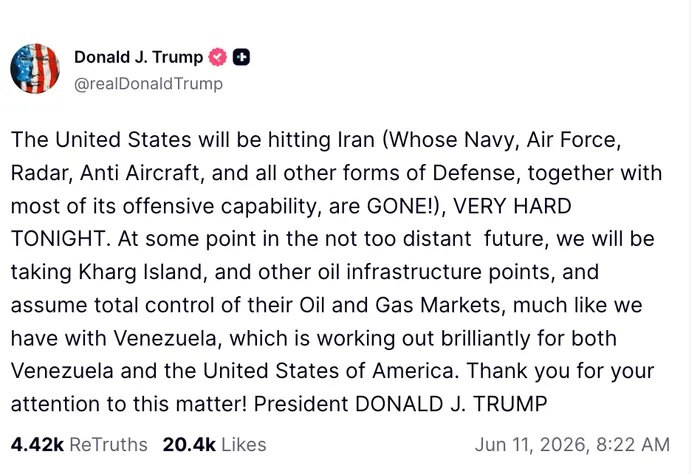
The market's swing higher comes despite a dramatic escalation in Iran War hostilities. In a Truth Social post Thursday morning, President Donald Trump stated that "The United States will be hitting Iran ... VERY HARD TONIGHT" and added that the U.S. would eventually take control of Iran's Kharg Island and other oil infrastructure assets. The comments intensified concerns about potential disruptions to global energy supplies.
Oil markets initially reflected those concerns. Brent crude remains elevated at $93.35 per barrel, although gains have moderated as equity investors continue to emphasize corporate earnings and AI-related growth themes. Meanwhile, traditional safe-haven assets are showing a mixed reaction. Gold futures are down 0.90% to $4,096.20, while the CBOE Volatility Index falls 3.82% to 21.37, suggesting investors are not yet positioning for a sustained risk-off move.
Economic data also remain in focus. The Labor Department reported that producer prices rose 0.6% in May, indicating that inflation pressures at the wholesale level remain present. The report arrives as investors continue assessing the path of future Federal Reserve policy and the potential impact of tariffs, energy costs, and supply-chain disruptions on inflation.
Investors are likely to remain focused on developments in the Iran War and inflation data, as they prepare for next weeks FOMC meeting.