

StoneX (SNEX) just delivered a blowout quarter. Record revenues up 70%, net income up 143%, and an EPS beat of 32% over estimates. The stock has nearly doubled from its 52-week low of $53.52 to trade around $113 today, with a market cap near $9.2 billion. The natural investor reaction is to ask whether there's still room to run. My answer is no - the multi-year rally has already priced in a commodity trading environment that cannot be sustained, and at a trailing P/E of 20.6, the risk/reward has flipped.
What Q2 2026 Actually Tells Us
StoneX reported fiscal Q2 2026 net operating revenues of $829.1 million, up 70% year-over-year. Net income hit $174.3 million, up 143%, with diluted EPS of $2.07 versus an estimate of $1.64. These numbers are real and impressive. The question isn't whether the results are good - they are. The question is whether they're repeatable.
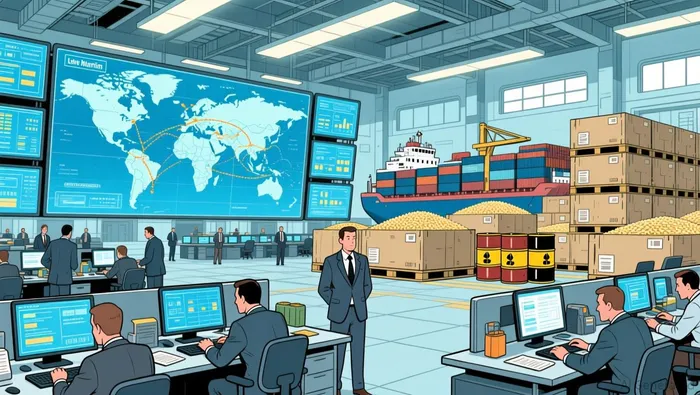
StoneX is a commodity trading house. It moves enormous volumes of physical commodities - agricultural products, energy, metals - and earns money on the spread between buying and selling. The gross profit margin on those physical commodity sales is approximately 0.3%. That means for every $1,000 of commodity volume, StoneX earns roughly $3 in gross profit. The revenue scale is massive - over $37 billion in physical commodity sales in Q1 FY2026 alone - but the economics are razor-thin by design.
Here's what matters for the investor: those 0.3% margins expand and contract with commodity market volatility. When markets are dislocated - supply chain shocks, weather events, geopolitical disruption - trading houses like StoneX thrive. When commodity markets stabilize, the spreads tighten, and the earnings surge reverses. The 70% revenue growth and 143% earnings jump in Q2 are evidence that commodity markets are currently in a high-dislocation phase. That phase will not last forever.
The Valuation Has Already Run
This is where the story turns against new buyers. StoneX trades at a trailing P/E of approximately 20.6, with the stock sitting near $113 - just below its 52-week high of $125.42 and roughly double its low from a year ago. A 20x multiple for a commodity trader whose earnings swing on market dislocation that it doesn't control is not a bargain. That's a multiple that assumes continued exceptional performance, not a cyclical peak.
Worse, the enterprise value tells a story the market cap hides. StoneX's enterprise value - market cap plus net debt and working capital needs - sits at approximately $28.9 billion, roughly three times the $9.2 billion market cap. That gap represents the massive working capital and debt requirements inherent in physical commodity trading. You can't move $37 billion of quarterly commodity volume without enormous balance sheet leverage. The enterprise value/market cap ratio of 3.1x means StoneX carries substantial financial obligations that magnify the downside when commodity margins compress.
Compare that P/E of 20.6 to what the business actually delivers: a trading franchise whose earnings are volatile by structural design. There's no durable competitive moat in commodity spreads. There's no pricing power. There's no structural growth engine. The growth comes from market chaos, and market chaos is cyclical.
What The Cash Flow Story Suggests
StoneX's free cash flow in fiscal 2025 was approximately $4.3 billion, which sounds enormous until you realize that a significant portion flows through the commodity volumes themselves and reverses when trading conditions normalize. The beta of 0.77 suggests the stock has historically moved less than the broader market, but that doesn't mean low risk - it means the risk is idiosyncratic to commodity cycles, not systemically diversified.
The Catalyst Clock
The next earnings report will be the real test. If StoneX can demonstrate that Q2's record results were the start of a structural shift rather than a commodity spike, the thesis changes. But the burden of proof is on the business to show sustained margin expansion at a franchise level, not just another volatile quarter of thin spreads catching a favorable market. Until then, the stock is trading as if the Q2 print is the new normal. It isn't.
Risks
- Commodity normalization: If global supply chains stabilize and geopolitical disruptions ease, the spreads that drive StoneX's earnings compress. The earnings decline could be rapid and severe.
- Valuation already reflects perfection: At 20x trailing earnings, the stock is priced for continued exceptional results. Any quarter that normalizes toward historical averages will face multiple compression on top of earnings decline.
- Balance sheet leverage: The 3.1x enterprise-value-to-market-cap ratio means the business is heavily leveraged to its trading volumes. A margin contraction hits both the top line and amplifies through the balance sheet.
- No pricing power: Unlike software, consumer brands, or even many industrial names, StoneX cannot raise prices. It earns what the market gives it.
Investor Takeaway
StoneX is not a bad company. It's a well-run commodity trading operation that has benefited from an unusually dislocated market environment. The Q2 results are legitimate and impressive. But the stock has already moved the distance between a cyclical trough and a cyclical peak - roughly doubling from its 52-week low - and is now priced as if the peak is permanent.
I'm taking a Hold stance. For current holders, the position is defensible if you're willing to ride the next earnings print and accept that commodity trading earnings will eventually normalize. For new money, there is no margin of safety at $113 and a 20x P/E. Wait for a pullback that reflects the cyclical nature of the business, not the growth multiple the market is currently assigning to it.
The metric to watch: if StoneX's next quarter shows margin contraction on physical commodity trading - even modestly - the thesis that this is a structural earnings expansion falls apart. At that point, the 20x multiple becomes a 20x multiple on a declining earnings base, and the stock has much further to fall.