

The headlines say oil is surging on escalating U.S.-Iran tensions. The data says something entirely different.
Let me start with the numbers that matter. Brent crude settled at $103.54 a barrel on May 21, with West Texas Intermediate at $96.60 - and those are declining numbers. By late May, oil had dropped roughly $5 per barrel in the wake of emerging ceasefire outlines between the U.S. and Iran. As of May 29, global oil prices had tumbled around 20 percent from their 2026 highs as traders priced in the prospect of a diplomatic resolution.
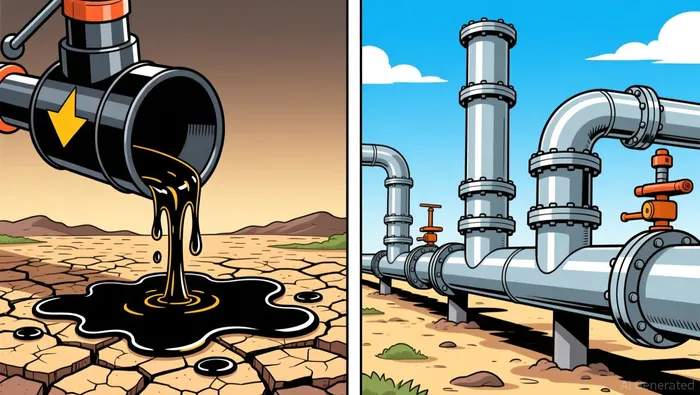
That is not a market pricing escalation. That is a market pricing de-escalation. And the headline telling you otherwise is reading the room wrong.
The conflict with Iran - which pushed oil into the $100-plus zone earlier in 2026 - was the obvious supply disruption story. The Strait of Hormuz, which carries roughly a fifth of global crude throughput, was the focal point. Every energy analyst who cared about cash flow knew that a Hormuz closure or severe disruption would send commodity-exposed producers soaring while creating genuine risk for anyone shipping through the region. But the Strait has held. The market has responded to peace signals, not escalation signals.
Now let's talk about what this means for oil and gas investors specifically, because the unwinding of a geopolitical premium is where mispricing gets created.
Here is the setup. When oil spikes on war, energy equities run. E&P operators that are fully commodity-exposed see their revenues jump with every dollar of Brent. Midstream companies with high commodity-linked fee exposure - throughput and processing fees that move with volumes tied to commodity production - also benefit. The stock price action is mechanical: higher oil, more production incentive, more cash flow.
But when the geopolitical premium comes off and oil rolls back, the market tends to overshold in the other direction. It doesn't just remove the war premium. It starts pricing in fear that the entire energy bull case was built on a temporary spike. That is when deeply held cash-flow businesses start trading like temporary windfalls.
The data supports a different view. U.S. crude and petroleum product exports were running at nearly 12.9 million barrels per day by late April - a structural production capacity figure, not a war-dependent number. That is domestic output that does not vanish when a ceasefire happens. American E&P operators are not sitting on a war story. They are sitting on production infrastructure that generates cash flow at $70 oil, $80 oil, and $100 oil, with different margins at each level.
From a valuation perspective, that is the contrarian crack worth noticing. The market is reacting to the geopolitical narrative - "ceasefire means lower oil means lower energy stocks" - without separating the commodity price from the underlying cash-flow durability of the companies themselves.
Let me be clear about what I'm looking for in this environment. I want E&P operators with disciplined balance sheets, low breakeven costs, and production that isn't collapsing just because oil drops from $103 to $85. I want midstream names where fee-based revenue represents the vast majority of EBITDA, so that the commodity price matters less to their cash flow than the volume on their pipelines. If the market is selling these names alongside the oil price because of ceasefire optimism, that creates the margin-of-safety gap I need.
Here is the risk, stated plainly. If oil falls further - if peace talks go well and the market prices in a sustained drop to $65 or $70 - then high-cost producers with weak balance sheets will face genuine stress. Covenants will tighten. Companies that were cutting capex to survive at $80 will find themselves cutting capex to survive at $70. For those names, cheap is not value. It is a trap. That is the standard value-investing lesson, and I will downgrade any name that cannot survive at a lower price regardless of how attractively it looks on a spreadsheet.
But the other names - the ones with fee-based insulation, low leverage, and production costs well below $50 a barrel - those are the ones worth holding, and potentially buying into, when the market treats the entire sector as a casualty of a peace deal.
Even if oil drops significantly, the structural demand story hasn't changed. Global oil consumption has been rising, supply growth outside of the U.S. has been constrained, and OPEC+ discipline on production cuts has held. A ceasefire removes the risk premium from oil, not the underlying demand-supply dynamics. Oil at $75 in a peaceful Middle East is still a price that generates robust cash flow for disciplined operators. The question is whether the market has priced energy stocks for oil at $60 instead.
All things considered, the headline is wrong about direction, and wrong about what matters for investors. Oil prices are falling, not rising. That does not mean energy stocks are a sell. It means the geopolitical premium that inflated both the commodity and the equities is unwinding, and in that unwinding, there are opportunities for anyone willing to look past the ceasefire narrative and check the cash-flow math.
I would be looking for fee-based midstream names with distribution coverage above 1.5 times and net leverage below 4x, and for E&P operators with proven low-cost production and no covenant risk. Those are the names where the ceasefire trade creates a buying opportunity instead of a reason to panic. There are better prospects on the market than the ones that only work at $110 oil. Find the ones that work at $70, and buy them when the market forgets that not every energy stock is a war trade.