

I have written repeatedly that geopolitical noise in the Middle East tends to spike oil on the headline and fade on the reality - what matters for cash flows is not whether missiles fly, but whether barrels stop moving. Iran's ballistic missile strikes on Israel on June 7 look like another test of that rule.
Here's what happened. Iran fired waves of ballistic missiles at Israel - its first direct strike since the fragile ceasefire took hold in early April. The IRGC called it a "warning," triggered by Israel's military offensive against Hezbollah targets in Beirut, and promised a "broader and more crushing" response if the attacks continued. On the commodity side, WTI crude rose about 2.6% to settle around $93 per barrel, while Brent climbed roughly 2.75% to near $96. Futures drifted lower afterward as the market digested what kind of escalation this actually was.
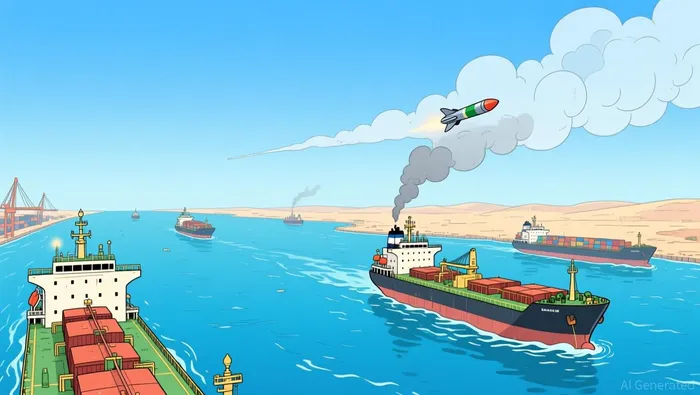
Now, let's separate signal from noise. The headline reads like a March replay. In early March, when the Strait of Hormuz - the narrow waterway carrying roughly 20% of global oil trade - effectively closed, WTI spiked to nearly $114 in a single session. That was a supply shock. What we have on June 7 is a signal play. Iran's language matters: "warning" strikes are calibrated to pressure, not to trigger the kind of shipping blockade that would move actual barrels. The Strait reopened to commercial traffic in mid-April, and there is no credible reporting of renewed closure threats tied to these specific strikes.
That distinction is the investment opportunity. Oil is up roughly 3% on a posturing event, not on lost supply. The EIA's May Short-Term Energy Outlook, written before this latest flare-up, already expected Middle East production to recover later in 2026, with global prices falling to around $89 per barrel by the fourth quarter and roughly $79 in 2027. The IEA noted a 4.25 million barrel-per-day surplus entering 2026, even before the conflict drove supply down by 8 million barrels per day in March. If that suppressed supply returns to market - and the ceasefire holds even in its current fragile form - the June spike has nowhere to go but down. This is not a structural bull case for crude; it's a sentiment bump that fades when shipping data confirms normalcy.
From a portfolio perspective, that's why I would not chase E&P names on this move. Exploration and production companies earn revenue directly from the commodity price, so they benefit when oil spikes - but they also get crushed when it fades back toward fundamentals. A $10 swing works out to hundreds of millions in quarterly revenue for a major producer, which is real, but it is also the swing both ways. If you're buying E&P at these levels because you think the Strait is about to close again, you're front-running the same relief rally that already played out in April.
The better play when geopolitical headlines get loud is fee-based midstream. Pipeline and logistics companies charge tariffs to move product regardless of where the spot price trades. Their cash flows are insulated from the commodity cycle by long-term contracts, many of which are indexed to volume, not price. When oil runs higher and activity picks up, throughput volumes tend to follow. When oil fades, the contracted fee revenue holds. You get the upside from a busier market without carrying the commodity bet.
While it's true that midstream names have run higher during this cycle and no longer look fantastically cheap the way some did before the February escalation, the risk-adjusted math still favors them over pure commodity exposure. A company earning 85%+ of its EBITDA from fee-based contracts - earnings before interest, taxes, depreciation, and amortization, a rough proxy for operating cash generation - is not going to see its distribution or its cash flow get wiped out because WTI falls from $93 to $82. That's the margin of safety this moment demands.
All things considered, Iran's warning strikes are a reminder of how the market reflexively prices worst-case supply disruption into oil before checking whether barrels are actually stuck. The Strait is open. The EIA still sees supply returning and prices falling through the rest of 2026. I would treat this move as a transient tailwind for E&P cash flows, not as a reason to chase exposure. For energy investors who want durable cash flow in a volatile backdrop, fee-based midstream remains the higher-conviction play - the market gets emotional about geopolitics, but contracted tariff revenue does not.