

The immediate signal is clear. Michael Saylor posted Strategy's Bitcoin purchase history chart on Sunday, a move that has become synonymous with an imminent acquisition. His "Back to work, BTC" message on X follows a pattern that has preceded buys, with the company typically purchasing the day after his posts.
The scale of the anticipated transaction fits within an aggressive accumulation strategy. The company's last purchase was on April 27, buying 3,273 BTC for about $255 million, which brought its total holdings to 818,334 BTC. This places the company's total Bitcoin reserve at a staggering $61.8 billion in value, dwarfing all other corporate holders.
This recent buy is part of a broader, relentless accumulation trend. Strategy accumulated 46,233 BTC in March alone, a volume nearly three times the 16,200 BTC miners produced that month. The company has now completed 105 Bitcoin transactions since 2020, continuing to buy through debt and equity financing even as the bear market has pushed Bitcoin to two-year lows.
The Financial Drag: Unrealized Losses and Funding Flows
The most immediate financial impact is staggering. Strategy reported an unrealized loss of nearly $14.5 billion on its Bitcoin holdings for Q1 2026. This loss, which dwarfed its operating income, represents a significant portion of its market capitalization and underscores the pure price risk inherent in its core strategy.
The company funds its aggressive accumulation through a critical, high-volume mechanism: digital credit. Year-to-date, it has raised $11.68 billion via STRC, its preferred stock instrument. This flow provides the capital to buy Bitcoin even as the company posts massive paper losses, creating a direct link between its funding strategy and its asset accumulation.
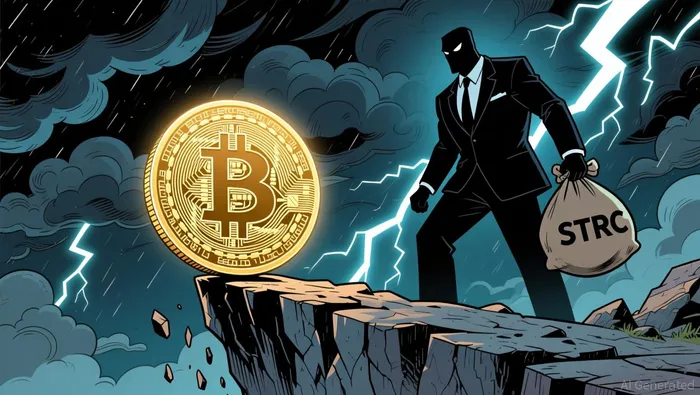
A new risk is emerging from the CEO's recent comments. Saylor has suggested the company may sell portions of its treasury to fund dividends. This introduces a potential new source of selling pressure, directly from the largest corporate holder, which could complicate the price action during periods of market stress.
Price Impact and Near-Term Catalysts
The immediate test for the accumulation thesis is the market price. As of yesterday, Bitcoin traded at $81,022.55, a drop of over $1,200 from its level earlier this week. The company's next purchase will be executed against this benchmark, and the volume and price paid will be the first concrete flow data to watch.
The two key near-term catalysts are the actual purchase execution and the potential for dividend-funded sales. Strategy's CEO has signaled it may sell portions of its treasury periodically to pay dividends. Any such sale would directly add to market supply, creating a counter-flow to its buying and testing the market's absorption capacity. The scale of these sales is critical; the company owes $1.5 billion in annual dividend payments to holders of its credit instruments, a flow that could become a recurring supply event.
Funding future accumulation remains dependent on capital raises. The company's ability to continue buying through debt is shown by its $11.68 billion raised year to date via STRC. This flow is the lifeblood for its strategy, allowing it to accumulate even with massive unrealized losses. The sustainability of this funding mechanism, and the market's reaction to any associated selling, will determine the pace and price impact of its next moves.