

Bandar Abbas strike lands while a deal is still taking shape
This is a negotiation shock, not background war noise.
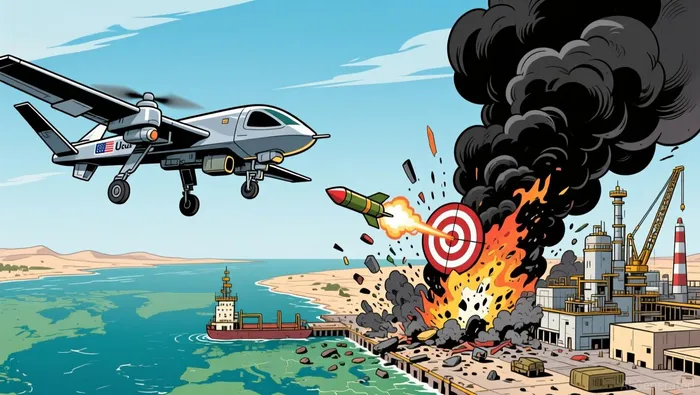
US forces hit a military site in Bandar Abbas and shot down four Iranian drones near the Strait of Hormuz, while Washington described the action as measured and defensive. That framing may shorten the first headline cycle, but it does not erase the core market problem: violence is hitting a sensitive chokepoint just as a ceasefire looks close.
The conflict has already lasted three months, and the diplomatic setup is still early. The framework reportedly gives the parties 60 days to reach final deal points. That leaves room for both readings at once: a deal may be getting closer, but both sides can still escalate quickly.
In that context, the near-term effect is likely an extended tail-risk premium unless the episode is cleanly contained. If the strike is treated as a coercive nudge, markets may absorb it. If it is treated as a ceasefire breach, the risk trade stays broken. For now, the safer read is that this is still a live escalation risk, not a settled de-escalation story.
Why the location matters more than the blast
Bandar Abbas is a strategic port city close to the Strait of Hormuz, which is why the strike matters beyond the immediate damage. If markets start to question whether the strait stays secure, the repricing shows up first in energy, shipping, and broader risk sentiment.
A strike on a remote inland site would mainly signal capability degradation. A strike nearer the port and the Hormuz corridor sends a different message: the US can still choose the timing and geography of escalation without fully abandoning the negotiation track. That keeps markets in a high-volatility zone-more pressured than a normal ceasefire trade, but not yet a full-scale renewed campaign.
Centcom said it targeted a ground control station in Bandar Abbas as it was about to launch a fifth drone and shot down four others around the strait. That supports the view that this was both a defensive response and a message that pressure will remain until the deal is done.
Prior strikes already changed the baseline
This latest strike lands on top of an older scorecard. The earlier nuclear strikes set back Iran's program around two years, even as assessments of the exact damage still vary. That matters because both sides have already committed heavily to coercion.
The bullish interpretation is that accumulated pressure is pushing Tehran toward a deal. The bearish interpretation is that the conflict has already absorbed much of the easy leverage, so another shock may harden positions instead of breaking them.
What markets may already be pricing in
Markets are probably trading a partial de-escalation setup, not full normalization. A US official said the framework could take a few more days to finalize, and reports also indicate that a naval blockade on Iranian ports would remain in place during negotiations. That suggests investors are pricing pressure with a possible path to relief, not a clean all-clear.
That is why the better approach is not to chase the headline explosion, but to watch whether fear actually starts to roll off. The first assets to move if sentiment improves are likely to be the ones with the most direct exposure to the chokepoint: energy, tanker and shipping rates, and other trades that had been priced with calmer regional logistics.
What would confirm de-escalation-or a broken ceasefire trade
The clearest signposts are straightforward:
- Bullish: the framework holds, drone activity fades, and Hormuz risk clearly de-escalates.
- Bearish: the talks stay incomplete or another strike follows, keeping the region in a fresh escalation leg.
- Market invalidation: even if the fighting cools, energy and shipping refuse to de-risk, which would suggest fear is being driven by factors beyond this single strike.
For now, the key question is not whether the explosion was dramatic. It is whether Bandar Abbas becomes leverage that helps close a deal, or proof that the ceasefire was never firmly in place.