

A completed strike round lowers immediate escalation risk, but Hormuz still matters
One completed strike round likely reduces the odds of an immediate all-out spike, but threats to commercial maritime traffic in the Strait of Hormuz still matter for oil, rates, and risk assets.
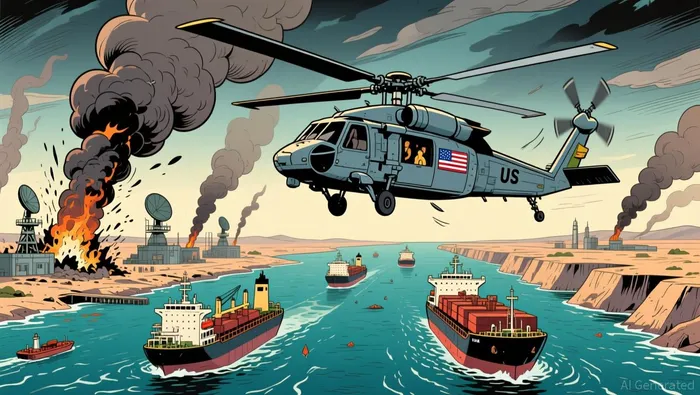
Tuesday's strike was more of a tactical relief signal than a full green light. Washington completed a round of retaliatory strikes after Iran downed a U.S. helicopter near the Strait of Hormuz, and officials described the mission as a proportional response and self-defense operation. That framing matters because markets trade not only the explosion itself, but also the perceived limits of the response.
That helps explain the initial relief trade. But it is too early to treat the situation as fully de-escalated. Earlier this month, U.S. strikes were explicitly linked to threats against commercial maritime traffic in the Strait of Hormuz, and Tuesday's targets were still located in that same strategic corridor. For markets, that keeps the choke-point risk alive.
The next few days should be more important than the headline itself. If the word that the strikes were "completed" holds and Hormuz traffic stays calm, risk assets can extend their relief bounce. If not, the first rally may prove short-lived.
Why the Strait of Hormuz matters more than the press release
The market cares most about where the fight happened. Earlier this month, U.S. action was explicitly tied to threats against commercial maritime traffic in the Strait of Hormuz, and this round hit air defence and radar systems around the strait. That keeps the choke-point trade relevant.
How strait stress can spread to crypto and other risk assets
The transmission path is fairly direct. If the Hormuz corridor comes under stress again, oil is usually the first asset to reprice that risk through higher shipping costs and insurance premiums. When oil moves higher, inflation expectations can return quickly, and that can tighten liquidity sentiment across risk assets.
That is why traders should focus less on the tone of the briefing and more on whether the strait stays open and whether activity around the Gulf coast fades. Iranian state media reported explosions and air defence activity along the Persian Gulf coast, including Bandar Abbas, Qeshm and Sirik. Even if the strike round is over, those reports show why the area remains a market watchpoint.
The broader campaign still raises the escalation ceiling
A completed strike can look like a clean reset, but the wider conflict still sets the ceiling for how far relief can run.
This was not just a one-off event
The latest round may have been presented as a closed operation, but the broader campaign was explicitly framed as something longer. The U.S. and Israel said strikes across Iran would last days and not hours, and the conflict had already been running for 102 days. That makes this less of an isolated incident and more of an extended campaign whose market impact depends on whether hostilities actually wind down.
Nuclear-site strikes raise the stakes beyond the latest round
The other reason escalation risk remains on the table is what was targeted in other parts of the campaign. Pentagon briefings said Operation Midnight Hammer struck Fordo, Natanz and Isfahan, with officials claiming severe damage to those nuclear sites. That matters because strikes on nuclear infrastructure are more likely to harden positions and complicate diplomacy, even when a specific retaliatory round is declared complete.
Bulls may argue that degrading nuclear infrastructure could eventually create conditions for a diplomatic off-ramp. Bears will argue the opposite: hitting the nuclear core can deepen retaliation risks through proxies, harassment, or further pressure on key choke points. In market terms, that is the difference between a temporary relief move and a longer period of uncertainty.
What would confirm de-escalation, and what would reverse the relief trade
The setup now is about signal versus noise. In the next few days, markets will decide whether the strikes were "completed" becomes a genuine risk-off reset or merely a pause in a campaign said to last days and not hours.
Signals that would support a relief rally
- Hormuz stays calm: no fresh strikes tied to commercial maritime traffic in the Strait of Hormuz, and no new incidents near the strait after air defence and radar systems around the strait were struck.
- The nuclear blow becomes a ceiling, not a spark:significant damage at Fordo, Natanz and Isfahan leads to firmer talks rather than further retaliation.
- Diplomacy keeps some room to breathe: the conflict does not fully derail a looming peace agreement.
If those conditions hold, the market can move from a war discount back toward a relief squeeze.
Signals that could trigger another flush
- The "completed" label proves short-lived because the broader offensive continues under the days-not-hours framework.
- Hormuz becomes active again, with fresh pressure on commercial maritime traffic or new strikes tied to that corridor.
- Reports around Khamenei's death start to reshape command-and-control dynamics, adding another layer of uncertainty.
For traders, the lesson is simple: do not chase the first green candle after a strike headline. Wait for confirmation that the mission was truly a proportional response and that the wider campaign is winding down rather than moving deeper into a broader operation.