

SymphonyAI is positioning itself as the foundational infrastructure layer for the next industrial paradigm. Its core model is that of a Vertical AI platform, providing domain-trained applications and pre-built agents for specific industries like energy and manufacturing. This is not about generic AI tools; it is about building the essential rails for exponential adoption across complex industrial operations.
The company's strategic play centers on its IRIS Foundry platform, which serves as a unified industrial data foundation. This platform connects assets and systems through a governed DataOps layer, solving the critical problem of siloed data that has long hindered industrial AI. By creating a trusted, interoperable data layer, IRIS Foundry bridges the gap between operational technology (OT) and information technology (IT), a prerequisite for any meaningful AI deployment at scale.
This infrastructure is now being rapidly expanded with a targeted suite of applications. In January, SymphonyAI announced eight new industrial AI applications purpose-built for the unique operational demands of CPG & Food and Beverage manufacturers. This move demonstrates a clear, repeatable playbook: leverage the core data and application platform to quickly build and deploy specialized solutions for high-velocity industrial environments. The same framework is being applied to energy, as seen in its collaboration with Snowflake to launch AI-powered energy solutions. The eight new CPG apps are key building blocks, showing how the platform can accelerate innovation from concept to production in hours, not months.
The thesis is that SymphonyAI is building the essential data and application layer for the next paradigm in energy operations. By providing a vertical AI platform with a unified data foundation and a growing suite of pre-built, domain-specific applications, the company is creating the conditions for exponential adoption. It is not just selling software; it is constructing the infrastructure layer that industrial companies will need to navigate the coming S-curve of AI-driven efficiency and resilience.
The Energy Adoption Curve: Measurable Performance and Scalability
The theoretical promise of AI in energy hinges on tangible results. SymphonyAI's evidence shows its solutions are delivering on the core industrial imperative: maximizing uptime. The company's predictive maintenance platform claims to deliver 20 – 50% Reduction in downtime through predictive maintenance and actionable alerts. This is not a vague aspiration but a quantifiable performance target aimed directly at the heart of industrial operations, where every minute of unplanned stoppage translates to lost revenue and heightened risk.
Early adopters are validating this promise. Aluminum producer Novelis has selected SymphonyAI's APM 360 solution for a phased multiplant rollout. The goal is clear: to reduce unplanned downtime and improve the reliability of our most critical assets. This partnership, spanning a major global manufacturer, provides a real-world test case for the platform's ability to scale across complex, distributed operations. It signals that the technology is moving beyond pilot projects into core reliability programs.
This track record is part of a broader pattern of deployments across multiple industries, with a consistent focus on real-time operations. SymphonyAI's energy solutions emphasize real-time operations monitoring and diagnostics, ensuring insights are current and actionable. The company highlights its ability to deliver rapid time-to-value, helping large enterprises realize operational benefits in days or weeks. This speed-to-value is critical for accelerating the adoption curve, allowing companies to quickly see ROI and build momentum for wider deployment.
The bottom line is that SymphonyAI is demonstrating the early stages of exponential growth in industrial AI adoption. The performance claims are specific and significant, the first-adopter validation is credible, and the platform's design supports rapid, scalable implementation. For an infrastructure play, this is the essential feedback loop: proven performance at scale attracts more customers, which in turn fuels further development and market penetration. The paradigm shift from reactive to predictive operations is beginning to take measurable shape.
The Technological Moat: Data, Partnerships, and No-Code Scalability
SymphonyAI's growth is powered by a technological moat built on three interconnected pillars: a no-code application platform, strategic data partnerships, and a secure, scalable cloud foundation. This infrastructure is designed for exponential adoption, turning industrial expertise into deployable AI at unprecedented speed.
The core of this moat is IRIS Forge, a capability that fundamentally accelerates innovation cycles. It empowers engineers and operators to create and deploy AI-powered applications in hours, not months. By bringing AI development directly to the people closest to production, Forge eliminates the traditional bottlenecks of lengthy development cycles and reliance on specialized data-science teams. This no-code scalability is the engine for rapid iteration and deployment, allowing SymphonyAI to quickly build and refine solutions for specific industrial workflows, from predictive maintenance to energy optimization.
This capability is amplified by a critical strategic partnership. SymphonyAI's collaboration with Snowflake aims to unify industrial data and deploy AI-powered energy solutions at scale. By integrating with Snowflake's AI Data Cloud, the company gains access to a trusted, governed data foundation that bridges traditionally siloed IT and OT systems. This joint ecosystem allows energy organizations to operationalize AI in weeks, democratizing insights and achieving measurable cost savings at an unprecedented scale. The partnership directly addresses the foundational data problem, creating a unified layer for the next wave of industrial AI.
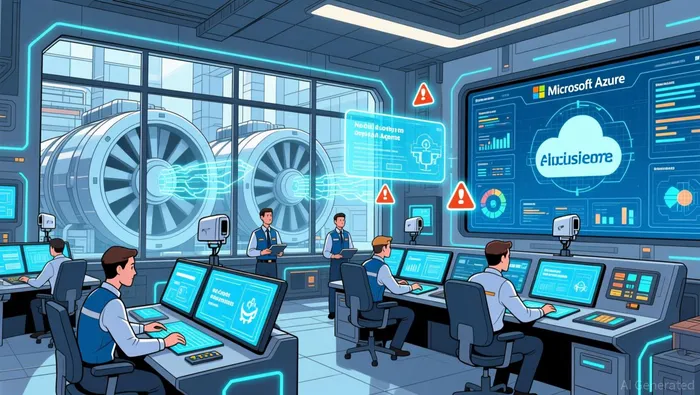
Finally, the entire platform is built on a secure, scalable cloud infrastructure. SymphonyAI's applications run on Microsoft Azure, providing the necessary compute power and reliability for real-time operations. This foundation ensures that the industrial AI solutions, whether for optimizing high-speed beverage lines or monitoring critical energy assets, can handle the volume and velocity of operational data. It provides the essential rails for the platform to scale alongside its customers.
Together, these elements form a powerful infrastructure layer. The no-code Forge platform fuels rapid innovation, the Snowflake partnership solves the data integration challenge, and the Azure cloud provides the scalable backbone. This stack is not just a product suite; it is the technological moat that enables SymphonyAI to capture the exponential growth of industrial AI by dramatically lowering the barrier to entry for its customers.
Catalysts, Risks, and What to Watch
The path to exponential growth for SymphonyAI hinges on a few clear catalysts and risks. The primary catalyst is the broader adoption of AI in energy and manufacturing, driven by the fundamental need for operational resilience and efficiency. As industrial companies face volatile markets and sustainability pressures, the quantifiable performance of solutions like 20 – 50% Reduction in downtime through predictive maintenance becomes a powerful economic driver. When these results translate to bottom-line savings and improved reliability, they create a self-reinforcing cycle that accelerates adoption across the industrial S-curve.
Yet a key risk looms: competition from generic AI vendors and the challenge of achieving widespread, deep integration within complex industrial environments. The industrial landscape is crowded with tech giants and software providers offering AI tools. SymphonyAI's moat is its vertical, domain-trained platform and unified data foundation. The risk is that customers, especially larger enterprises, may attempt to build or integrate solutions in-house or with less specialized vendors, potentially fragmenting the data layer and undermining the value of a single, governed infrastructure layer. The company must continuously demonstrate that its vertical approach delivers superior speed, accuracy, and ROI that generic tools cannot match.
For investors, the forward view should focus on three critical signals. First, watch for new customer announcements and expansion of the application suite beyond energy and CPG. The recent launch of eight new CPG apps shows the playbook in action for the unique operational demands of CPG & Food and Beverage manufacturers. Success in other verticals like chemicals or mining would validate the platform's scalability and broaden its addressable market. Second, monitor progress in monetizing the IRIS Foundry platform itself. While the platform enables applications, its value as a foundational infrastructure layer will be proven by the volume and stickiness of data flowing through it and the recurring revenue from the applications built upon it. Finally, track the pace of integration with partners like Snowflake, which is critical for scaling the data foundation to deploy AI-powered energy solutions at scale. Each of these metrics will indicate whether SymphonyAI is successfully navigating the adoption curve, turning its infrastructure layer into a dominant, monetizable platform.