

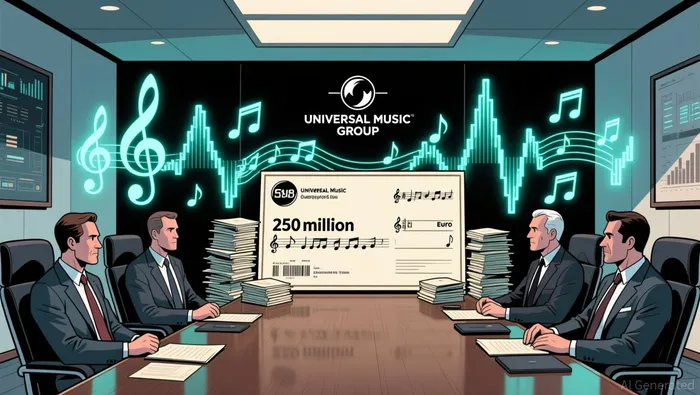
Here is the thing about Universal Music Group's exit deal with Bill Ackman that the headlines skip: the company whose board unanimously rejected his $64 billion takeover offer also wrote a check to let him leave. UMG repurchased 14.2 million of Ackman's shares at €17.66 each - about €250 million of the company's own cash, from a buyback program the board had announced just before Ackman's bid. That is roughly one-fifth of the activist's entire stake.
The official story is straightforward. Ackman tried to take UMG. The board said no. He sold his shares and walked away with a profit. But the plumbing underneath is more interesting. The activist who tried to force a sale of the company used the company's own capital return program as exit liquidity. The target paid part of the bill.
Ackman's fund, Pershing Square, first entered UMG in 2021 with a roughly 10% stake - about $4 billion worth - acquired in two transactions during the company's IPO year. He wanted board seats, a US listing (the company trades on Amsterdam's Euronext), and changes to how UMG handles artist contracts, AI-generated music, and streaming economics. The fund had a contractual right to force a US relisting. Over five years, Pershing trimmed and rebuilt its position, ending up with about 80.6 million shares - roughly 4.4% of the company.
Then in early April, Ackman made his offer: €30.40 per share in a mix of cash and Pershing Square shares, valuing UMG at about $64 billion. That was a 78% premium over UMG's then-price of around €17.10. The bid would have shifted the listing to New York and effectively rolled existing shareholders into a new US vehicle. Standard enough for a hostile bid. The odd thing wasn't the offer itself - it was what happened next.
UMG's board rejected the bid on May 29. It was unanimous. The board said the offer undervalued the company and wasn't in the best interests of shareholders, artists, or the business.
Three days later, Ackman was selling everything. All 80.6 million shares, at €17.66 each - barely above UMG's pre-bid trading price, and 42% below the price Ackman had just told everyone the company was worth. The company itself bought back 14.2 million of those shares at that price. The rest - roughly 66 million shares - went to third-party buyers through a private placement, also at €17.66.
Pershing Square made roughly $600 million on the whole position. That is the number the financial press highlighted. The more revealing number is the other one: €250 million of UMG's own cash, deployed to repurchase shares from the very activist who tried to take the company. UMG shares fell 5.8% on the news.
So what is the machine here?
The simplest model is this: the buyback program gave Ackman an implicit floor. If the bid succeeded, he rolled his stake into Pershing Square shares at a 78% premium. If it failed, the company had already committed €500 million to buying back its own shares - which is to say, there was a willing buyer for a chunk of his position at a price that was still a profit over his cost. The activist who needed to sell 80 million shares could do so into a guaranteed counterparty. That is not exactly downside protection, but it is close enough that the risk profile of the bid looks different once you see it that way.
The timing is worth sitting with. UMG's board announced the €500 million buyback program on March 30 - the first since going public in 2021 - one week before Ackman's formal proposal. In their Q1 earnings letter, the board said the share price is "undervalued relative to its business performance and prospects". That is respectable language for: we think you're offering too little, and here's a plan that signals we'll defend the price ourselves. The buyback was both a signal and a shield. Except it also became exit liquidity for the person on the other side of the table.
Does the buyback prove the board's thesis? Sort of. UMG spent its own cash at €17.66 - well below Ackman's €30.40 bid - to defend against the argument that its stock is worth the takeover price. That is a real vote of confidence, if you believe a board's capital allocation decisions are honest signals rather than defensive theater. But it is also an implicit admission that the company can't or won't go to war with an activist who can use the company's own plumbing as a hedge.
There is a subtler wrinkle. The €17.66 sale price to third-party buyers through private placement is suspiciously clean - the same price, the same day, across both the UMG buyback and the secondary sale. That suggests coordinated pricing rather than a fragmented market. Someone arranged a single exit price so the whole stake could leave at once. In practice, that is what investment banks do for block sales, but the coordination is worth noticing: Ackman didn't just dump shares on the open market and accept whatever price survived. The exit was structured.
The five-year campaign is now over. Ackman built a stake, spent years pushing for a US listing and operational changes, made a bid at nearly double the market price, got rejected, and walked away with a $600 million profit - partly because the target company helped fund the exit. That is a fine result for Pershing Square. It is a messy signal for UMG shareholders.
The structural implication is straightforward. The activist made money whether the bid succeeded or failed. The 78% premium bid gave him upside. The buyback program gave him a floor. If you are trying to understand what happened, the question is not whether Ackman was right about UMG's value. The question is whether any activist with a buyback-rich target has the same asymmetric position: bid high, and roll into new shares at a premium. Fail, and sell into the company's own capital return program at a discount to your bid but still a profit over your cost. The mechanism matters more than the music.
UMG now has €250 million less cash and 14.2 million fewer shares outstanding, and its activist problem is resolved. That is either an efficient capital allocation decision or an expensive lesson that hostile bidders can use your own plumbing as a hedge. The board gets to decide which story it tells.