

Patrick Paolini's appointment does not change the main value driver in TEGNA
The new CEO headline is the wrong lens. With Mike Steib stepping down in March and Patrick Paolini set to take over daily operations on June 1, investors are getting an operating narrative just as TEGNA remains under a hold-separate order. That matters because the only near-term source of extrinsic value is not management change. It is the cash exit: under the merger agreement, each TEGNA share is to be converted into the right to receive $22.00 in cash.
What actually matters now
This is a legal-resolution story, not a standalone operating story. Paolini has been tasked with daily operations, revenue strategy, local journalism and production, and growth initiatives. But in a stuck $6.2 billion takeover, those duties do not unlock the stock by themselves. The real catalyst is whether the legal pressure around the deal tightens or eases while the companies still target expected closing by the second half of 2026. If the $22 path holds, the trade can work. If it does not, a CEO change will not create value out of thin air.
The merger challenge is shifting from a temporary freeze to real injunction risk
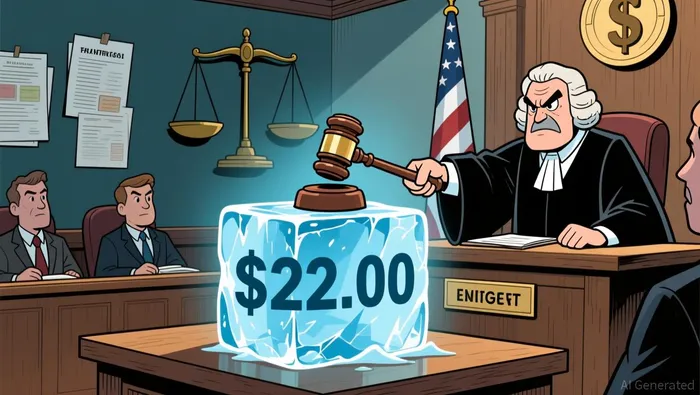
The setup changed earlier this spring when the court order went from "keep things separate" to another week of freeze. A temporary hold is one thing; the bigger question is whether the judge turns that pause into a preliminary injunction. For merger-arb investors, that is the difference between waiting for closing and preparing for a much longer, messier timeline.
What the court is doing
Judge Nunley has already said the plaintiffs were likely to succeed on their claims that the transaction would substantially lessen competition in dozens of local TV markets. That moves the case beyond process noise. If the freeze becomes a preliminary injunction, the spread stops looking like a simple timing trade and starts carrying real reversal risk.
The fight is also broadening. Five more states have joined the antitrust challenge, which likely means more litigation friction and less room for a quick, narrow resolution.
Why Nexstar cannot simply power through
Nexstar closed quickly after federal approval and has described the transaction as a major scale move. That helps the bullish case, but it also makes the deal a bigger antitrust target. Add the separate campaign in which a union has notified Nexstar of plans to seek shareholder backing for governance reforms tied to large deals such as Tegna, and the picture is one of rising friction rather than a clean path to closing.
The practical takeaway is simple: watch whether the freeze remains narrow or evolves into full injunction litigation. That is the pressure point that will move the spread next.
The bull case and bear case both center on deal completion
Why bulls still have evidence
Bulls are not starting from scratch. The deal was approved by TEGNA stockholders after being unanimously approved by TEGNA's Board. That suggests the transaction has real backing on both sides of the capital table. The structure is also straightforward: each TEGNA share would receive $22.00 in cash in a $6.2 billion buyout. If court pressure eases, the market does not need to re-rate TEGNA as a great standalone operator; it only needs to get more confident the cash deal will close.
Why the bear case is about friction
Bears are not arguing the deal is imaginary. They are arguing that the legal drag is getting heavier. The freeze has been extended for another week, and the court has already signaled plaintiffs were likely to succeed on their claims. On top of that, more states have joined the challenge, which can lengthen the timeline and increase uncertainty.
The governance campaign is another friction point, even if it does not automatically change the terms. A union has notified Nexstar of plans to seek shareholder backing for governance reforms tied to big deals like Tegna. That may not break the deal, but it can still add noise and delay.
The signal that should drive the trade
The key question is simple: are the boards still aligned behind the same $22 path that stockholders already backed? Under the hold-separate order, Nexstar cannot integrate TEGNA, so the clearest signal is not operating commentary. It is whether the companies continue to maintain the merger terms and closing timeline in filings and disclosures. If that support holds, the spread can narrow. If it weakens, the trade becomes much riskier.
How to approach TEGNA and NXST while the case plays out
From here, the trade is about sizing, not storytelling.
TEGNA: focus on the spread, not the headline
- Bullish trigger: management or filings continue to point to expected closing by the second half of 2026 while the merger terms still provide $22.00 per share in cash.
- Best re-rating cue: no new adverse filings, no change to the cash consideration, and no visible hesitation from the board.
- Invalidation: a formal termination move or a clear signal that the parties can no longer support the expected closing window. At that point, the $22 path is no longer reliable.
Nexstar: higher upside, but more execution and perception risk
- Bullish trigger: Nexstar keeps pressing toward closing and the market continues to view the transaction as a scale completion story rather than a governance distraction tied to governance reforms tied to large deals.
- Bearish trigger: litigation and shareholder friction start affecting financing, ratings, or investor tolerance. Then NXST starts trading less like a buyer executing a clean deal and more like a consolidator dealing with pushback.
- Key boundary condition: termination fees create incentives to close, but they do not eliminate deal risk.
The practical map is simple: treat TEGNA as a spread trade tied to legal progress, and only add NXST if the odds of closing improve rather than merely sound more urgent. If the injunction remains in place, both stocks can stay stuck while the spread stops compensating investors for time and risk.