

The specs are legitimate. Thirty-six-foot clear height. One hundred dock-high doors. 185-foot cross-dock truck courts. These aren't the features of a speculative spec build-they're the hallmarks of a facility designed for serious logistics operators who need to move product efficiently. The location, too, deserves real credit: 75 miles north of Los Angeles at the I-5 and Highway 58 junction is a genuine freight crossroads, a day's drive to three major ports and the Southern California consumer base. Any logistics manager will tell you that location is legit.
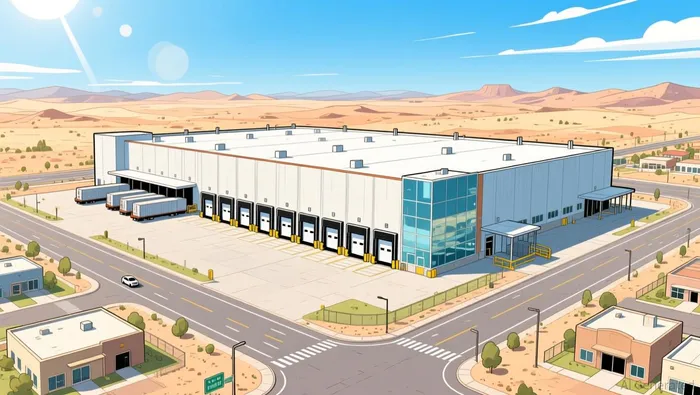
But here's the question that keeps me up at night: TRCC already has 11 million square feet of available space-why build new when there's so much empty inventory waiting for tenants?
The math is uncomfortable. The development team at Tejon Ranch Commerce Center has seven million square feet of developed industrial space that's fully occupied, sure. But they also have 11 million square feet of entitled, ready-to-build-or-lease space sitting on the market. That's not a shortage-that's a cushion. So when you're breaking ground on a half-million-square-foot Class A facility in early 2027, you're not filling a gap. You're betting that the gap will close before the building is done.
The pre-lease story sounds promising-a 446,400-square-foot facility was pre-leased before construction and delivered ahead of schedule. But that was a different project, a different timeline. The question for this 510K build is whether the market can absorb another half-million square feet without rent concessions, tenant improvement allowances, or other incentives that eat into returns.
The smell test? This feels like another speculative build betting on a continuing upswing. The timing suggests confidence-building into a market where supply is "limited" and demand is "accelerating," as the CEO put it. But the available inventory tells a different story. Either the market will absorb this space, or Tejon Ranch will be sitting on another half-million square feet of empty Class A industrial space when the upswing inevitably pauses. Common sense says: ask for the lease-up timeline, ask about pre-leasing activity, and don't be fooled by impressive specs into thinking demand is guaranteed.
Terra Vista: The Residential Side Story
Terra Vista is now open and leasing, with stabilization expected summer 2026. That's real rental income coming online in the next few months. But here's the thing: residential is residential, and industrial is industrial. They're different businesses with different rhythms, different tenants, and different risks.
The location does make sense from a synergy angle. Terra Vista sits right next to The Outlets at Tejon, and the marketing explicitly positions it as convenient housing for workers at the Commerce Center adjacent to the Outlets at Tejon. That's a logical ecosystem-thousands of industrial employees need places to live, and having housing within commuting distance of the warehouse district is genuine utility. The amenities package (pool, fitness center, dog park, fiber internet) targets the demographic that would actually work in logistics: young professionals, small families, people who value convenience over a long commute.
But let's keep the stories straight. The industrial market at TRCC has 11 million square feet of available space-a cushion, not a shortage. The residential market is a completely separate supply-demand equation. Terra Vista's success or failure won't directly change whether that industrial space gets leased. Yes, employed workers need housing, but the question is whether the wages in Southern California logistics can support the rents Terra Vista needs to charge to make its numbers work.
The 270,000-acre holding is Tejon's long-term card to play. The master plan envisions nearly 35,000 homes across the ranch and 35 million square feet of commercial space. That's a residential empire in the making. But it's also a multi-decade proposition with its own regulatory, market, and construction risks. The industrial story is about absorbing existing inventory and filling new spec space. The residential story is about building a community from scratch in a market that already has housing supply questions.
The bottom line: Terra Vista adds a revenue stream, sure. But it also adds complexity. For investors focused on the industrial thesis-the 510K SF build, the pre-leasing activity, the absorption rate-residential is a separate P&L. Don't let the mixed-use narrative blur the reality: you're evaluating two different real estate businesses under one corporate umbrella, and one doesn't guarantee the other's success.
Kick the Tires: What's Actually Driving the Numbers?
Two names keep showing up in the development pipeline at TRCC: Majestic Realty and Dedeaux Properties. Both are serious players. Both are betting big money. But here's the thing-both are also speculative builders. That distinction matters.
Majestic Realty's joint venture with Tejon Ranch owns nearly 2.8 million square feet of the developed space at the Commerce Center. That's not a small stake. That's institutional capital locked into the project's success. When a firm with that kind of footprint puts money to work, it's signaling confidence in the market's ability to absorb space. But confidence doesn't equal absorption. It just means the money people see something they like.
Then you have Dedeaux Properties. They just closed on a 12-acre parcel entitled for up to 250,000 square feet of industrial development. They manage a portfolio of more than six million square feet of warehouse and logistics properties across Southern California. They're one of the most active developers of logistics facilities in the region. Their involvement signals that the submarket has merit. But Dedeaux is also a speculative builder-they're building to lease, not for a specific tenant. That's a bet on future demand, not evidence of current demand.
Here's what both of these players have in common: they're building spec space. The 510,000-square-foot project breaking ground in early 2027 is spec. The 250,000-square-foot Dedeaux project is spec. The 446,400-square-foot facility that was pre-leased before construction and delivered ahead of schedule-that's the exception, not the rule.
The key metric isn't how much space is being built. It's how much space gets absorbed without rent concessions, tenant improvement allowances, or other incentives that eat into returns. The market has 11 million square feet of available space right now. That's the cushion. That's the inventory waiting for tenants. Any new construction is competing against that inventory for the same pool of tenants.
So when you see impressive specs-thirty-six-foot clear height, dock-high doors, 185-foot truck courts-ask the question that matters: what's the lease-up timeline? What's the pre-leasing activity? Are tenants signing at market rates, or are incentives being offered to fill the space?
The smell test? Institutional players are putting money down. That's real. But they're also building speculative space into a market with 11 million square feet of available inventory. That's a bet. And bets can go either way.