Tenaga's Q1 was steady, not flashy
Tenaga posted MYR 17,103.7 million in revenue and MYR 1,097.6 million in net income, or MYR 0.1883 EPS, reflecting a 3.7% increase in net profit. For a regulated utility, that is a stabilizing print rather than a dramatic rerating quarter.
The real question is not whether the quarter was exciting. It is whether investors are ready to look past modest headline growth and assess Tenaga as an owner of a scarce grid asset at a time when electricity demand may be becoming more consequential.
Why Q1 held up without a revenue surge
Higher demand and lower fuel costs did the work
Q1 was supported by higher electricity demand and lower fuel costs, not by any major policy or pricing change. For a utility, that is a sensible mix: system usage remained firm while margins received a natural cost boost.
That helps explain why the quarter looked quiet rather than weak. Tenaga remains an integrated power player with generation, transmission, distribution, and sale of electricity. In that model, better demand and cheaper input costs often show up first in earnings resilience, not in a sharp revenue jump.
Reinvestment may look heavy before it looks valuable
The other reason the quarter felt restrained is that Tenaga continues to spend on the network. Management highlighted RM1bil invested towards grid modernisation as part of its broader effort to strengthen energy security and grid resilience. Markets can view that spending as capital intensity in the short run, even if it later looks like reinforcement of a scarce asset.
A useful benchmark is the full-year backdrop. In FY2025, Tenaga delivered net income up 20% even as revenue fell 1.3%. That supports a more patient way of reading the business: in a regulated, infrastructure-heavy model, margin expansion and earnings durability can matter more than revenue growth.
Tenaga's moat is the grid, not the quarterly headline
The physical bottleneck is the core asset
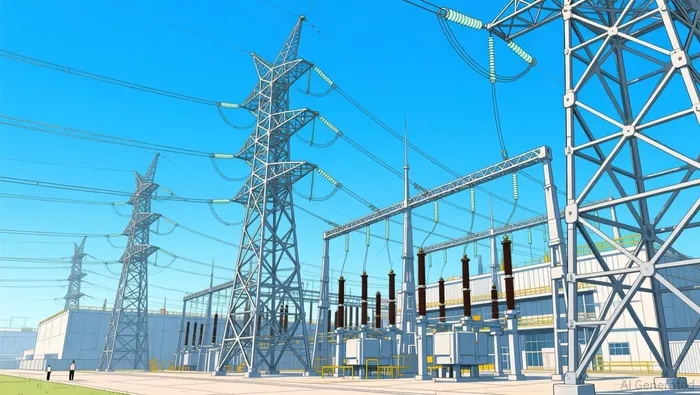
Tenaga is more than a power seller. It operates and manages the National Grid and is involved in the transmission and distribution of electric power. That gives it a natural bottleneck position. When demand rises, the critical need is often not just more generation, but more capacity to move, manage, and stabilize power across the system.
That is why RM1bil invested towards grid modernisation matters. It is easy to dismiss as capital intensity. It is harder to dismiss if future load increasingly depends on the incumbent network being able to absorb it.
The demand mix may be changing
There are signs worth watching, even if they do not show up directly in Q1 earnings. Earlier this month, a Tenaga unit received approval for extension of Kenyir hydro power station. Separately, TNB's service offerings include tools such as Demand Response With Customer Participation, Corporate Green Power Programme, and Distributed Energy Resources (DER) Facilitation. None of that proves a near-term earnings step-change. It does, however, suggest a business operating in a system where electrification, flexibility, and grid support may become more important over time.
What the next update needs to show
The next update matters less for another modest earnings beat and more for whether management can make the demand story more visible. The bull case is that stronger electricity demand starts to look structural. The bear case is easier to quantify: Tenaga still faces 1.4% p.a. revenue growth versus 4.5% for Asian electric utilities. That is the real fork in the road-scarce infrastructure or slow utility.
What would support the thesis
- Management gives clearer timelines for grid connection and power take-off, rather than leaving new demand largely as a pipeline story.
- New generation projects are discussed as part of a broader reliability stack that still depends on transmission and network support.
- The recent approval for extension of Kenyir hydro power station is paired with grid reinforcement, showing both sides of system support.
- Demand Response With Customer Participation and related time-of-use tools move from product listings toward operational deployment.
What would weaken it
- Demand commentary softens or large customer buildouts slip.
- New generation advances while grid bottlenecks and connection constraints remain vague.
- Transition products remain theoretical, with little sign of becoming meaningful operating levers.
The next hard timing marker is May 26, 2026, with results then settling into a quarterly update rhythm. For now, the cleaner read is not that Tenaga has become a growth stock. It is that the stock may deserve a more infrastructure-heavy lens if rising demand starts to test the network faster than the market is recognizing.