

The headline claim is that investors are selling Tesla to chase a day-one pop in Elon Musk's SpaceX IPO on June 12. The narrative is neat. It also assumes you can trace portfolio cash flows with the precision of a plumbing diagram. Nobody has.
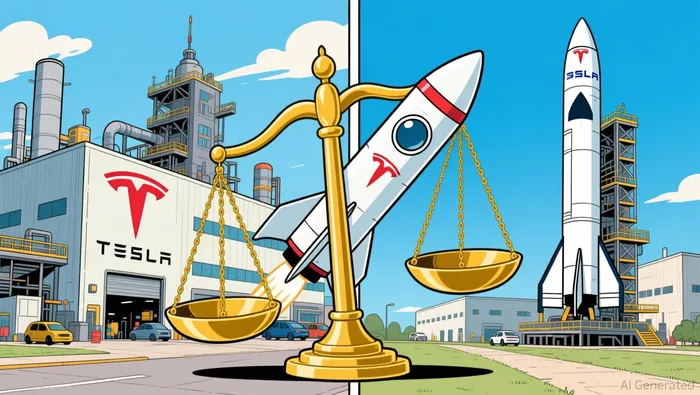
But beneath the unverified rotation story sits something you can actually measure. SpaceX is going public at a $1.77 trillion valuation, above Tesla's approximately $1.6 trillion market cap. The market is being asked to value a rocket company above a car company - built by the same person, launching in the same month. That relative framing problem is structural. It does not depend on whether any particular investor moved money from one ticker to the other.
Analysts flagged the capital diversion risk early. The BitMEX IPO guide in May noted that SpaceX competes directly for the same Musk-bull dollars currently parked in Tesla. A Biggo/Finance piece around the same time warned of capital crowding-out fears and pressure on Tesla's valuation. As of June 9, Capital.com reported analysts remain split - some see diversion, others see it reinforcing flows into the wider Musk-linked ecosystem. Morningstar flagged Tesla shareholders' concern about SpaceX's valuation in the context of potential merger speculation.
The question isn't whether anyone is literally selling Tesla to buy SpaceX. It's whether Tesla's own valuation story holds up when a rival Musk entity debuts at a bigger number. Because if the market is pricing SpaceX above Tesla, the implicit comparison set for Tesla just got more expensive - not cheaper.
Let's separate the plumbing from the math.
The IPO mechanics
SpaceX filed for a Nasdaq debut with Goldman Sachs as lead underwriter, followed by Morgan Stanley. Shares are set to release June 12 at $135 per share, targeting a $75 billion raise - the largest IPO in history by that measure. The company plans to sell approximately 555.6 million shares. At that valuation, SpaceX would rank as the seventh-largest company in the U.S.
For context: Tesla's market cap sits around $1.6 trillion, according to CNBC's June 3 coverage of the IPO. SpaceX's $1.77T debut number puts it ahead. A rocket launch company just valued above an automaker. By the same founder. That is the mirror Tesla now looks into.
Why the "selling" narrative is thin
Here's what we know about the capital flow claim: analysts have flagged the risk. That is not the same as evidence that flows are moving. There is no publicly available trading data confirming systematic TSLA selling tied to SpaceX IPO positioning. The narrative is plausible - Musk bulls have a limited pool of high-conviction capital, and a new trade opening at a record scale is a gravitational pull - but plausible is not verified.
The New York Times June 10 piece on the SpaceX IPO referenced Tesla's past performance for investors who held on, implicitly noting that the Musk stock playbook has rewarded patience before. But past behavior does not guarantee the next rotation.
What the valuation mirror actually means
This is where it gets interesting for anyone still holding Tesla, or considering adding.
Tesla has traded on a narrative premium for years - the idea that it is not just a car company but an AI and autonomy platform. That premium has justified valuations that dwarf traditional automakers by wide multiples. But valuation premiums are sticky only as long as the comparison set supports them. Introduce a Musk-branded company going public at a higher valuation, and the comparison set shifts. Now investors have two Musk entities to rank. If the bigger number belongs to the space company, the implicit message is that the highest-conviction Musk bet is no longer the car business.
That doesn't mean Tesla is a bad business. It means the narrative hierarchy is being challenged at the worst possible time - right as the auto sector faces margin pressure and EV adoption curves that are flatter than the 2020-2021 bull market assumed.
What would change the framing
Three scenarios worth tracking:
SpaceX pops and Tesla holds. If SpaceX sees a massive day-one gain but Tesla's price stabilizes, the market may decide the two can coexist as a Musk barbell - growth in rockets, cash flow in autos. That would weaken the diversion thesis.
SpaceX pops and Tesla continues to fade. That's when the capital rotation claim gains credence. A sustained divergence would suggest the market is re-ranking Musk's portfolio in real time, and the car business is moving down the priority list.
SpaceX underperforms. If the IPO launches flat or lower, it validates the skeptics and removes the gravitational pull. Tesla would no longer face a competing Musk trade - it would be the only game in town again, which is a relative tailwind regardless of absolute direction.
So what do you do with the stock?
If you're holding Tesla, the SpaceX IPO does not mechanically force a sell. A Hold is not a Sell. The rating question depends on whether Tesla's own factor stack - earnings trajectory, margin durability, delivery growth - is intact. The IPO creates a narrative headwind, not a fundamental one. Narrative headwinds fade faster than fundamentals.
If you're on the outside looking in, the question isn't whether SpaceX is a better trade. It's whether Tesla's valuation has room to compress further now that the comparison set includes a bigger Musk number. That is a different question than the rotation story implies - and it matters more for positioning.
The market moves on stories. The factor stack moves more slowly and usually tells you more. Today, the factor stack for Tesla is being stress-tested by a new comparison it didn't ask for. Whether that test is passed or failed won't be settled in a single IPO week. It will take quarters. The process doesn't demand a call right now. It demands watching the divergence - or the lack of it - and adjusting only when the data says to.