

Macro data, not company news, is driving the setup
With 3.8% year-over-year PCE expectation and the 30-year Treasury yield at 5.09% after 5.19%, this is a macro-driven session.
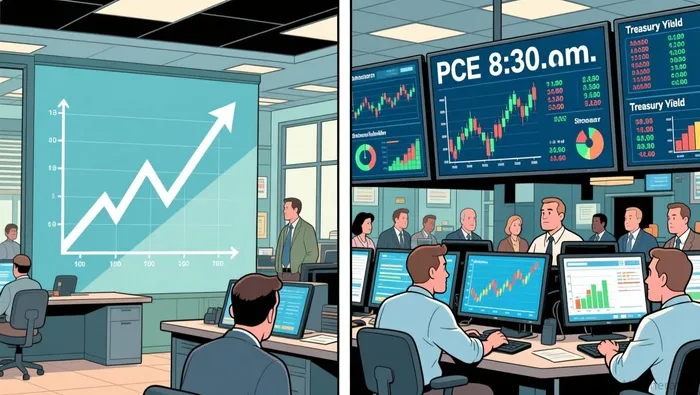
Stock futures are modestly higher, and the major indices are set to finish a winning week. That means the 8:30 a.m. release will likely do more than change headlines: it can reprice duration, inflation expectations, and the relationship between yields and equities in one move.
For portfolios, that makes this a macro allocation call first and an earnings-screening exercise second. If inflation runs hot, long-duration bonds and rate-sensitive multiples are more exposed. If it cools, the recent risk-on tape can keep going even if stock-specific alpha takes a backseat.
The 8:30 a.m. data bundle is the session's main catalyst
The key event is the 8:30 a.m. release bundle: GDP second preliminary, GDP chain price, initial claims, personal income, and personal consumption expenditure. That gives investors a combined read on growth and inflation right before a holiday-shortened week.
Why the bundle matters more than any single report
The market is not just asking whether inflation cooled. It is asking whether the Fed has reason to keep policy tighter for longer. The main datum is the PCE price index expected at 3.8% year over year. If that figure runs hot and the GDP price deflator points the same way, inflation risk is still embedded in the system. That keeps pressure on Fed expectations, duration risk, and equity valuations that are most sensitive to discount rates.
If growth holds while inflation stays sticky, the pressure likely falls more on rate-sensitive multiples than on near-term earnings power. If both slow together, the debate shifts more quickly toward demand weakness.
What to watch in equities after the macro print
A hot print does not just move bonds. It can also raise equity correlation because many growth names can get hit by the same discount-rate shock.
If growth and inflation both look firm, the cleaner response is to reduce exposure to the most rate-sensitive long-duration assets and let sector rotation do part of the hedging work. If the bundle cools, the risk-adjusted setup for risk assets likely improves before company-specific alpha matters again.
Consumer and software names still matter for leadership
Once the 8:30 macro wave passes, the market can start rewarding prints that change sector leadership or sentiment.
Costco is the clearest consumer read
A strong Costco report would matter beyond one retailer because it would speak to consumer resilience at the mass-affluent end. In a market that has been celebrating breadth after the S & P 500 reached fresh all-time highs, a confident Costco print would support discretionary exposure and help keep risk appetite firm heading into a holiday-shortened week.
Software and AI sentiment remain a live debate
The broader debate this week is whether AI is eating software. That makes software and infrastructure names important sentiment tests. If enterprise demand holds, leadership can keep rotating toward productive AI and software exposure rather than fading on macro noise.
Other names to watch
- NetApp: look for evidence of sustained enterprise storage demand, not just a good quarter.
- Hormel Foods: a better read on the lower-income consumer and input-cost pressure than another mall-based retailer.
- Dollar Tree: if this name struggles while Costco looks strong, that is a useful split signal on consumer stress.
- Salesforce: still relevant after hours, but secondary to the Thursday session. The key question is less about a routine beat and more about whether investors will keep paying up for software while the AI debate remains contested.
The practical filter is simple: focus on the prints that can shift money between consumer, software, and AI-related buckets while the market is still searching for fundamentals to catch up to prices after May's rally.
Bulls and bears are still debating valuation versus resilience
The live question is narrower than the headlines suggest: after fresh all-time highs in May and a winning week despite heightened volatility, can the market absorb a mixed consumer-inflation read, or is this the point where valuation starts to matter more than momentum? That is the same debate investors have been wrestling with around what is happening with inflation and whether the American consumer is OK, now colliding with a tape that has already repriced optimism.
What each side needs
- Bulls do not need a perfect macro print. They need evidence that the recent pullback in long-end yield pressure was temporary and that the consumer is holding up well enough to support premium multiples.
- Bears are making a valuation argument, not a full recession call. They need inflation to stay uncomfortable and consumer resilience to look less certain than the rally assumed, so that this becomes a multiple reset rather than another buy-the-dip moment.
That is the real decision now: not which story sounds better, but which one the market chooses after the print.
A practical trade plan for the session
Treat the 8:30 bundle as the session's risk gate, especially with a holiday-shortened week limiting time for damage control.
Base-case stance
Stay constructive, but not aggressive. The market is still coming off a fresh all-time highs run and a winning week despite heightened volatility, so the bias is to own quality risk assets unless the data force a clearer trend break.
What would make the setup more bullish
- The PCE price index and GDP deflator both read cooler, while growth stays firm enough to avoid a demand-weakness scare.
- Long-term rates hold their recent composure.
- Consumer and software prints reinforce resilience instead of forcing a leadership reset.
What would make the setup more bearish
- A hot inflation print lands while the GDP chain price also stays sticky, reviving the higher-for-longer discount-rate story.
- Equity correlation rises across duration-sensitive buckets after stocks have already reached fresh all-time highs.
- Yield sensitivity returns quickly.
Invalidation signals
- A routine beat that fails to move the market suggests price may have outrun fundamentals, which argues for consolidation rather than fresh leverage.
- If the 8:30 a.m. release bundle forces bonds and rate-sensitive equities lower at the same time, assume the setup has shifted before the dust settles.
In a holiday-shortened week, thinner liquidity can exaggerate both the first move and the reversal. Size triggers; do not chase them.