

TotalEnergies delivered a robust first quarter, with adjusted net income reaching $5.4 billion, up more than 40% year-on-year, and cash flow hitting $8.6 billion, a 20% increase compared to the previous year. On the surface, these figures reflect the obvious tailwind of a $81 per barrel Brent average. Yet the deeper story lies in the quality of the earnings and the balance sheet strength that persists even after accounting for significant operational headwinds, including Middle East production disruptions and refining strikes.
The company's capital efficiency metrics suggest a foundation built for more than just a price spike. A Return on Equity of 14.4% and a Return on Average Capital Employed of 12.7% for the first quarter are strong indicators of structural performance, not merely cyclical luck. These returns were achieved while maintaining a disciplined capital framework, with net investments at $4.5 billion and a leverage ratio-gearing at just 15.5%-that provides substantial buffer against volatility at the end of the quarter. This financial cushion is deliberate, positioning the company to fund its energy transition investments while returning over 40% of cash flow to shareholders.
Operational execution further underscores this resilience. Upstream cash flow surged 26% quarter-to-quarter to $4.6 billion, driven by disciplined cost management-OpEx per barrel stayed below $5-and a 4% year-on-year organic growth in oil and gas production that beat annual guidance exceeding the annual guidance of 3%. Even in the face of a 15% production hit from Middle East conflicts, the diversified portfolio, particularly its growing LNG segment which saw a 12% quarter-to-quarter production jump, absorbed the shock impacting approximately 15% of production.
The key question is sustainability. The current cycle is undeniably supportive, with elevated prices and margins. However, the metrics point to a company that is structurally stronger than the cycle. The low gearing, high returns on capital, and commitment to a >40% cash payout ratio for 2026 indicate a strategy designed to weather downturns and capitalize on upswings. The results are not just a product of high oil prices; they are the result of a diversified portfolio and operational discipline that convert those prices into durable shareholder value. This is the hallmark of cycle resilience.
Production Growth and the Integrated Model
TotalEnergies is not only meeting its production growth targets but is doing so in a way that demonstrates the strategic value of its integrated model. The company delivered 4% year-on-year organic growth in oil and gas production for the first quarter, exceeding its annual guidance of 3% despite operational headwinds. This achievement is particularly notable given the Middle East conflict disrupted approximately 15% of total production. The diversified portfolio-spanning geographies and commodity types-absorbed the shock, with LNG production providing a critical offset.
LNG emerged as the standout growth driver, with production surging 12% quarter-to-quarter and sales reaching 12.4 million tons generating integrated LNG cash flow of $1.8 billion. This segment's momentum is structural, not cyclical. The company is advancing short-cycle investments in countries like Angola and progressing toward a final investment decision for Papua New Guinea before year-end as noted by the CEO. These projects are designed to deliver rapid production ramp-ups, positioning TotalEnergies to capture sustained demand for gas as a transition fuel.
Yet the true advantage of the integrated model lies downstream. European refining margins averaged $11.4 per barrel over the quarter with utilization rates at 92%. These margins are not merely a function of high oil prices-they reflect the flexibility to process diverse crude grades and the ability to shift product slates based on regional demand. When upstream faces volatility, downstream provides stability. The strikes at the SATORP site temporarily impacted refining capacity, but the overall system absorbed the disruption without significant earnings damage.
This buffering mechanism is the integrated model's real value. Upstream cash flow surged 26% quarter-to-quarter to $4.6 billion driven by disciplined cost management, but that upside is partially cyclical. The downstream segments-refining and power-generate more stable returns that smooth the earnings trajectory. With net investments at $4.5 billion and a gearing ratio of just 15.5% the company maintains the financial flexibility to invest across the value chain regardless of where the cycle is.
The implication is clear: TotalEnergies is not simply riding the oil price cycle. It is using its integrated structure to convert cyclical upstream upside into durable, multi-segment value. As the company navigates the energy transition, this model provides a structural hedge-upstream growth funds downstream diversification, while downstream stability supports upstream volatility. That is the definition of cycle resilience.
The Renewables Transition: Scale and Capital Allocation
TotalEnergies is scaling its renewable footprint with a pace that signals strategic conviction, not incremental adjustment. The company added nearly 8 gigawatts of renewable capacity over the last 12 months, and net power production from renewables grew 20% year-on-year to contribute to the 11.7 terawatt hours of total power generation reported for the quarter. This is the transition in motion-measurable, accelerating, and now material to the overall production mix.
But scale demands capital, and here the cycle-aware question emerges. TotalEnergies deployed $4.5 billion in net investments during the quarter-a substantial outflow against $8.6 billion in cash flow. On paper, the math works: the company is generating cash faster than it is investing, maintaining a comfortable buffer even after committing to a >40% cash payout ratio for 2026 and a 5.9% dividend increase to EUR0.9 per share announced this quarter. The gearing ratio of 15.5% at quarter-end confirms the balance sheet remains deliberately under-leveraged, preserving debt capacity for either opportunistic upstream acquisitions or accelerated transition investments.
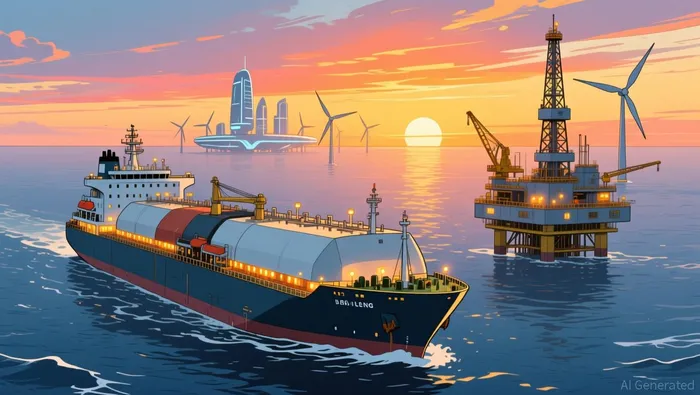
Yet the trade-off is real. Every dollar funneled into renewables is a dollar not returned to shareholders or held as liquidity. The company's $1.5 billion per quarter buyback authorization, combined with the elevated dividend, means capital returns are structurally prioritized. This is prudent in a cycle that could turn-oil price volatility remains a constant risk, and the Middle East disruptions earlier this quarter reminded everyone how quickly upstream cash flows can contract. The low gearing provides a cushion, but it also represents underutilized borrowing capacity that could have funded more aggressive transition scaling.
The strategic implication is clear: TotalEnergies is betting that its integrated model-upstream cash generation funding downstream diversification-will sustain the transition without compromising financial flexibility. The 12.7% ROACE and 14.4% ROE for the quarter suggest the capital is being deployed efficiently, but the real test is whether the renewable scale-up can deliver returns that match the upstream portfolio over the cycle. For now, the company is walking the line between transition ambition and cycle discipline-but the margin for error narrows if oil prices soften or the transition timeline extends.
Catalysts and Risks: What Moves the Stock
The investment thesis for TotalEnergies rests on three pillars: sustaining production growth, managing the energy transition capital load, and navigating geopolitical risks in key operating regions. Each presents both catalyst and constraint, with the stock's trajectory depending on how the company balances these competing demands over the cycle.
The Middle East remains the most immediate geopolitical risk. The company has been clear that it will not resume operations in the region until shipping transit through the Strait of Hormuz stabilizes CEO says wait for stable Strait of Hormuz. This is not merely a temporary disruption-the conflict has already impacted approximately 15% of production this quarter, and the company's historical depth in the region means further escalation would strike at the heart of its upstream portfolio. The CEO's opening remarks on the Q1 call emphasized the region's special place in the company's DNA, noting it is where TotalEnergies was born in 1924 in Iraq CEO on Middle East importance. That historical footprint is now a strategic vulnerability. Investors should watch for any escalation that extends beyond production hits to broader regional instability, which could disrupt LNG trade flows and refining operations alike.
On the capital allocation front, the dividend sustainability question is paramount. The board announced a first interim dividend of €0.90 per share for fiscal 2026, a 5.9% increase year-on-year, alongside a $1.5 billion buyback authorization dividend and buyback details. This represents a commitment to return over 40% of cash flow to shareholders in 2026-a generous payout that assumes the current cycle holds. The gearing ratio of 15.5% provides a substantial buffer, but the trade-off is real: every dollar returned is a dollar not deployed for transition investments or held as liquidity against upstream volatility. If oil prices soften or the Middle East disruptions persist, the company will face pressure on either the dividend or the transition capex. The key watch item is whether the payout ratio remains sustainable if cash flows contract by 20-30% in a downside scenario.
Production growth sustainability is the third critical factor. The 4% year-on-year organic growth achieved in Q1 exceeded annual guidance of 3% production growth details, but that was before the full impact of Middle East disruptions was felt. The company's ability to deliver on its 2026 production targets now hinges on LNG expansion-particularly the short-cycle projects in Angola and the impending final investment decision for Papua New Guinea LNG project updates. If these projects deliver as planned,