

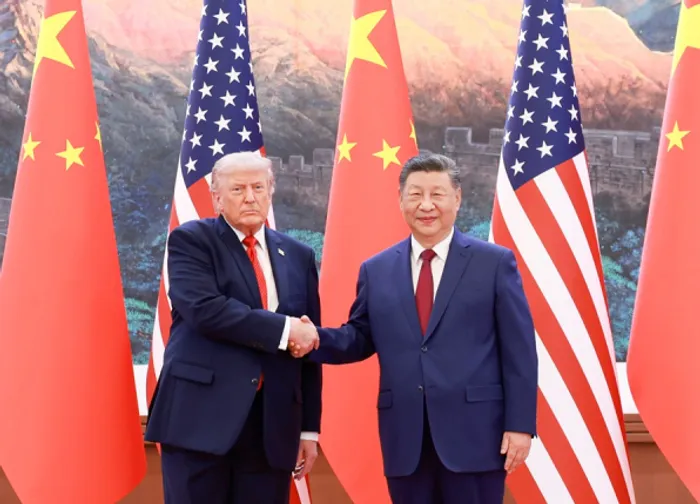
Donald Trump has wrapped up his China visit with a more positive tone around U.S.-China relations. The trip did not solve every major disagreement between Washington and Beijing, but it sent one clear message: both sides want to keep the relationship stable and avoid letting competition turn into confrontation.
That matters because U.S.-China relations have been tense for years. Trade disputes, tariffs, Taiwan, technology restrictions, and military tensions have all made the relationship harder to manage. This visit did not erase those problems, but it gave both sides a chance to reset the tone and show that they are still willing to talk directly at the highest level.
A New Framework for Stability
The main phrase from the Chinese side was "constructive China-U.S. relationship of strategic stability." In plain English, that means the two countries are still competitors, but they are trying to manage that competition in a more controlled way.
Beijing's message was that U.S.-China relations should not be defined only by confrontation. The two sides can compete, but that competition should have limits. They can disagree, but those disagreements should not automatically become crises. This is the real meaning of "strategic stability": keeping the relationship predictable enough so that both governments, businesses, and markets can plan around it.
For global markets, this is a positive signal. Investors do not need the U.S. and China to become close allies. What they want is a relationship that is more stable, less chaotic, and less likely to produce sudden shocks in tariffs, supply chains, or geopolitical risk.
Taiwan Remains the Most Sensitive Issue
One of the biggest topics was Taiwan. China made clear that Taiwan remains the most sensitive issue in the relationship. Xi Jinping said Taiwan is the most important issue in China-U.S. relations, and that handling it properly is key to keeping the overall relationship stable.
This does not mean the Taiwan issue has been solved. It means China wanted to make its position very clear during the meeting. For Beijing, Taiwan is not just one issue among many. It is the issue that can decide whether U.S.-China relations stay stable or become much more dangerous.
At the same time, the fact that both sides continued the visit with a constructive tone suggests they are still trying to manage this risk through dialogue. That is why Taiwan remains both the biggest pressure point and one of the main reasons high-level communication matters.
Trade and Business Ties Show Practical Progress
Trade was another important part of the meeting. Xi said the two countries' trade teams had reached "overall balanced and positive results" before the meeting. That suggests both sides are looking for practical areas where they can reduce pressure, especially in trade, agriculture, business cooperation, and market access.
This is important because trade is one of the few areas where both sides can still find visible, practical results. The U.S. wants more purchases, more access, and more benefits for American companies and farmers. China wants a more stable trade environment, less pressure from tariffs, and stronger confidence from foreign businesses.
The visit also had a strong business angle. Chinese Premier Li Qiang met with U.S. business representatives from technology, finance, aviation, agriculture, and consumer sectors. This showed that both sides still want business ties to play a stabilizing role, even while political tensions remain.
In simple terms, business may become one of the "safety valves" in the relationship. Even when political issues are difficult, companies, trade flows, investment, and market access can give both sides a reason to keep talking.
Communication Channels Matter for Risk Control
Another key point was communication. China said both sides should better use political, diplomatic, and military communication channels. This is not just a formal diplomatic phrase. It matters because direct communication can reduce the risk of misunderstanding, especially when tensions rise.
That is why this part of the meeting is important. The visit was not only about what Trump and Xi said publicly. It was also about keeping the system of communication open behind the scenes. For a relationship as large and complicated as U.S.-China relations, that kind of communication is not optional. It is necessary.
Conclusion
Overall, this visit should be seen as a positive diplomatic reset for U.S.-China relations. It did not solve every disagreement, but it helped both sides move the conversation in a more stable and constructive direction.
The most important takeaway is that Washington and Beijing are still willing to talk, manage disputes, and look for practical areas of cooperation. Taiwan remains sensitive, and trade tensions are not gone, but the tone of this visit was clearly more about stability than confrontation.
For markets, businesses, and global politics, that is a meaningful signal. A more predictable U.S.-China relationship can reduce uncertainty, support trade and investment confidence, and give both sides more room to avoid unnecessary escalation.
In simple terms, Trump's China visit ended with a more constructive mood: the two largest economies are still competitors, but they are also showing that competition can be managed through dialogue, communication, and practical cooperation.