

The first quarter of 2026 was a brutal market test, separating the diamond hands from the paper hands. While the narrative was all about a crypto bull run, the financial reality was a stark divergence between pure hype plays and sustainable business models. The quarter laid bare a simple truth: in a bear market, only the most resilient, narrative-driven strategies survive, while others burn cash on unrealized losses.
Take Hyperliquid Strategies. While the broader sector crumbled, Hyperliquid posted a $152.5 million net profit as its native HYPE token surged 44%. This was a textbook narrative play-a pure FOMO pump riding on tokenized yield and community sentiment. It's the kind of performance that makes the crypto native's heart race, but it's also a reminder that such profits are often detached from traditional business fundamentals.
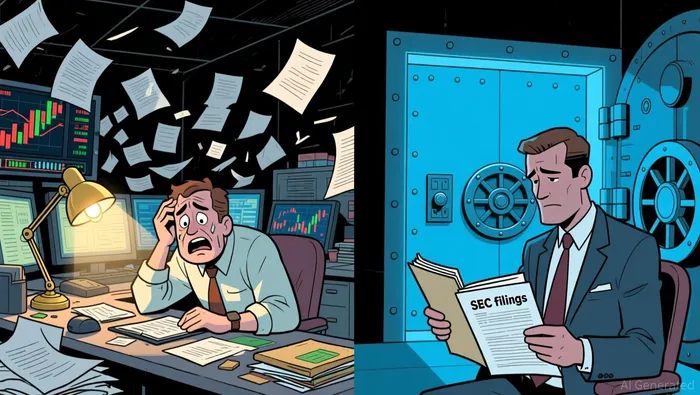
Contrast that with the sobering results from Coinbase. The exchange missed on every line, reporting a $1.49 loss per share as trading volumes fell. The catalyst was clear: Bitcoin dropped 22% for the quarter, directly crushing the core revenue driver for a centralized exchange. This wasn't a narrative win; it was a direct hit to the business model. The company is now cutting about 14% of its workforce, a classic "paper hands" move to preserve cash during the FUD.
Then there's the ultimate cautionary tale: Trump Media. The company reported a staggering $405.9 million net loss for the quarter, with a massive $244 million in unrealized losses on its Bitcoin holdings. This is the classic "buy the peak" mistake in crypto-native terms. They piled in at last summer's market top, and the subsequent drop wiped out nearly half a billion dollars on paper. It's a brutal lesson in holding through volatility without a hedge or a plan.
The bottom line is that Q1 2026 was a reality check. The market punished those chasing hype without substance, while rewarding those with a resilient, narrative-driven strategy. For the crypto native, it's a reminder that the whale's playbook isn't just about holding; it's about choosing the right narrative to ride through the storm.
The Whale's Edge: Where Money is Actually Moving
The surface chart is weak, but the whale games are telling a different story. While retail traders watch the price struggle to reclaim $70,000, a structural demand flow is quietly building from the balance sheets of public companies. In Q1, these entities accumulated approximately 62,000 BTC, a figure documented in SEC filings. This isn't speculation; it's a strategic, multi-year bet funded by debt and equity issuance. Companies like MicroStrategy are buying regardless of short-term momentum, creating a persistent demand that does not pause when the chart looks bad. This is the ultimate form of conviction-structural demand decoupled from price signals.
Meanwhile, the big players in the derivatives market are turning bullish. Bitcoin whale activity on the Hyperliquid trading platform surged to its highest net long positioning level of 2026, coinciding with a brief rally above $82,000. This shift in positioning among large-scale investors signals growing confidence in future price appreciation. When whales pile into longs on leveraged platforms, it often precedes extended upward moves. The narrative here is clear: the whales are loading up, not selling.
This institutional demand for leverage and hedging persists, even as spot prices stagnate. Coinbase's derivatives market share hit a new all-time high, driven by record-breaking adoption. The fact that retail derivatives revenue topped $200 million annually shows that sophisticated players are still using the platform to manage risk and amplify positions. It's a sign that the core infrastructure for whale games remains robust.
The bottom line is a market operating in two layers. On one side, the Exchange Whale Ratio shows overhead selling pressure. On the other, public companies are accumulating with borrowed capital, and whales are taking bullish long positions. The price weakness is a distraction. The real money is moving in a structural, conviction-driven play that the chart alone cannot show.
The Playbook: What Works and What's Paper Hands
The Q1 earnings are a masterclass in crypto-native strategy. The data splits the field into clear winners and losers, separating structural alpha from temporary noise. Here's the playbook for navigating this market.
First, the only clear winner is tokenized yield. Hyperliquid's $152.5 million net profit as its HYPE token surged 44% is the ultimate narrative play. This is pure alpha: a business model where token appreciation directly funds profits. It's the whale's dream-riding a community-driven pump with no reliance on volatile spot trading. For the rest of us, this is the blueprint: find projects where the token's story is the business.
By contrast, pure CEX trading is a high-cost, low-margin trap in a downtrend. Coinbase's $1.49 loss per share amid falling volumes is the textbook paper hands move. When the chart is down, trading fees get crushed. The company is cutting 14% of its workforce to survive, a sign of a business model exposed to price volatility. This isn't a sustainable edge; it's a cost-heavy bet on perpetual bull runs. In a bear market, it's a death spiral.
Then there's the high-risk, high-conviction play: holding Bitcoin as a treasury asset. Trump Media's $405.9 million net loss, driven by $244 million in unrealized losses on its Bitcoin holdings, is the ultimate cautionary tale. They bought at the peak and are now paying the volatility penalty. This is a pure conviction play with no hedge. It's a moonshot for the diamond hands, but the unrealized losses show the brutal reality of holding through a 22% drop. The risk/reward is asymmetric and unforgiving.
The real alpha, however, isn't in chasing price charts. It's in spotting structural demand and whale sentiment shifts. The whales are loading up on leverage, with Bitcoin positioning on Hyperliquid hitting its highest net long level of 2026. That's a direct signal of conviction from the big players. Simultaneously, public companies are accumulating 62,000 BTC on their balance sheets, a structural demand flow that ignores short-term price action. This is where the real money is moving-beneath the surface, in the whale games and corporate treasury moves.
The bottom line is simple. In this market, the winners are those who understand the narrative, the structural flows, and the psychology of the whales. The paper hands are left holding the bag on pure trading models or poorly timed treasury bets. The diamond hands are positioned for the long structural play.