

SpaceX's IPO timing is turning Musk stocks into a rotation trade
TSLA is down 15% this year as SpaceX's $75 billion IPO turns Musk-linked stocks into a more contested trade. The bullish read is that capital is rotating toward the hotter Musk narrative. The bearish read is that Tesla is being sold ahead of a SpaceX debut that may offer a quicker headline pop. For now, that looks more like a sentiment-driven reallocation than a final verdict on Tesla's fundamentals-though the next few sessions should clarify a lot.
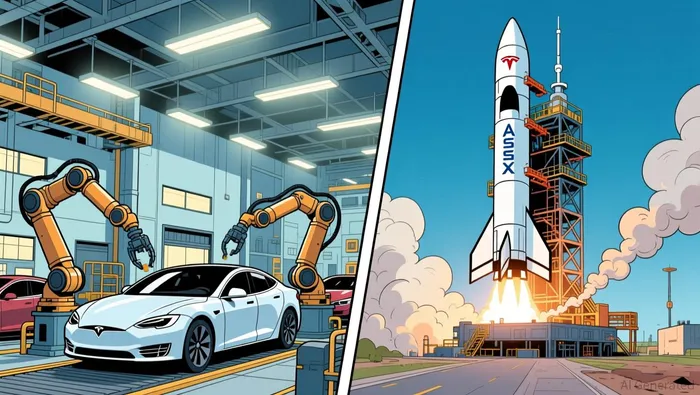
The timing matters. SpaceX is reported to price its IPO the night of June 11, with trading set to begin June 12 at a $1.75 trillion valuation. Reports also point to over $250 billion in demand. That combination helps explain why some retail investors may see Tesla as the funding source for the next Musk trade rather than the main event.
That still needs to be framed as a hypothesis, not confirmed order flow. One analyst has suggested retail investors may be trimming TSLA to fund SpaceX exposure, and that fits the tone on Musk-heavy forums, where Tesla is increasingly treated as a legacy position and SpaceX as the rawest private asset FOMO of the decade. That is narrative trading in plain view: one investor's rotation trade is another investor's trap trade.
Merger chatter should stay in its lane. Yes, there is chatter that Musk discussed folding the companies together. But that is backstory, not the core mechanism behind the sell signal. The simpler risk is that once SpaceX prices and debuts, this rotation thesis either gets confirmed by the tape or loses momentum quickly.
Tesla's premium depends more on Musk's attention than on merger speculation
What appears to be getting repriced is not a confirmed cash combination, but Tesla's scarcity premium. That premium works best when Wall Street believes Musk's attention remains mainly tied to Tesla's execution roadmap. If a newer Musk story looks more urgent, the market can start treating Tesla as a slower-moving moonshot with less immediate claim on his focus.
Why bears think the premium should compress
Tesla already entered this backdrop with some weakness in the tape. The company recently posted its first full-year revenue decline in its history. Analysts have also pointed to deliveries below expectations while production kept running ahead of sales. Those are not merger facts; they are execution concerns. In a market driven by narrative, execution questions can weaken even a strong story.
That is why the attention shift matters. Tesla has long benefited from the idea that Musk can force several difficult projects into reality at once. But if investors begin to believe SpaceX is becoming his priority, Tesla's valuation has less room to rest on narrative premium alone. The bear case is straightforward: a fresher Musk winner can draw attention away, and that can compress the multiple.
Why bulls still think the selloff is overdone
Bulls do not need a merger to defend Tesla. They only need investors to treat recent operating hiccups as cyclical rather than structural. From that perspective, SpaceX may be exciting, but it does not erase Tesla's manufacturing base, installed customer base, or longer-term AI and robotics optionality. In that reading, bears are treating a weak tape as final confirmation when it may still be little more than a narrative flush.
That is the real debate. Chatter that Musk discussed folding the companies together is not the mechanism. The more basic mechanism is simpler: when a new Musk narrative arrives, the market starts asking which company is the primary vehicle for his next big win. If Tesla looks slower and less central, the premium can compress quickly even without a formal corporate combination.
SpaceX debut is the test for the rotation trade
Once SpaceX prices and opens, this stops being a forum debate and becomes a market test. The demand backdrop is already notable: reports point to more than $250 billion in investor demand, a 30% retail allocation, and a June 12 listing. But retail access still looks rationed in practice, with experts warning investors may not be able to buy all the shares they want. That matters because a crowded Musk trade can turn messy fast if retail gets a small allocation at a rich price and then looks for liquidity elsewhere.
What would confirm or invalidate the thesis
- Confirmation: SpaceX shows sustained strength beyond the first hour, broad participation survives the allocation squeeze, and the stock holds gains after the initial excitement fades.
- Failure: The debut pops briefly and then cracks, leaving investors who wanted in with only a small position and weaker conviction on the broader Musk trade.
A hot first day alone is not enough. CNBC has noted that IPOs with a strong opening tend to underperform six months later. So the more important signal for TSLA/SpaceX positioning is not just whether SpaceX pops on day one, but whether the debut proves durable enough to keep capital anchored to the new Musk winner.