

The economic substance of the US-UK Economic Prosperity Deal is clear, but its durability is being tested by a volatile macro backdrop. The agreement, announced in May 2025, creates a $5 billion opportunity for new exports from U.S. stakeholders, with specific commitments for more than $700 million in ethanol exports and $250 million in other agricultural products. Yet the deal itself is a framework, not a binding treaty. As a short-form document, it is explicitly not legally binding, and its implementation has been partial, with a key executive order from June 2025 failing to deliver immediate relief from existing steel and aluminum tariffs.
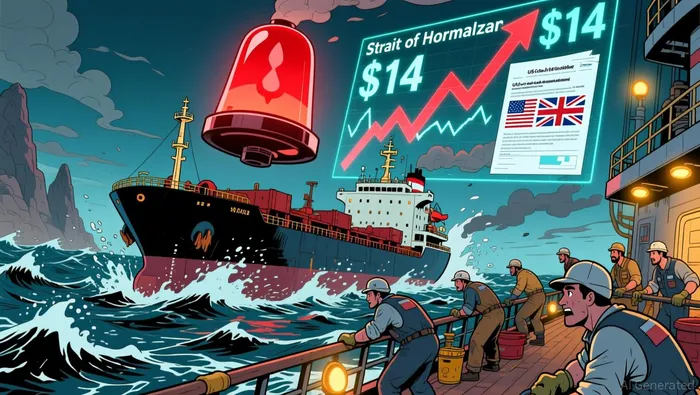
This fragile foundation is now exposed to a major external shock. The recent escalation in the Middle East has triggered a significant oil supply risk. Goldman Sachs Research estimates that traders are demanding a $14 more for a barrel of oil to compensate for the increased risk of disruptions through the Strait of Hormuz. That premium, which could rise further if the conflict persists, injects a powerful inflationary and growth-inhibiting force into the global economy. For a trade deal predicated on expanded market access and supply chain security, a surge in energy costs threatens to undermine the very economic stability it aims to promote.
Adding to the uncertainty is a fundamental shift in the U.S. tariff environment. Just last week, President Trump announced a new 15% global tariff on all imports . This action signals a move toward a higher baseline tariff regime, independent of bilateral deals. For the UK, this creates a direct vulnerability: its preferential access under the EPD exists alongside a new, universal tariff wall. The deal's value is now contingent on navigating this dual pressure-a negotiated framework against a rising tide of unilateral U.S. trade policy.
The Oil Shock and Its Cyclical Impact
The current oil price surge is not just a temporary spike; it is a major supply shock that is testing the resilience of global commodity cycles. The conflict in the Middle East has triggered a "major supply shock" to the global economy, with traders demanding a $14 more for a barrel of oil to compensate for the heightened risk of disruptions through the Strait of Hormuz. This premium, which could escalate further, reflects a market pricing in the potential for a prolonged closure of one of the world's most critical chokepoints, through which around one-fifth of global oil and LNG flows normally pass.
The immediate economic pressure is severe. Bloomberg Economics projects that if these disruptions persist, they could hit euro area GDP by 0.6%. This is a tangible growth penalty that hits the very heart of the trade deal's intended beneficiaries. For a framework aimed at boosting economic prosperity, a simultaneous surge in energy costs and a cut to regional growth forecasts creates a powerful headwind. It forces a re-evaluation of demand and supply chains over the medium term, as businesses and governments seek to secure alternative routes and build resilience against future shocks.
Viewed through a longer-term cycle lens, this event echoes past oil crises but with a modern twist. The 1970s shocks were driven by political decisions to cut supply; today's shock is a direct result of military conflict. Yet the cyclical impact is similar: a sudden, large-scale reduction in available supply can force a sharp, involuntary compression of global demand. As one TotalEnergies executive warned, if the crisis lasts more than a few months, it becomes a "systemic problem for the world". The market's current focus on a $14 premium is a short-term risk assessment. The real test for commodity cycles will be whether this shock leads to a permanent recalibration of trade flows, investment in alternative infrastructure, and a longer-term shift in the balance between supply security and cost efficiency.
Stress Points: Tariffs, Geopolitics, and the UK's Friction
The US-UK Economic Prosperity Deal faces a series of specific, persistent friction points that could force a renegotiation. These are not abstract concerns but concrete economic and political pressures rooted in the deal's incomplete implementation and the broader, shifting geopolitical landscape.
The most glaring unresolved issue is the UK's continued exposure to the 25% steel and aluminum tariffs. While the deal committed to negotiating an alternative arrangement, the executive order from June 2025 did not provide any immediate relief from these duties. This creates a direct economic friction that other allies have avoided. The UK remains on the hook for these punitive rates, while other partners received carve-outs. This differential treatment undermines the deal's promise of reciprocal benefit and gives the UK a clear, ongoing incentive to push for a more favorable outcome.
A second known leverage point is the UK's Digital Services Tax (DST). The United States has consistently viewed this tax as discriminatory and a barrier to digital trade. It is a formal irritant that has been on the U.S. trade radar for years. In the context of a deal that explicitly commits to negotiating "ambitious digital trade provisions," the unresolved DST issue represents a tangible sticking point. It provides the U.S. with a specific, policy-based tool to pressure the UK if broader trade or investment issues become contentious.
These bilateral pressures are set against a backdrop of deepening U.S. skepticism toward Europe. President Trump's recent comments dismissing the continent as "unrecognisable" and singling out only a few countries for praise signal a fundamental shift in U.S. strategic outlook. This rhetoric raises serious questions about the stability of the deal's regional framework. If the U.S. views the broader European context as hostile or irrelevant, it diminishes the value of the UK's special arrangement. The deal's long-term viability depends on a stable transatlantic relationship, a foundation that is now being actively questioned.
The bottom line is that the EPD's durability is being tested on multiple fronts. The UK is stuck with a punitive tariff while other allies are not, creating a persistent economic grievance. The unresolved DST provides a ready-made point of leverage. And the broader geopolitical friction, exemplified by Trump's dismissive comments, threatens to reframe the entire context in which the deal operates. These are not minor irritants; they are structural vulnerabilities that could compel a renegotiation if the macroeconomic environment turns more challenging.
Catalysts and Watchpoints
The fate of the US-UK Economic Prosperity Deal and its implications for commodity markets hinge on a few clear, forward-looking events. The immediate catalyst is the resolution of the Iran conflict and its impact on oil prices. The current $14 premium for a barrel of oil is a direct function of the risk of a prolonged closure of the Strait of Hormuz. If the conflict de-escalates quickly, that premium could collapse, easing inflationary pressure and supporting global growth forecasts. But if disruptions persist, the market's warning that the crisis could become a "systemic problem for the world" may come true. This would force a sharp, involuntary compression of global demand, directly undermining the economic rationale for a trade deal aimed at boosting prosperity. The key watchpoint is the duration of transit restrictions; a full-month closure could spike prices to $15 per barrel above current levels, a shock that would test the resilience of both the UK economy and the deal's framework.
A second critical catalyst is any formal U.S. pressure on the UK tied to its geopolitical stance. President Trump has already signaled that the UK's position on the Strait of Hormuz is not immune to scrutiny. In a recent interview, he lashed out at Italy and Europe for refusing to assist in securing the strait, calling the Italian Prime Minister "lacking courage." While not directly targeting the UK, this rhetoric sets a clear precedent. If the UK is seen as not doing enough to support U.S. interests in the region, it could become a target for new conditions or even a request to renegotiate the trade deal. The deal's value as a preferential arrangement could be leveraged against the UK's broader strategic alignment, making its geopolitical posture a key variable.
Finally, the implementation timeline for the deal's remaining provisions will reveal the depth of U.S. commitment. The partial rollout, where the June 2025 executive order did not provide any immediate relief from steel and aluminum tariffs, is a red flag. Any further delays in operationalizing the remaining terms-particularly those related to digital trade and services-would signal a waning political will in a new U.S. tariff environment. The recent announcement of a 15% global tariff on all imports creates a higher baseline for trade friction. In this context, the EPD's value is contingent on the U.S. maintaining a special, negotiated path for the UK. If implementation stalls, it will be a clear signal that the deal is being subordinated to a broader, more aggressive unilateral trade policy. The bottom line is that the deal's durability will be tested by the oil shock's duration, U.S. geopolitical demands, and the pace of its own implementation.