

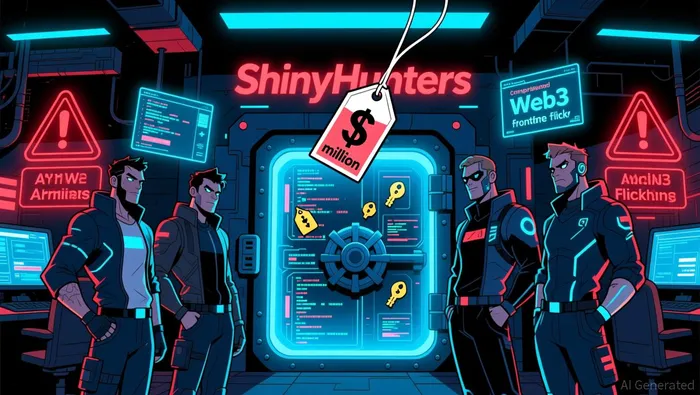
The financial threat is quantified at $2 million, with the hacker group ShinyHunters claiming to be selling stolen Vercel data. The alleged payload includes access keys, source code, and database records, creating a direct monetary incentive for the breach.
The immediate attack vector is now confirmed: Vercel stated that attackers gained access via a compromised third-party AI tool that used Google Workspace OAuth. This method exploited a broader incident affecting multiple organizations, highlighting how a single compromised tool can breach a major platform.
This creates a direct attack vector for crypto projects. Many Web3 frontends, including the widely used MetaMask, rely on Vercel for hosting. The breach exposes the risk that attackers could compromise deployment pipelines, potentially leading to frontend tampering for affected accounts.
The Crypto-Specific Risk: Frontend Manipulation and Fund Flow
The confirmed breach creates a direct path to manipulate the user-facing layer of Web3. If attackers accessed deployment credentials and source code, they could alter or take down DEX frontends and wallet dashboards. This is a supply-chain attack where a single point of failure-centralized hosting-undermines trust in decentralized applications, even if the underlying smart contracts remain secure.
The mechanism is straightforward: stolen environment variables often contain private RPC endpoints and API keys. Compromising these allows attackers to alter builds and inject malicious code into the frontend delivered to users. This bypasses traditional security checks like DNS monitoring and enables sophisticated phishing attacks designed to steal user private keys directly from the interface.
The financial risk is immediate and severe. A compromised frontend could redirect user funds to attacker-controlled wallets or display fake balances and transaction confirmations. For crypto projects relying on Vercel, this incident transforms a hosting platform from a neutral utility into a critical, vulnerable chokepoint for user capital.
Catalysts and Watchpoints
The severity of the fallout hinges on three key developments. First, monitor for confirmed leaks of specific crypto project credentials or source code from the $2M listing. The initial claims are unverified, but any public disclosure of project-specific secrets would validate the threat and trigger immediate response actions.
Second, watch for Vercel's official update on the number of affected customers and the status of its investigation. The company has only stated a "limited subset" was contacted. A broader customer count or details on the breach's origin would clarify the scale of the risk to the Web3 ecosystem.
Third, track any reported incidents of crypto project frontends being compromised or user funds being drained. The mechanism is clear: attackers with deployment access could alter builds and inject malicious code. Any such event would be the ultimate proof of concept, moving the risk from theoretical to immediate financial loss.