

Viva Leisure (ASX: VVA) is treating the ASX announcement board like a daily scoreboard. For weeks the company has been filing routine buyback notifications - telling the market exactly how many shares it repurchased that day, at what price, and how many remain available under the program. The headline machine runs along with it: Viva Leisure Continues On-Market Share Buy-Back With Daily Updates. The implication is clear. Management is executing with conviction. The stock is undervalued. Someone who knows is buying.
It is not as good as it looks.
Let's strip away the announcement cadence and look at what's actually happening.
The buyback: 10% of the company, 9% of the commitment
In February 2026, Viva Leisure announced an on-market share buyback program authorizing the repurchase of up to 9,854,636 shares - approximately 10% of its issued share capital. The price cap is set at no more than 5% above the 5-day volume-weighted average price. A standard mechanism. Nothing unusual in structure.
As of late May - three and a half months later - the company has repurchased approximately 896,000 shares. That represents roughly 9% of the authorized buyback amount. Not 90%. Nine percent.
The daily updates create an impression of urgency and momentum. They don't reflect it. A few thousand shares per session against a program that authorizes nearly 10 million is not aggressive execution. It's a slow dribble.
The director purchase signal - or signal of a signal
On May 25, a Viva Leisure director made a modest share purchase, which financial media quickly framed as insider conviction. The narrative was immediate: insiders are stepping up alongside the buyback, which means the board believes the stock is deeply undervalued.
Any astute investor would have asked one question: what was the size of the purchase?
When insider trades are modest relative to existing holdings, they are more often about maintaining percentage ownership in the face of dilution than about conviction. A director buying a few hundred shares while the company authorizes a 10% buyback isn't a signal. It's arithmetic. The share count is shrinking; without buying, the director's percentage would drift. The market treats it as a bull signal. It may be nothing more than portfolio maintenance.
The numbers that matter: revenue growth, margin mix, and the debt nobody discusses
Set aside the buyback theater for a moment and look at the underlying business.
FY26 revenue came in around $229 million, up roughly 25% year-over-year. Statutory NPAT was upgraded. EBITDA guidance held. The performance marketing arm - TPLR - is growing faster than the rest of the business and is now 8.1% of group revenue, up from 6.5% a year ago. It is the highest-margin segment, which means margin mix is accreting as TPLR scales.
That is not nothing. The operating story is improving.
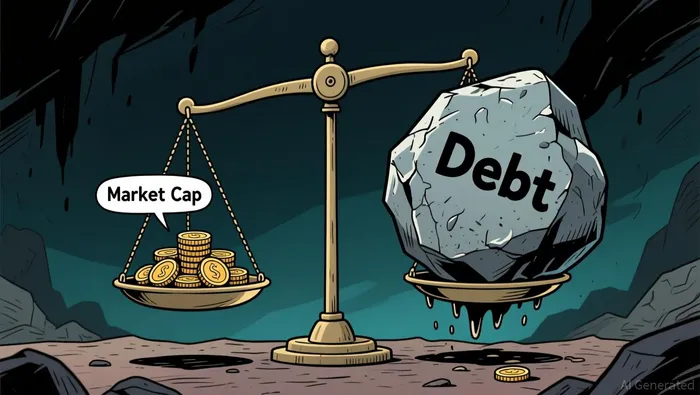
But now look at the balance sheet. Total debt sits at approximately $370 million. The market capitalization is roughly $145 million at current share prices around $1.45. The company owes more than it is worth.
That is the number the buyback announcements are designed to make you forget. A $145 million market-cap company carrying $370 million in debt is not buying back shares because it has excess capital. It is buying back shares while it is leveraged. Every dollar spent on a buyback is a dollar not spent on deleveraging. Every dollar not spent on deleveraging keeps the interest burden and the refinancing risk alive.
For a budget fitness operator - a business with real-estate leases, fitout costs, and membership churn that accelerates the moment macro conditions tighten - carrying debt that exceeds market cap is not a strategic position. It is a vulnerability that buybacks don't fix.
The analyst consensus at $3.01 - a different kind of propaganda
Sell-side consensus on VVA targets approximately $3.01 per share. That implies roughly 110% upside from current levels. With a min target of $2.00 and a max of $3.60.
You decide which was marketing fluff and which one was analysis.
The gap between $1.45 and $3.01 is so wide that it stops being a disagreement and becomes a statement about how little conviction those targets carry. Analysts on micro-cap ASX stocks routinely issue targets that function as recommendations rather than models. When the target is double the current price on a company with more debt than market cap, the model assumptions have already done the work that the stock price hasn't. That is not a trading signal. It is a thesis in search of execution.
What the buyback actually tells us
The cross-currents are clear. Revenue is growing, margin mix is improving, and the TPLR business is scaling. That suggests the operating team is executing on growth. But debt exceeds market cap, the buyback has consumed less than 10% of its authorization in three and a half months, and the daily update cadence reads more like market maintenance than capital conviction.
Directionally, the buyback is a floor-setting signal, not a ceiling-breaking one. It tells us management doesn't want the share count drifting lower - which is rational for any company that wants to protect per-share earnings as it grows revenue. But it does not tell us the stock is a steal at $1.45. It does not tell us the balance sheet risk is managed. And it certainly does not tell us the $3.01 analyst consensus is earned.
The daily update machine will keep running. Viva Leisure will announce another few thousand shares repurchased. The headline will recycle. The narrative will hold: management is buying, insiders are buying, the stock is undervalued.
The question the market should be asking is not whether management believes in the stock. It is whether $370 million in debt on a $145 million market cap makes share repurchases the rational use of capital - or just the easiest story to sell.
Until that balance sheet compresses, the buyback is PR disguised as capital discipline. The daily updates aren't evidence of conviction. They're evidence of a company that knows the alternative conversation - about leverage, about risk, about why a gym chain is more indebted than it's worth - is a harder sell.
Investors who treat these daily notifications as bullish signals are confusing announcement volume with substance. The real story isn't in the buyback log. It's in the debt schedule.