

The Senate confirmed Kevin Warsh as a Federal Reserve governor on May 12 by a vote of 51-45. This procedural step clears the way for a separate confirmation vote on his chairmanship, scheduled for May 14. The process is now moving toward a final vote, with Warsh's term as governor set to begin on February 1.
Market pricing shows near-certainty in this outcome. As of today, the probability of Warsh becoming Fed chair by May 15 is 99.2%. The chance of Jerome Powell being removed from the chairmanship by May 14 is minimal at just 0.7%. This reflects a market view that the Senate's procedural steps are a near-guarantee of a leadership change.
The immediate market reaction was a clear crypto flow catalyst. Bitcoin spiked to $80,000 by May 10. Yet, this positive sentiment was met with a counter-current in traditional crypto vehicles, as spot Bitcoin ETFs saw $268 million in outflows on May 7. This divergence highlights the complex, flow-driven nature of the market's response to the confirmation news.
The Crypto Flow Catalyst: Policy Ambiguity and Market Inflows
Warsh's crypto background is a direct flow catalyst. He has invested in over 20 crypto-linked firms and famously called Bitcoin "new gold for under 40s". This personal stake and bullish framing contrast sharply with the Fed's traditional distance from digital assets, creating immediate regulatory expectation shifts for the market.
The key uncertainty lies in his potential influence on bank custody policy. As Fed Chair, Warsh would oversee supervision of banks holding digital assets. His disclosed investments create a clear conflict-of-interest risk, which may lead to a more cautious or delayed supervisory stance. This ambiguity could slow institutional onboarding, a critical source of future liquidity.
A potential catalyst exists in any coordination between the Fed and Congress on crypto-specific legislation. The proposed CLARITY Act aims to provide a clear legal framework. With Warsh viewing crypto as part of the financial system, his leadership could accelerate legislative clarity, unlocking the institutional capital that has been on the sidelines.
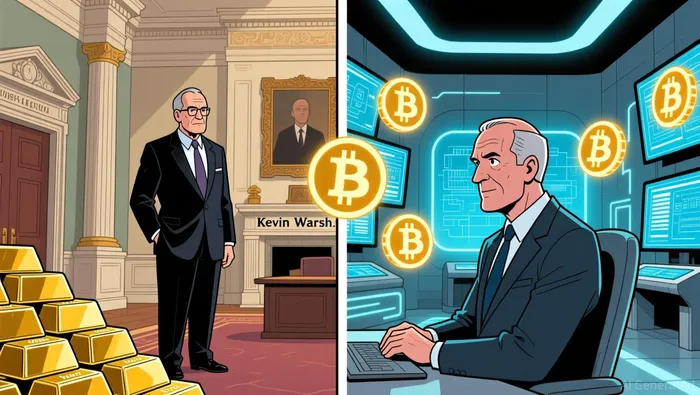
The Rate Policy Dilemma: Independence vs. Political Pressure
The core tension for Warsh is his stated commitment to monetary policy independence against a backdrop of intense political pressure. He has pledged the Fed should be "strictly independent" in the making of monetary policy. Yet, he has also proposed a new "Fed/Treasury accord" to govern non-monetary matters, a vague concept that has raised concerns among former Fed officials about potential limits on the central bank's crisis tools. This ambiguity creates immediate policy risk, as markets weigh whether his leadership will strengthen or erode the Fed's autonomy.
This sets up a stark contradiction in his economic stance. Warsh was once a "hawk," pushing for rate hikes to curb inflation. Now, he supports the rate cuts that President Trump has demanded to boost growth. This shift from a past pro-hawk to a current pro-cut position creates significant policy ambiguity. It leaves markets uncertain about his true inflation-fighting resolve, especially as he faces the same political pressure that has targeted the current chair.
The critical test arrives at the Fed's next meeting, likely its first chaired by Warsh, scheduled for June 16-17. His initial policy statements will be key in signaling whether he will prioritize inflation control or yield to growth-focused political demands. The market's reaction to those remarks will determine the near-term trajectory for rates and, by extension, the flow of capital into assets like crypto.