

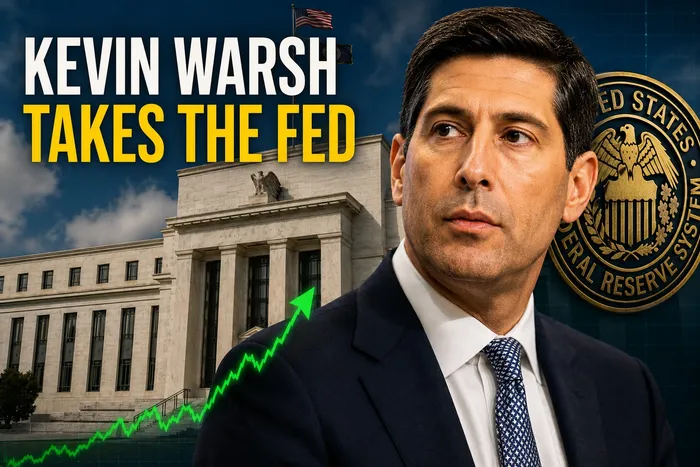
Kevin Warsh will be sworn in this moring as chairman of the Federal Reserve, stepping into one of the world’s most influential economic policymaking roles at moment of mounting inflation, elevated Treasury yields, and renewed scrutiny over the central bank’s independence under President Donald Trump.
President Trump will host the swearing-in ceremony at the White House East Room, a rare setting for a Fed chair installation and the first such event there since Alan Greenspan’s 1987 ceremony.
Warsh, a former Federal Reserve governor who served during the 2008 financial crisis, replaces Jerome Powell as chair after a contentious transition period marked by public disagreements between the White House and the central bank over interest-rate policy. Powell’s term as chair expired earlier this month, though he remains on the Fed’s Board of Governors.
WATCH:
📺 Could Nvidia’s Earnings Launch the First $8 Trillion Company in History?
📺 The Nvidia Blindspot: Where the Next 80% of AI Profits Are Hiding
📺 5% Treasury Yields Could Crack AI-Fueled Stock Rally
The leadership change comes as financial markets reassess the direction of U.S. monetary policy. According to The Wall Street Journal, Trump selected Warsh partly because of expectations that he could support lower interest rates. Yet rising inflation tied to higher oil prices, tariffs, and geopolitical tensions have complicated that outlook, leading some investors to anticipate that the Fed may instead need to keep rates elevated or potentially raise them further.
Warsh will immediately confront an economy where inflation remains more than a percentage point above the Fed’s 2% target while policymakers debate whether tighter monetary policy may be necessary. Minutes from the Fed’s most recent meeting showed a growing number of officials open to additional rate hikes.
During his confirmation process, Warsh sought to reassure lawmakers that the Federal Reserve would remain independent despite Trump’s repeated criticism of Powell and demands for lower rates. Warsh told senators the central bank would maintain its autonomy while also signaling significant changes to how the Fed communicates policy and manages its balance sheet.
Warsh has also been critical of the Fed’s post-pandemic policy framework. Reuters reported that he has argued inflation was largely the result of Federal Reserve decisions and excessive fiscal spending rather than temporary supply-chain disruptions. He has additionally called for reducing the Fed’s balance sheet and scaling back the institution’s reliance on “forward guidance,” the practice of signaling future policy intentions to markets.
Warsh’s first major test as chair is expected at the Federal Open Market Committee meeting scheduled for June 16–17, where investors will closely watch updated rate projections and any early signs of how aggressively the new chairman intends to steer policy.