

A Yahoo Finance headline told investors that seven words from Fed Chair Kevin Warsh "should terrify Wall Street". The words: "regime change in the conduct of policy".
They didn't terrify anyone. The S&P 500 closed at all-time highs last week. The Nasdaq hit records on May 27. The 10-year Treasury yield spiked 65 basis points on the news, then faded back to 4.49% by June 3. The market heard the words, checked the mechanics, and moved on.
But the headline still matters - because fear narratives are where valuation disconnects get born. When the market sells a stock because it reads one article and assumes the worst, that's the gap this writer lives in. The question is whether the Warsh fear trade is doing that right now.
The answer: "Regime change" is a multi-year framework project, not a near-term rate shock. The mechanical threat is almost zero on any timeline that moves individual stock prices. Here's what actually separates the fear from the substance.
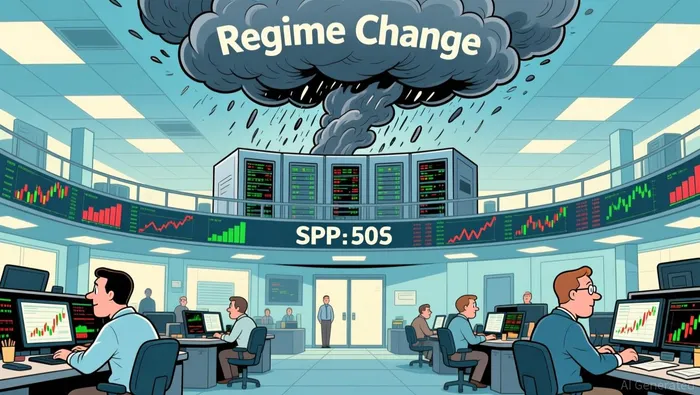
1. "Regime change" means framework, not fireworks.
Warsh defined it himself during his April Senate testimony. It means a new inflation framework, new data sets, the end of forward guidance, and eventually a smaller Fed balance sheet. That's structural reform - the kind of work that plays out in FOMC statements over years, not in sudden rate moves next month. It's plumbing, not a fire alarm.
2. The balance sheet shrink is years away, and it might not happen at scale.
The Fed's balance sheet is already at $4.4 trillion after $2.2 trillion in quantitative tightening was completed last December. Warsh wants it smaller. But Reuters reported in May that the massive U.S. debt load could undercut his plan entirely - the Treasury keeps issuing bonds faster than the Fed can shrink its holdings. You can't drain liquidity when the borrower won't stop borrowing. The structural constraint is Congress and the Treasury, not the Fed.
3. Warsh is trapped between Trump's agenda and the data.
Trump nominated Warsh to deliver rate cuts. The data says steady. Futures markets price in zero rate cuts for the rest of 2026. Chase strategists expect rates held at 3.5%–3.75% through year-end. Warsh can't deliver the cuts Trump wants without inflation justification he doesn't have, and he can't raise rates without political blowback. The result: policy stays flat, which is neutral for earnings, not the catastrophe the headlines sell.
4. The market already proved the fear is thin.
The S&P 500 trades at roughly 21 times forward earnings, while analysts project 22.6% earnings growth for calendar year 2026. That puts the index's PEG ratio (price-to-earnings-growth) near 1.0 - the threshold where the valuation justifies the growth. The market isn't pricing in a regime shock. It's pricing through a transition. All-time highs don't lie about what the bulk of capital has concluded.
5. The real disconnect is in individual names, not the index.
This is where the edge lives. When the Warsh headlines run, small-cap and rate-sensitive stocks get sold on narrative before the mechanics are checked. The Russell 2000 was actually up 0.90% on June 3 - even as the Dow slipped 0.56%. The small-cap complex already found its bid. But in individual growth names that got tagged as "rate-sensitive" during the February and April selloffs, you'll still find forward multiples below their earnings growth rate. That's the GARP setup. The macro headline creates the discount; the individual company's execution justifies buying into it.
The break condition.
This thesis breaks if Warsh actually pivots to aggressive tightening - rate hikes above 3.75% on the back of sustained inflation above 3%. Right now, that scenario has no path. The political constraints, the data, and the balance sheet mechanics all point to steady policy. The narrative is louder than the mechanism.
The bottom line.
"Regime change" sounds like a threat. It's a to-do list. The real story isn't what Warsh said - it's what the market did. It bought through the noise, hit records, and proved the fear doesn't move the needle. For investors looking at individual growth stocks still carrying selloff discounts from January and February, the Warsh headline is doing the heavy lifting that creates bargains. The disconnect between the fear narrative and the steady-state math is the setup. The specific stock pick is where it pays off.