

CLARITY Act progress is real, but New York enforcement keeps the message mixed
The near-term story is not whether crypto gets regulated. It is who gets to set the rules. The constructive signal is real: the Senate Banking Committee has advanced the CLARITY Act, which would draw clearer lines between securities and commodities oversight. That is the kind of milestone that can start improving institutional confidence because it points toward a workable U.S. market-structure framework rather than years of jurisdictional blur.
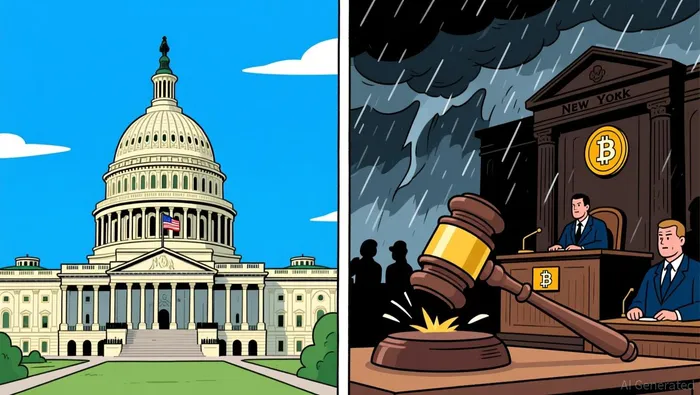
The problem is that the signal is still noisy. Earlier this month, New York filed lawsuits against Coinbase Financial Markets and Gemini Titan over event-based trading platforms, arguing those products amount to illegal gambling under state law. So the split is now visible: Washington is moving toward a federal regulatory map for digital assets, while New York is still trying to shut down part of that activity at the state level.
That tension matters because institutions do not need perfect regulation; they need predictable regulation. Bulls can argue federal progress should eventually dominate. Bears can argue that state-level enforcement keeps creating product and compliance gray zones. The practical takeaway is simpler: investors are starting to get clarity, but not yet a clean institutional green light.
Why the market is starting to price legal clarity
Once regulation starts moving from courtroom drama to written rules, the market stops treating clarity as theory and starts trading it as a variable.
Valuation models are already reacting
Citigroup lowered its 12-month price targets for Bitcoin and Ether because stalled U.S. crypto legislation remained a key risk. That suggests legal gridlock is not just a headline risk; it is starting to influence valuation outlooks. The mechanism is straightforward: clearer U.S. rules could widen the buyer base by reducing compliance friction for advisors, custodians, and fund platforms. If that changes, upside revisions can follow. If legislation stalls again, the market has fresh evidence that adoption is still being delayed.
Stablecoin compromise may unlock broader legislation
The next transmission channel is market structure, and the latest move centers on stablecoins. Lawmakers reportedly reached a compromise regarding stablecoin "yield" provisions, resolving what had been one of the most contentious issues in crypto regulation. Stablecoin rules have been a central bottleneck in U.S. policymaking, so progress here matters beyond the immediate dispute. A workable compromise can clear part of the path toward broader market-structure legislation for exchanges, token issuers, and digital asset markets.
Public-market access is the clearest confirmation
The strongest confirmation is capital-raising behavior. Blockchain.com has confidentially filed for a U.S. IPO, a sign that at least one major crypto business believes the regulatory environment is stable enough for public-market scrutiny. After a period when firms delayed listings, that matters more than any press release. An IPO brings disclosure, institutional sponsorship, and a public-market test of crypto exposure.
The decision window is now. If stablecoin talks advance into broader legislation, the market can rerate on several fronts at once: higher asset price targets, better stablecoin economics, and more crypto firms accessing public capital. If the compromise fractures, investors should expect the opposite: softer forecasts, slower listings, and another round of wait-and-see positioning.
The tradeable read: lean constructive, with clear watchpoints
The tradeable read is lean constructive, not all-clear. The market is no longer treating crypto as "no rules." It is starting to price which rules arrive first, with the Senate committee having advanced the CLARITY Act, lawmakers reportedly reached a compromise regarding stablecoin "yield" provisions, and Blockchain.com having confidentially filed for a U.S. IPO. That combination says policy momentum is real, but still fragile.
What would strengthen the setup
Bulls do not need perfection; they need process. The setup gets stronger if:
- CLARITY moves beyond committee advancement and into broader congressional action.
- The stablecoin compromise expands into a fuller market-structure deal.
- More crypto firms follow Blockchain.com toward public-market access.
If those signals stack, clarity becomes tradable flow rather than just headline hope.
What would break the thesis
The setup weakens if:
- Stablecoin negotiations break down after the reported compromise.
- State enforcement expands faster than federal rulemaking.
- Other firms delay listings or revise outlooks because U.S. legislative progress stalls.
What to watch now
Three watchpoints matter more than the rhetoric:
- Whether CLARITY advances beyond the committee stage.
- Whether the stablecoin compromise becomes the basis for broader legislation.
- Whether Blockchain.com's IPO filing moves from confidential filing toward a more advanced public-market process.
That is the edge: stay constructive, but only while the rulebook keeps advancing faster than the crackdowns.