

The U.S. government now holds a position that makes it the largest known sovereign holder of Bitcoin. Roughly 328,372 BTC, worth around $25 billion, sits in a reserve created by an executive order in March 2025. This isn't a speculative bet; the coins came almost entirely from criminal forfeitures and law enforcement seizures. The order was clear: the Treasury is barred from selling these assets, treating Bitcoin as a reserve asset. For over a year, the machinery has been in place, cataloging and centralizing these holdings.
Now, the setup is complete. The key legal hurdle has been cleared, and a major announcement is expected "in the next few weeks". White House adviser Patrick Witt has signaled a breakthrough, calling it a "big step forward" independent of new legislation. The central question for the smart money is about to be answered: is this a passive holding, a symbolic gesture, or the first move in a strategic policy tool? The real signal will come not from the announcement itself, but from what it implies about the future use-or non-use-of this $25 billion whale wallet.
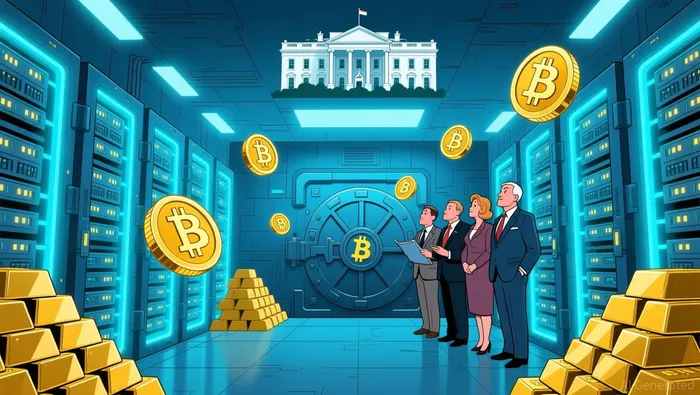
The Smart Money's Lens: What to Watch in the Announcement
The smart money isn't waiting for the announcement. It's already scanning the language for signs of skin in the game. The key question is whether this reserve becomes a permanent, non-inflationary holding or a potential future supply overhang. The market's reaction will hinge on that distinction.
The first signal to watch is any mention of future acquisition. The administration has stated its strategy must be budget-neutral, meaning no new taxpayer spending. That's a positive for avoiding a direct supply shock. But the real test is in the fine print. If the announcement merely confirms the status quo-holding seized coins with no plan for more-then the reserve remains a passive holding. That's a bullish signal for the coins already in the wallet, as it implies no immediate selling pressure. Yet, it also leaves the door open for political winds to shift later. The lack of codified legislation is the biggest vulnerability. As Witt noted, executive actions are insufficient; legislation would be needed to make the arrangement lasting. A reserve without a legal anchor is a whale wallet that could be moved by the next administration.
On the flip side, if the announcement hints at a broader sovereign Bitcoin strategy, the smart money will scrutinize the mechanism. Any plan to acquire more coins must be truly budget-neutral. The market will be wary of any language that sounds like a future buying program, even if it's framed as "accumulating" or "building a strategic position." The real alignment of interest comes from the Treasury being legally barred from selling, which is already in place. The next step is making that bar permanent through law.
The bottom line is that the smart money will look past the headline. It will focus on the language around permanence and future use. A statement that the reserve is closed and only for seized assets, with a clear legislative path to lock it in, would be seen as a bullish signal of alignment. Anything else-vague talk of "where we are going" without a concrete, non-inflationary plan-would be viewed as a potential trap, leaving the $25 billion whale wallet exposed to future political decisions. For now, the market is bracing for news that could either cement the reserve's role as a permanent holding or reveal it as a political showpiece with a contingent supply overhang.
Catalysts and Risks: The Path to a Durable Policy
The immediate catalyst is the announcement itself, expected in the next few weeks. The smart money will watch for any hint that the reserve is being used as a strategic tool, not just an asset management exercise. The White House has already taken a "big step forward" from the executive branch side, but the real durability depends on what comes next. The primary risk is that the announcement is procedural-a confirmation of the status quo-followed by years of legislative gridlock. That would leave the $25 billion whale wallet vulnerable to the next administration's policy shift.
The key uncertainty is legislative codification. The reserve was created by executive order, which lacks the permanence of law. As Witt noted, legislation would be needed to make the arrangement lasting. The path is now clear with bills like the American Reserves Modernization Act (ARMA), the renamed version of the BITCOIN Act. This bill aims to build on the executive order and includes language for acquiring 1 million bitcoin over five years using budget-neutral strategies. The smart money will scrutinize any indication that the administration is actively pushing ARMA through Congress. A quiet, behind-the-scenes effort would be a red flag. A public, bipartisan push would signal a commitment to making this a lasting policy.
The bottom line is that the reserve's fate hinges on the next few months. If the announcement is followed by concrete legislative action, the $25 billion holding becomes a permanent, non-inflationary asset. That would be a bullish signal for Bitcoin's institutional adoption. If it stalls, the reserve risks becoming a political footnote-a symbolic gesture with a contingent supply overhang. For now, the market is watching for the first sign that the smart money in Washington is truly committed to locking in this strategic position.