

The headline last week had the energy complex buzzing: Exxon Mobil is evaluating acquisition targets, including Australia's top gas exporter, Woodside Energy. The stock jumped. The chatter machines fired up. Takeover premiums, bid speculation, who-blinks-first theater.
I don't think this is the right way to frame Woodside. The real question is not whether Exxon pays a premium tomorrow. The real question is whether Woodside is the kind of company that can compound a growing income stream through a structurally higher-inflation regime - regardless of what happens with a bidder.
Because if you get that question right, the takeover rumor is just noise. If you get it wrong, you're speculating on a headline instead of investing in cash flows.
Why the takeover probability is low - and why that's not a problem
Let's deal with the distraction first. Bloomberg reported June 12 that Exxon has been evaluating acquisition targets, including Woodside, citing people familiar with the matter. That's it - internal talks, not a bid, not a letter of intent, not even a confirmed approach.
Then Australia pushed back. Woodside insiders told the Australian Financial Review that an Exxon takeover would be "highly unlikely" to secure federal government approval. Western Australia's government said it would block any deal that moved Woodside's headquarters out of the state. The company's embattled chairman and recently departed CEO have left governance questions open, but not regulatory clearance.
Australia's foreign investment regime - the FIRB process - has already blocked foreign acquisitions on national interest grounds. Woodside produces gas that powers Australian homes and industry. A foreign supermajor absorbing the country's largest gas exporter isn't a transaction the Australian government is going to rubber-stamp.
This means the M&A premium is unlikely to materialize. That's not a bear case - it's a reality check. It means you need to own Woodside for the fundamentals, not for a speculator's lottery ticket.
And the fundamentals are exactly where this becomes interesting.
Pricing power in a toll-road business
Here's what I look for first: can the company raise prices without losing customers? For an LNG producer, the answer depends on what you sell and who buys it.
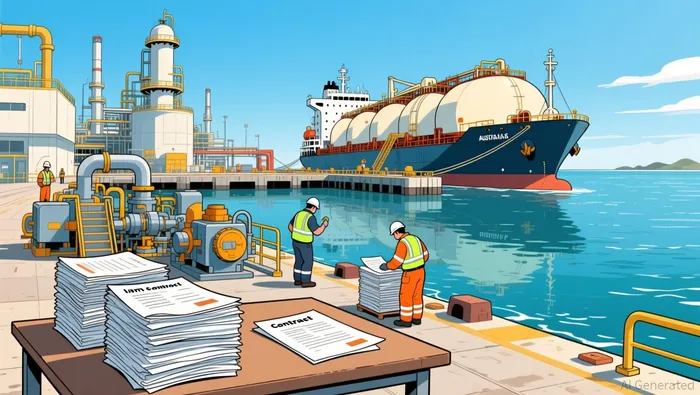
Woodside doesn't just sell gas on the spot market, where prices swing violently with weather and geopolitics. A significant portion of its production is locked into long-term contracts with Asian offtakers. These are multi-year agreements that tie LNG prices to crude oil indices or Brent-linked formulas. When inflation pushes commodity prices higher, those contracts pass the increase through. That is pricing power by contract structure.
The Louisiana LNG project - which Woodside acquired in October 2024 and gave final investment decision on in April 2025 - illustrates the model. It's a three-train, 16.5 million tonne per annum (Mtpa) development. Woodside already secured offtake agreements with Japanese utility Jera and Turkish buyers before the facility is even finished. You don't lock up buyers like that unless they believe they need the supply.
The structural reason they do is simple: Japan and South Korea are importing less LNG on an absolute basis, yes - their coal and nuclear ramp-ups are real - but emerging Asia, India, and Southeast Asia are growing demand faster. The IEA estimates global gas demand growth of nearly 2% in 2026, driven by China and emerging Asia. The buyers are shifting geography, not disappearing.
Woodside is positioning for that shift. That matters because it means revenue isn't entirely at the mercy of a single buyer's policy reversal.
The cash flow inflection nobody is talking about
Now to the numbers. Woodside's full-year 2025 underlying net profit was US$2.6 billion. Free cash flow was $1.9 billion. Those figures look solid, but they're not the headline. The headline is what's coming.
The Scarborough Energy Project off Western Australia is 96% complete and on budget. First LNG cargo is expected in the fourth quarter of 2026 - months from now, not years. Scarborough alone will generate approximately $1.9 billion of revenue for Woodside annually. More importantly, management has guided that net operating cash flow from LNG assets should grow from around $5 billion today to approximately $9 billion as growth projects come online.
That is an 80% increase in cash flow from the base business. Not a hope. Not a scenario. A project that is 96% done, with the floating production unit already on site.
Now connect that to the dividend. Woodside's payout policy targets 50% to 80% of net profit. The full-year 2025 dividend was US$1.12 per share, fully franked - meaning Australian shareholders receive a tax credit on the corporate tax already paid, which boosts the effective after-tax yield. At a share price near A$23, that translates to a forward yield of roughly 4.8%.
A 4.8% yield on a company guiding cash flow to nearly double is not a static income play. It's a compounding setup. If free cash flow approaches $9 billion as Scarborough and Pluto Train 2 come online, and the payout ratio stays in the 50-80% band, the dividend has a clear mechanical path to grow significantly. That's the equity yield curve in action: you accept the current cyclical yield, but the growth trajectory is what creates the return over decades.
The LNG oversupply risk - and why it doesn't break the case
I need to be clear about the risk. The IEA says global LNG supply growth will accelerate in 2026, with 113 billion cubic metres of new export capacity coming online over the next two years. That's a real wave. Some analysts see it creating a structural surplus that compresses prices and squeezes margins.
That's the counterargument. I don't think it breaks the Woodside thesis, and here's why.
First, Woodside's cash flow isn't spot-dependent. The long-term contract portfolio provides a floor. Second, the $9 billion cash flow guidance already factors in the current market environment - management isn't pricing in a 2022-style price spike. Third, the supply wave is global, but LNG doesn't trade like oil. Geography, shipping capacity, and regasification infrastructure create regional pricing dislocations. The buyer still needs the supply.
If the oversupply case materializes more severely than expected, the dividend still has a 50% payout ratio floor to protect it. Woodside isn't chasing yield. The payout policy gives it room to cut the ratio rather than cut the dividend.
Where this belongs in a portfolio
This is not a stock I would treat as a yield shortcut. It belongs in the income-growth sleeve of a portfolio - the section where you buy companies that can turn a modest yield into years of dividend growth without betting the farm on one macro outcome.
The balance sheet is investment-grade. Net debt to equity is well controlled. The payout ratio of roughly 50-60% on underlying earnings provides cushion through a downturn. Scarborough, the catalyst that changes the cash flow profile, is nearly done and on budget. The pricing power comes from contract structure, not wishful thinking.
I believe inflation is likely to remain more persistent than the market wants to admit, but that does not mean every energy stock is attractive. The winners still need pricing power, balance-sheet strength, and a payout profile that can survive a full cycle. Woodside passes all three.
The Exxon rumor may have put a temporary bid under the stock. The Australian government will likely ensure the rumor doesn't become a transaction. What remains is the standalone case: a 4.8% yield on a company whose cash flow is set to grow materially within the next 18 months, backed by long-term contracts in the world's fastest-growing gas market.
If you're sitting in cash waiting for a clearer entry, the Scarborough completion timeline in Q4 2026 is the clock on the wall. Every month that passes with the project on budget and on track narrows the gap between today's price and tomorrow's cash flow reality. That's where the opportunity starts.
I don't think investors are being paid to chase the highest current yield. The better setup is a company that can turn a moderate yield into years of growing income when the macro regime keeps inflation above traditional targets. Woodside is that setup - takeover rumor or not.