

Workday's rebound shifted the debate from quarterly execution to AI relevance
The immediate question was whether Workday could post a clean quarter. The bigger question is whether investors will keep valuing it mainly as a legacy HCM vendor or start treating it as a trusted layer for enterprise AI. The setup was extreme: shares jumped nearly 12% premarket after the print, yet the stock was still down more than 43% year-to-date. That looks more like relief than a full rerating.
Workflow trust matters more than model headlines
Workday's case is not that it has the flashiest model. It is that its agents sit on top of HR, finance, and business-process data that enterprises already trust. Workday now markets AI agents that operate within enterprise guardrails, while acquisitions and a new AI strategy have been used to reinforce that position.
The commercial question is whether that trust converts into spend. Workday's push around the Universal Main Subscription Agreement and Flex Credits could make it easier for customers to experiment with, measure, and scale AI features inside an existing deployment. If that happens, the installed base becomes a real attach platform rather than just a large addressable base.
Workday is trying to make governance the moat for enterprise agents
The next part of the debate is distribution plus control. The recent 17% YoY partner-centric SaaS growth matters because Workday is trying to scale agents through the partner ecosystem in much the same way modern enterprise software scaled through implementation partners. Workday has cited Gartner-style research saying partners could drive more than 65% of AI-related enterprise implementations by 2026. If that holds true, the winner may be the vendor that makes it safest and easiest for partners to deploy agents in production.
Agent Passport is Workday's control-plane pitch
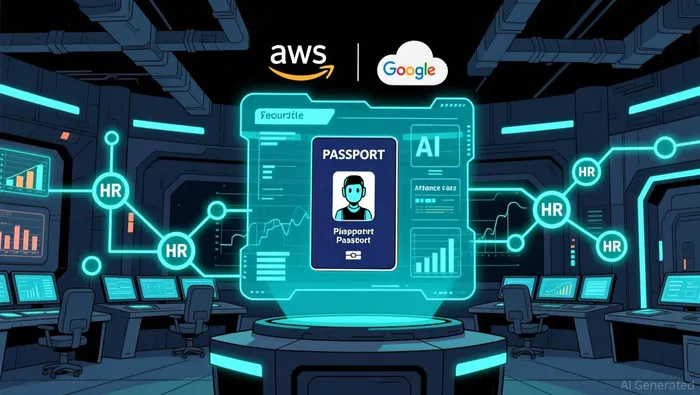
Workday's answer is an agent control plane centered on Agent Passport. The company says every AI agent-Workday-built or third-party-can be tested and verified before production and monitored afterward against standards such as OWASP LLM Top 10, NIST AI RMF, and MITRE ATLAS. Security teams would get an auditable record of what was tested and by whom, while runtime controls can allow, block, or route actions. If a problem is found, revocation can limit or stop affected agents across the organization.
That is the core moat argument: Workday is not only selling agents; it is trying to become the governance layer where enterprises approve, monitor, and revoke them.
Why breadth alone may not beat Workday's niche
Bears can reasonably argue that ServiceNow and Microsoft have broader platform reach and could win agent adoption through helpdesk or productivity relationships first. But broad reach matters less if enterprises are unwilling to let autonomous software touch sensitive people-and-money workflows. Workday's counter is that its embedded security and business rules engine logic, combined with a compliance-first agent ecosystem, gives it a defensible niche even if rivals have wider footprints.
AWS and Google matter only if they deepen adoption and wallet share
The next test is straightforward: do AWS and Google make Workday harder to ignore, or just easier to demo?
AWS reduces build friction at the data layer
The AWS integration matters because developers now get bi-directional, zero-copy access between AWS data and AI services and Workday's governed HR and finance data. That removes the need for custom pipelines, duplicate data, or rebuilding business logic. Strategically, it lets customers point AWS tools and AI services at Workday's governed data layer, while Workday agents can also draw on AWS data when needed.
Google puts Workday agents closer to end-user workflows
Google adds the distribution layer. Sana Self-Service Agent from Workday is now available in Gemini Enterprise, and Gemini is the default AI model inside Sana for Workday. That pushes answers and actions into the applications employees already use, which is often where adoption wins or stalls.
The bull case is simple: AWS can lower the cost to build, Google can lower the friction to adopt, and together they can widen the set of workflows where customers spend on Workday.
The real test is stickier, broader usage
These partnerships only matter if they increase wallet share and switching costs. If Workday remains a destination users log into directly, the upside is more limited. If it becomes a trusted source for people-and-money data inside both AWS and Gemini workflows, customers are wiring automation through Workday's security, policies, and governance tools, including Agent Passport and Agent Gateway. That is how an integration becomes a moat.
Bears still have a valid concern: co-integrations can remain peripheral if they do not pull more spend into Workday's stack. So the signal to watch is not launch headlines, but whether partners start shipping more workloads on top of deepening ties with Google and AWS and whether customers expand from isolated agent use cases into broader automation anchored by Workday's data and governance layer.
What would confirm the thesis beyond the quarter
The quarter showed the base is still active, with subscription revenue growth holding up and the company avoiding an obvious AI-disruption scare. The next test is whether that stability turns into repeat AI spend inside systems customers already trust.
Bullish confirmation would come from partners and customers routing real workflows through Workday's data, agent, and governance layer. Invalidation would be easier to spot: friction around adopting AI features, AWS and Gemini links that stay peripheral, or rivals that capture the surrounding workflow layer before Workday can deepen its role.