

Look, diamond hands will tell you XRP's story isn't written yet. But the charts don't lie, and right now they're screaming one thing: weakness. Johnny Rice from the Motley Fool laid out the bearish counter-narrative that every XRP holder needs to confront - catalysts came, catalysts went, and the price action proves it.
The SEC settlement happened. The spot XRP ETFs launched with $1.6 billion in initial investment. Yet here we are, with XRP down more than 60% from its July high. That's not a dip. That's a structural breakdown in the bullish thesis.
Rice's core argument cuts to the heart of the bridge asset narrative: banks were supposed to need XRP for cross-border value transfer. Ripple's technology converts fiat to XRP, then to destination currency - theoretically creating endless demand. But the demand never materialized in proportion to adoption. The math isn't adding up, and the market knows it.
The technicals confirm the sentiment. XRP is trading well below the $2 level it held before the SEC lawsuit even dropped. The 200-day moving average - the line institutional players watch for long-term trend direction - has flipped bearish. And right now, the Fear & Greed Index sits at 38 (Fear), with technical indicators leaning bearish at 48%. This isn't a pullback. This is the market pricing in a thesis that's failing.
Worst of all? Ripple's own stablecoin RLUSD is undercutting XRP's primary use case. If banks can bridge value through a stablecoin instead of converting through XRP, the "bridge asset" demand mechanism becomes optional - not essential. That's not a headwind. That's a thesis-killer.
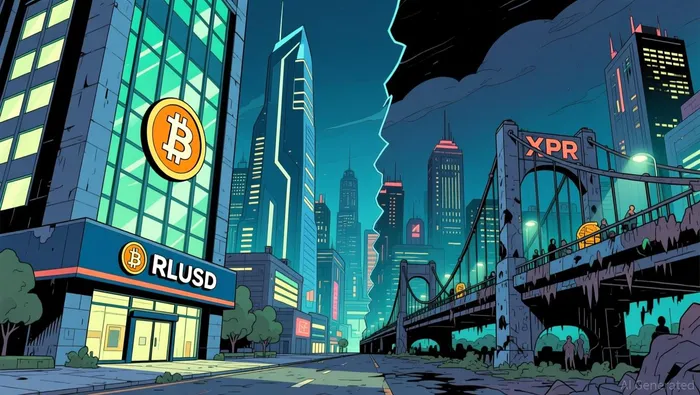
Rice isn't saying Ripple's business will fail. He's saying the XRP token itself may end up below $1 within five years, far from the moon targets promoted by the community. For HODLers banking on institutional adoption driving price? That's the cold water you need to drink. The narrative is cracking. The question is whether you're ready to admit it.
The Bull Case: Institutional Adoption Is No Longer Theoretical
The narrative around XRP is undergoing a fundamental shift - from retail speculation to institutional allocation. The evidence is mounting that this time is different, and the numbers tell a compelling story.
For years, institutional interest in XRP was expressed through OTC desks and private placements, the kind of quiet conviction that rarely makes headlines. That chapter is over. In the space of a few months at the end of 2025, XRP became one of the most actively adopted digital assets in the regulated Spot ETF market, attracting capital from some of the most influential names in traditional finance.
The launch of spot XRP ETFs brought about $1.6 billion in initial investment - proof that capital can be mobilized at scale when regulatory clarity arrives. That number alone dismantles the "nobody's taking this seriously" narrative. These aren't retail speculators dipping toes - they're institutional vehicles structured for long-term allocation.
The infrastructure underneath tells the same story. CME-listed XRP futures launched in May 2025 and became the fastest-ever CME cryptocurrency futures contract to reach $1 billion in open interest. That's institutional appetite measured in real money, not sentiment. The CME CF XRP-Dollar Reference Rate provided the institutional-grade pricing infrastructure these products needed to function.
But the real story is what Ripple is building underneath. The company has spent over $3 billion on blockchain- and crypto-related acquisitions over the past three years. The goal: create an end-to-end global payment infrastructure powered by XRP. This isn't theoretical anymore - it's a capital-intensive build with clear strategic intent.
Ripple now counts approximately 300 financial institutions using XRP for payment and liquidity purposes. That's not a waiting room. That's active adoption. And the pipeline is expanding - Mastercard's pilot projects involving the XRP blockchain could embed it into the overall payments infrastructure at scale.
The "bridge asset" thesis isn't dead - it's evolving. Yes, Ripple's stablecoin RLUSD exists. But the infrastructure being built around XRP positions it as potential settlement layer, not just a bridge. The $3B in acquisitions is creating an ecosystem where XRP becomes the backbone, not an optional stop.
Whales are accumulating. The ETF flows prove capital is moving. The institutional infrastructure is no longer theoretical. For diamond hands who've held through the cycles, the question isn't whether adoption is coming - it's whether you're positioned for the scale of adoption that's already in motion.
The Reality Check: Price History and Psychological Barriers
Let's cut through the narrative and look at what the charts actually show. XRP has been around for over a decade. It's seen SEC lawsuits, ETF launches, massive institutional adoption stories - and yet it still hasn't broken $4. That's not a ceiling. That's a fortress.
The current price sits around $1.42, which means we're dealing with a token that's down more than 60% from its July high and trading at roughly one-third of its all-time high. The $4 level has acted as an impenetrable roof for years - every breakout attempt has gotten crushed, every rally has fizzled out well before reaching that psychological barrier.
Here's the cold math: even Coinbase's conservative 5-year projection - the kind of "safe" prediction you'd make if you're being deliberately modest - puts XRP at $1.77 by 2031. That's a 27.6% gain over five years. For context, that's roughly a 5% annual return. The platform itself admits this is based on a 5% predicted price change input - meaning if you believe XRP will grow at a modest 5% per year, you get to $1.77.
But here's what that number doesn't tell you: to go from $1.42 to $4 - the level XRP has never breached despite a decade of hype - you're looking at nearly a 3x return. That's not a dip to buy. That's not a "accumulate on weakness" situation. That's a multi-bagger scenario that requires either massive adoption or massive speculation - or both.
The Fear & Greed Index sitting at 38 (Fear) tells you the market knows this. The technicals leaning bearish at 48% tells you the momentum isn't your friend right now.
For diamond hands who've HODLed through multiple cycles: the price history is clear. The $4 ceiling is real. Breaking it requires something more than hope. It requires a catalyst that actually moves the needle - not just in adoption metrics, but in actual buying pressure that can overwhelm the sellers waiting at every resistance level.
The question isn't whether the thesis is broken. The question is whether you're prepared for the possibility that even the most conservative bullish scenarios require returns that the market has consistently failed to deliver - year after year after year.
What Actually Moves the Price: Sentiment, Narratives, and Whale Games
Let's get real - in crypto, fundamentals are background noise. What moves price is pure sentiment, narrative control, and whale behavior. The charts don't lie, and right now they're showing a market that can't decide whether to FOMO or FUD.
The 50-day moving average is rising and currently sitting below price on the daily chart - that's the technical setup for short-term bullish moves. The 50-day MA is rising, which means if holders don't dump, XRP can grind higher. But here's the catch: this is short-term structure. The 200-day MA has been falling since April, and that's the line institutional players watch for long-term trend. Right now, the long-term trend is weak.
The 53% green days over the last 30 days tells you something critical: 16 out of 30 days ended green. That's not conviction. That's indecision. It's a market flipping between hope and fear, not a market with directional conviction. For diamond hands, this is the test - can you hold while the market oscillates like this?
The Fear & Greed Index at 38 (Fear) confirms the underlying sentiment. Fear & Greed Index score of 38 (Fear). This isn't capitulation, but it's not greed either. It's the space where weak hands start questioning their position.
Here's the tribal question: when the next bear cycle hits - and it will - can XRP holders resist paper-handing? The 2.48% volatility over the last month shows the asset is capable of moves, but without sustained buying pressure, those moves get sold into. Whales know this. They accumulate during fear, distribute during FOMO.
For the bridge asset thesis to work, holders need to demonstrate they're not just speculators - they need to show they can HODL through the cycles. The 50-day MA can support short-term rallies, but sustained price action requires holder strength. That's the real metric. That's the real test.
The narrative is in your hands. Literally. If you're HODLing, you're part of the signal. If you're trading, you're part of