

XRP's top 10% threshold fell, but concentration still matters
The gate got easier to open. About 2,232 XRP now lands a wallet in the top 10%, down from tougher thresholds earlier this year. But easier entry is not the same as a fair race. XRP's 7% slide in three days reset sentiment, while the distribution picture still shows that large wallets still control most effective float.
The threshold is lower at the bottom, not at the top
The full ranking still shows how uneven the prize is. Below the top 10%, the next rungs sit at top 5%: ~7,700 XRP, top 1%: ~46,400 XRP, top 0.1%: ~290,000 XRP, and top 0.01%: ~3.8 million XRP. Retail may now reach the lower tier more easily, but the upper tiers still separate serious capital from smaller positions.
Lower percentile targets still cost more in dollars
The harder truth is in dollars. Even after the pullback, the dollar value required to reach higher wallet tiers remains much higher than in prior years, and buying 1,000 XRP is now far more expensive than a year ago. That raises the barrier for new entrants even when the percentile threshold looks easier.
Why easier entry does not mean easier money
The main change is mechanical, not cosmetic. XRP's publicly accessible, real-time ranking of every wallet address makes distribution visible in real time, and more medium-sized wallets now exist than before. But that does not mean more supply is available to trade. XRP's distribution looks looser at the margin, while escrowed and functionally locked XRP still limits what can hit the market. Visible supply is not the same as tradable supply.
Liquidity remains concentrated in fewer hands
The rich list is not a flat ladder. It is a hierarchy of liquidity tiers, and the most important control point sits far above retail reach. The ledger now holds roughly 332,230 wallets holding at least 10,000 XRP, a record level. That is bullish in one sense, but those wallets are still much closer to the upper tiers than to the real power layer, and whale wallets control most effective float. If larger holders do not add liquidity, retail can hold a percentile badge and still trade in a market shaped by fewer, bigger wallets.
Network usage is rising even as price falls
The real test is whether network demand eventually helps price, or whether XRP keeps acting like cheap fuel for a busy chain. The usage case is hard to dismiss. In Q1, daily transactions jumped 35.3% and tokenized real-world asset volume climbed 124.1%. Yet XRP price slipped 27.1% in Q1 2026. Bulls can read that as accumulation before repricing; bears can read it as evidence that network utility can grow without immediately helping holders.
The clearest bullish signal is still accumulation
There is one clean signal supporting the bullish case anyway: larger holders are rebuilding positions even without price success. XRP has added a net 42 millionaire wallets since the start of 2026, the first increase in this cohort since September 2025, even while price stayed weak. That is a real accumulation signal, but it is not confirmation.
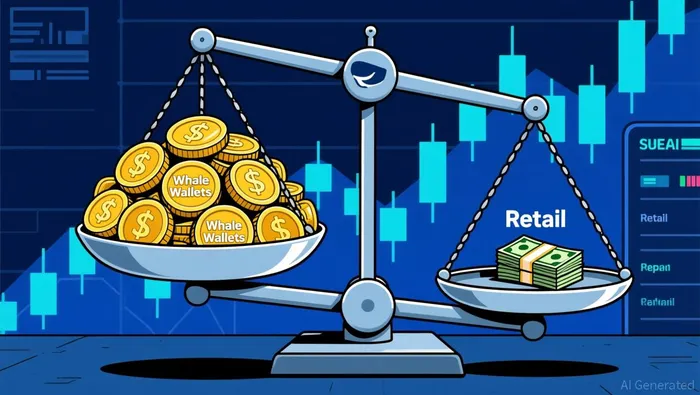
So the decision is straightforward. If June brings visible large-wallet movement toward exchanges, the easier-entry setup can still turn into a trap. If exchange inflows stay tight while usage and holder concentration keep building, the pullback was more likely a reset than a rejection.
XRP price still needs proof after the pullback
The setup is now a trade. XRP has fallen from $1.33 on May 31 to roughly $1.24 now and remains below its 7-day, 14-day, and 30-day moving averages. That means the prior accumulation setup is still alive, but price has not yet shown it can absorb supply. Until buyers reclaim control, this is a reset under pressure, not a confirmed reversal.
What would count as a real bullish trigger?
Bulls do not get the benefit of the doubt until XRP reclaims the $1.50 zone. That is the first clean trigger because a sustained move above that area would suggest buyers are absorbing supply where prior rallies have stalled. A weak spike is not enough; the market needs follow-through.
Why June is the decision window
Two demand catalysts are colliding in the same window: the timing of the floor vote and ongoing ETF inflows. May already showed that institutional demand can stay strong even while price weakens, with a record $131.94 million in ETF inflows. If regulatory timing improves and that capital keeps coming, the market could rerate faster than the chart currently suggests.
The practical watchpoint
The cleaner approach is to wait for the level to flip, then act. If XRP cannot hold gains above key resistance, the recent pullback may be just the first leg lower. If it does, the easier rich-list entry may matter less than the move in price and leadership.