

The GPCR deal matters because it follows a successful pilot
XtalPi's new GPCR program is worth more than $400 million in potential payments and is the largest single-program deal disclosed by the company to date. It also follows a pilot phase that produced hit rates sufficient to advance to a full research program. In a market still debating whether AI drug discovery is building real infrastructure or just showcasing demos, a partner that provides an upfront payment and fully funds XtalPi's early R&D efforts is a meaningful vote of confidence.
The timing also matters. XtalPi said it received a second $19 million payment from DoveTree under a collaboration that could generate as much as $5.89 billion in milestones and royalties, after an upfront payment of $51 million and eligibility for $49 million in additional near-term payments. That shows cash and partner commitment are already flowing into the business. If these programs advance, XtalPi has a clearer path to being viewed as more than a platform promise.
Why this GPCR program is a sterner test of the platform
This partnership is not just about deal value. It is about whether XtalPi can solve a hard discovery problem that still slows hit finding.
GPCR difficulty centers on conformational plasticity
The program targets a GPCR described as having extreme conformational plasticity and no publicly reported high-resolution structure bound to small-molecule ligands. That makes the target harder for conventional screening approaches, which can struggle to find molecules that are potent, subtype-selective, and orally bioavailable.
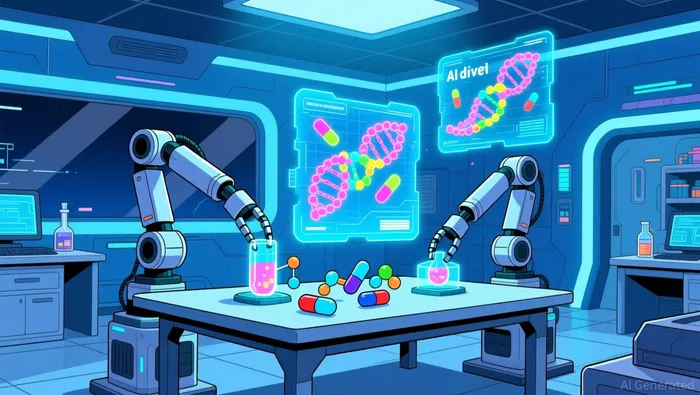
XtalPi says it is using multiscale enhanced sampling simulations to map the receptor's conformational landscape, XFEP for binding-affinity prediction, generative AI, and a closed-loop Design-Make-Test-Analyze workflow that combines robotic synthesis with computational design. If the system can produce oral leads for a target like this, it strengthens the case that the company is selling more than a point solution.
Metabolic-disease GPCR programs are attracting major spend
The broader market context helps explain why sponsors are willing to fund this space. Lilly's collaboration with Superluminal is worth up to $1.3 billion and focuses on GPCR targets in obesity and cardiometabolic disease. The lead program is aimed at the melanocortin 4 receptor and is expected to enter human trials in 2026.
That does not prove XtalPi will succeed, but it does show that pharma and biotech see real value in AI-enabled GPCR discovery. The real question for XtalPi is whether it can turn difficult biology into candidates that progress through partner-funded stages.
What investors should watch next
The next signals that matter are operational, not promotional:
- movement from pilot success into a full program
- evidence of subtype-selective oral candidates
- partner-funded progression beyond early proof of concept
The bull case and the main risk
The market backdrop still supports the bull case. The drug discovery services market is projected to reach $14.89 billion by 2031 at a 10.7% CAGR, which suggests demand remains for tools and services that can shorten discovery timelines. XtalPi is positioning itself around AI, physics-based modeling, and advanced robotics rather than a single feature, and recent partnerships give that claim more weight than a platform pitch on its own.
That said, the key risk is repeatability. XtalPi has already entered a strategic research collaboration with Pfizer on molecular modeling, which demonstrates capability but does not by itself show clinical-stage output. The same caution applies across newer deals: partnership value can be large on paper, but investors still need evidence that early hits mature into serious lead candidates.
The debate, then, is straightforward. The bull case strengthens if XtalPi keeps winning funded programs in difficult target classes and advances them through tangible chemistry milestones. The thesis weakens if deal flow becomes sporadic or if early successes do not translate into durable lead candidates.
How to think about XtalPi from here
The GPCR program adds preclinical, clinical, and commercial milestone payments plus future royalties, which creates optionality. But the bigger question is whether XtalPi can turn relationships such as the DoveTree collaboration, the Alternative Bio investment and R&D collaboration, the Dong-A ST MoU, and earlier work with Pfizer into repeated, partner-funded discovery programs.
If that happens, the market is more likely to reward the company for repeatable platform traction. If not, these deals are more likely to be viewed as valuable options rather than a full business-model rerating.