

Summary
- Veteran Capital Corp. terminated its two-year-old deal with African energy startup Powerhive on June 11, 2026 - not because management changed its mind, but because Powerhive could not complete its own financing despite repeated extensions.
- VCC.P shares trade at roughly CAD $0.04 with effectively zero volume. The stock was halted, and the company has applied to the exchange to resume trading.
- Veteran Capital says it will search for a new target. That is not reassurance. It is a promise to keep investor capital trapped in a shell company with no operations and no deadline to return the money.
- The TSX Venture Exchange's Capital Pool Company program - the vehicle structure behind VCC.P - was reformed in 2020 to remove the 24-month clock that previously forced companies to either close a deal or delist. That rule change made it structurally easier for cash to sit idle, indefinitely.
- The market for "Africa energy transition" SPACs and CPCs sold patience. The structural data says otherwise.
I always keep an eye out for false narratives that sell investor patience as virtue rather than risk. The "Africa energy transition" story is one of them. You sign up for a TSX Venture Exchange Capital Pool Company targeting a solar and battery-swapping startup in Kenya, told to "be patient," and told that patience will be rewarded when the deal closes. What the narrative leaves out is what happens when the deal doesn't close - and what kind of vehicle keeps your money trapped after it doesn't.
Veteran Capital Corp. is the latest example. On June 11, 2026 - almost exactly two years after signing a letter of intent to acquire Powerhive, a Kenyan-based company focused on solar generation, battery swapping, and electric mobility - Veteran Capital terminated the deal. The reason, from the company's own GlobeNewswire press release, is telling: Powerhive failed to complete its required financing and failed to enter into a binding definitive agreement, despite repeated extensions.
Let me underline that. The target company could not raise its own money. The extensions kept coming. And still nothing.
The stock tells you everything else you need to know. VCC.P trades at approximately CAD $0.04 per share. There is effectively no trading volume - zero, by the most recent available data. The shares were halted, and Veteran Capital has filed to lift the halt while it searches for a new target. If you bought VCC.P when it listed, your capital has been sitting in a shell with no operations, no dividend, and no path to value creation.
Here is the structural problem that most retail investors don't see until it's too late.
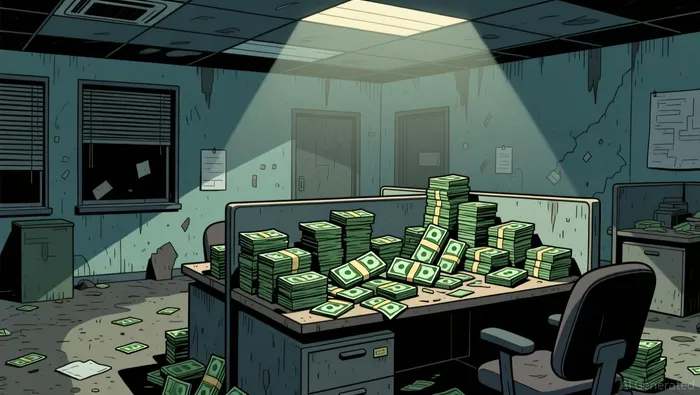
The CPC structure is a cash trap by design - and the 2020 reforms made it worse.
A Capital Pool Company is a Canadian listing vehicle unique to the TSX Venture Exchange. It allows seasoned directors to list a shell company with no assets other than cash and no commercial operations. Investors buy in without knowing which company the shell will eventually acquire. It is, in securities-law terms, a "blind pool." You are investing in management's ability to find a deal, not in a business.
Until 2020, there was a structural constraint: if a CPC did not complete a qualifying transaction within 24 months, it had to either delist or transfer its listing to a different venue. That deadline created skin in the game. Management had to execute or return the money.
The TSX Venture Exchange removed that requirement in December 2020. The 24-month clock no longer forces a delisting. CPCs can now sit indefinitely - extending, searching, failing, and starting over - without the regulatory consequence that would have existed five years earlier. Veteran Capital is exactly the outcome that reform enabled: a two-year deal that went nowhere, with the company announcing it will simply try again.
Powerhive's failure to raise money is not an anomaly. It is a data point.
Powerhive positioned itself as Africa's foundational energy and mobility platform. The pitch was clean: solar microgrids, battery swapping infrastructure, electric transport. In June 2024, the company announced plans to go public on the Toronto Stock Exchange with a cross-listing on the Nairobi Stock Exchange. The narrative was that African energy infrastructure was the next frontier, and patient capital would be rewarded.
Two years later, the company could not close the financing it needed to complete the transaction. Whatever the underlying reason - whether weak revenue traction, unfavorable terms, or a broader pullback in African cleantech funding - the result is the same. The capital sitting in VCC.P's trust account has no home.
The broader context matters. Wind and solar investments in the first half of 2025 fell 18% globally, to nearly $35 billion. Capital is tightening exactly where the Africa energy story assumed it would flow. That is not a temporary hiccup; it is a structural shift in how global capital allocates to emerging-market renewables.
"Searching for a new target" is not a thesis. It is a deferral.
Veteran Capital's press release says it intends to continue its search for a qualifying transaction with an alternative party. CEO Tyler Rice is the named contact. The company is headquartered in Calgary. There is no timeline, no criteria for the new target, and no mechanism that would force a decision.
That being the case, here is what investors should understand: a CPC with no deal and no deadline is not a stock. It is a cash parking account with management fees, exchange requirements, and the opportunity cost of two years - or five, or however long the extensions run. Every month the cash sits idle, inflation and currency depreciation eat into the real value of what investors put in.
What would change my view?
I am not saying all CPCs fail. Some have completed transactions and created value. But the structure itself is asymmetric: when the deal works, retail investors get diluted equity in a company they never had the chance to evaluate on their own terms. When it fails - as it did here - the money sits trapped with no forced return.
For VCC.P specifically, the only scenario that changes the equation is a credible announcement of a binding definitive agreement with a target that has demonstrable revenue, a clear path to profitability, and a transaction structure that doesn't leave existing shareholders diluted into irrelevance. Until that happens, the stock's price reflects its reality: it is a shell company with cash it cannot deploy.
The verdict
For investors who hold VCC.P, the honest assessment is that you are exposed to structural risk, not sector risk. The Africa energy transition may be real and important. But your capital is not positioned to benefit from it - it is positioned in a vehicle that has already demonstrated it cannot execute. For investors who are looking at CPCs or SPACs in this space, the rule is simple: the narrative is not the business case. The business case is the target's revenue, financing ability, and transaction terms - all of which Powerhive failed to deliver on after two years.
I rate VCC.P as a Sell. The vehicle has failed its test, and the structure that allowed it to persist without consequence is the real story here - not the Africa energy dream, but the cash trap that replaced it.