

- Zcash executed an emergency network upgrade (NU6.2) to patch a critical vulnerability in its Orchard privacy pool that could have enabled unlimited token counterfeiting.
- The security flaw, discovered by researcher Taylor Hornby, was neutralized via a two-stage fork process that temporarily halted shielded transactions before restoring them.
- Market volatility surged as ZEC dropped over 40% on fears of undetectable counterfeiting, though the network itself remained stable and the total supply was preserved.
- Institutional investors and prominent traders, including BitMEX founder Arthur Hayes, exited positions due to the inability to cryptographically prove the absence of counterfeit coins.
- The incident highlights the critical need for formal verification in cryptographic protocols and intensifies the debate over regulatory compliance for privacy coins in 2026.
The Zcash Foundation executed a rare and highly complex emergency network upgrade, designated as NU6.2, to patch a critical vulnerability in the protocol's core privacy architecture. The flaw, which resided in the Orchard Action circuit—the cryptographic machinery underpinning the network's most advanced shielded pool—was discovered on May 29 by independent security researcher Taylor Hornby. The vulnerability posed a severe risk, as it theoretically allowed bad actors to create unlimited counterfeit ZEC tokens without detection.
Hornby disclosed the issue to the Zcash Open Development Lab (ZODL) engineers that same evening, triggering a five-day coordinated response. Developers recognized that a direct software patch would have revealed too much information about the nature of the issue to potential attackers. Consequently, they orchestrated a two-stage fix involving a soft fork followed by a hard fork to ensure the network's integrity.
The initial phase involved an emergency soft fork that effectively disabled Orchard transactions entirely. This temporary shutdown began early on a Monday morning at block 3,363,426, halting all shielded activity while the patch was finalized. Private coordination with miners and major exchanges ensured that the network rules were synchronized across the ecosystem before the temporary suspension took effect.
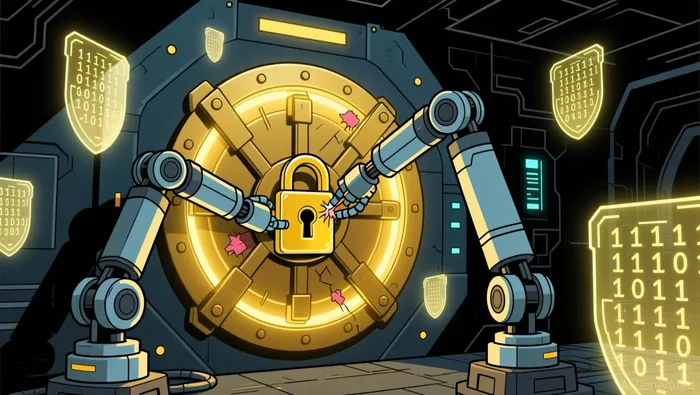
The permanent solution arrived on Wednesday with the rollout of a full hard fork. This upgrade restored Orchard functionality using a corrected cryptographic circuit, a necessary step because repairing a zero-knowledge proof system requires updating a verifying key that cannot be changed via standard software patches. The Zcash Foundation subsequently urged all node operators to upgrade to Zebra 5.0.0 to activate the corrected network rules.
Despite the severity of the vulnerability, officials confirmed that the total supply of ZEC was never at risk. Zcash's built-in "turnstile" mechanism, which tracks value across all transaction pools, confirmed that no unauthorized coins were created during the window of exposure. Furthermore, there is currently no evidence that the bug was ever exploited by malicious actors before the patch was deployed.
The disclosure of the flaw triggered a massive sell-off in the ZEC market, sending the token down more than 40% in a single day. Prices briefly dipped below $300, erasing billions from the privacy coin's market capitalization after it had recently surged from below $200 in March to a high of $675 in May.
The severity of the market reaction stems from the inherent design of Zcash's privacy technology. Unlike transparent blockchains, Zcash's architecture makes it impossible to cryptographically prove that counterfeit tokens were never created. This uncertainty led analysts to note that the price drop reflects the market assigning a non-trivial probability to the scenario where counterfeiting occurred, rather than the bug itself.
Prominent investors reacted swiftly to the breach of trust in the privacy narrative. BitMEX co-founder Arthur Hayes liquidated his entire position, stating that the narrative of privacy as a hedge against surveillance demands perfection, not improbability. Hayes exited the asset entirely, arguing that inability to verify transaction integrity undermined the core value proposition of the coin.
Rumors of a total network outage followed the upgrade, but these were quickly debunked by experts. Popular block explorers showed no activity for several hours because they were reading data from out-of-date nodes that had not yet upgraded to the new rules. The network itself continued to produce blocks normally, and miners did not stop working during the transition.
The incident has intensified the debate over the long-term security of zero-knowledge proof systems. An AI model from Anthropic reportedly uncovered the four-year-old bug, highlighting the growing capability of artificial intelligence to expose hidden flaws in cryptographic software. Experts argue that the industry must transition to formal verification—mathematically proving code correctness—to prevent such implementation bugs in critical financial infrastructure.
Zcash's ability to survive this crisis will depend on its transition to a Proof of Stake layer and its regulatory positioning. The network is implementing the "Crosslink" upgrade to enhance scalability and reduce energy consumption, moving away from its pure Proof of Work model. This technological evolution is critical for maintaining market relevance as sustainability trends dominate the crypto landscape.
Regulatory pressure remains the dominant risk factor for privacy coins in 2026. The Financial Action Task Force (FATF) guidelines may require exchanges to delist untraceable coins, threatening the liquidity of assets like Monero. Zcash's optional shielded privacy model offers a pathway to compliance that Monero lacks, potentially positioning it as a survivor in regulated markets.
Institutional accumulation has shifted significantly, with over 30% of the total ZEC supply now held in shielded pools or by institutions like Grayscale. The SEC officially closed its nearly two-year investigation into the Zcash Foundation in January 2026 without enforcement action, resolving a major regulatory overhang. This clearance is a primary bullish input for the asset as it navigates the complex landscape of digital asset regulation.
Grayscale has applied to convert its Zcash Trust into a U.S.-listed spot ETF, the first such filing for a privacy coin. Analysts expect approval in the second quarter of 2026, which could attract between $500 million and $2 billion in inflows. Given the supply constraints following the November 2024 halving, this demand shock could significantly impact the asset's valuation.
However, governance risks and exchange listing threats present downside scenarios. Developer departures and potential delistings from major platforms like Binance could constrain the token's upside potential. Investors must weigh the technological promise of zero-knowledge proofs against the persistent headwinds of regulatory scrutiny and limited mainstream merchant adoption.
The successful execution of the NU6.2 upgrade demonstrates the resilience of the Zcash protocol, but the market's harsh reaction underscores the fragility of trust in privacy infrastructure. As AI-driven security audits become more common, the pressure on cryptographic protocols to achieve mathematical certainty will only increase.
Zcash now faces a pivotal period where it must balance technological upgrades with the ability to navigate FATF guidelines. The long-term value of the asset will depend on its capacity to provide compliant privacy solutions while maintaining the security guarantees that originally attracted institutional capital.
The emergency patch has restored functionality to the Orchard pool, but the shadow of the vulnerability will linger in investor sentiment. The industry is closely watching to see if Zcash can leverage formal verification to restore confidence and if the upcoming ETF decision will provide the catalyst needed for a sustained recovery.