

Micron posted its strongest session since 2011 on Tuesday, closing at a record high — its 28th all-time high this year — after UBS more than tripled its price target on the memory giant to a Street-high $1,625 from $535, arguing that artificial intelligence has fundamentally altered the memory industry's long-term earnings profile.
The new target implies roughly 81% upside from Monday's close, extending a rally that has already pushed Micron shares up 214% year to date. The stock closed above $895.88, lifting the Boise, Idaho-based company beyond a $1 trillion valuation and making it the 11th-largest U.S. public company by market capitalization, behind Berkshire Hathaway and ahead of Eli Lilly.
UBS analyst Timothy Arcuri's thesis goes beyond simply raising estimates. The firm argues Micron should no longer trade like a traditional cyclical memory company vulnerable to DRAM and NAND boom-bust pricing dynamics, but increasingly like a structural AI infrastructure beneficiary with improved earnings durability and stronger long-term visibility.
"With LTAs now firmly in place across most of the industry, we are again raising C2027-2029 estimates and expect EPS to remain comfortably >$100 throughout the period, with MU generating over $400B in FCF across the same timeframe," Arcuri wrote. UBS now forecasts Micron earnings per share reaching $155 in 2027, $167 in 2028, and remaining above $100 even through a modeled 2029 downcycle. The bank believes AI-driven changes across the memory ecosystem justify multiple expansion as investors increasingly recognize structural rather than cyclical growth characteristics.
At the center of the bullish thesis sits an evolving supply framework that could materially reduce memory industry volatility. Historically, long-term agreements in memory largely secured volumes without locking pricing. The new generation of enhanced LTAs introduces partial fixed-pricing structures extending three to five years, often structured as "2+3" or "3+2" frameworks that blend fixed and floating pricing periods. Supply-chain checks suggest roughly 20% to 30% of industry DDR shipments could migrate into these agreements by 2027.
More importantly, hyperscalers including Microsoft, Google, Amazon, and Meta have reportedly already secured roughly 60% to 70% of future server DDR5 capacity, effectively exchanging pricing flexibility for long-term supply assurance and deployment visibility.
"Hyperscalers appear increasingly willing to exchange pricing for multi-year supply visibility and greater predictability around future deployment economics," Arcuri wrote. UBS estimates the agreements could reduce DDR pricing volatility by roughly half versus prior cycles, creating smoother revenue trajectories and materially improving through-cycle returns on invested capital.
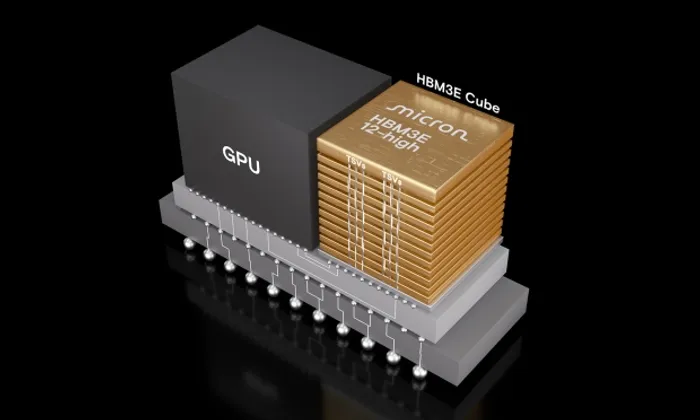
The second major driver is high-bandwidth memory, or HBM, which has become critical infrastructure for AI accelerators powering large-scale data centers. Micron's HBM capacity is effectively sold out through the end of 2026, while HBM revenue approached $2 billion in the latest quarter as HBM3E production ramps and HBM4 deployment approaches. UBS raised its HBM pricing assumptions meaningfully, now projecting Micron's HBM average selling prices rising 50% year over year in 2027 versus prior expectations for 35% growth, reflecting expectations that Micron, Samsung, and SK Hynix could reestablish pricing premiums after competitive pressure compressed margins during 2025 and 2026.
Internal industry models project Micron HBM shipments expanding roughly 58% in 2027, with HBM revenue potentially reaching roughly $25 billion in 2027 and approaching $45 billion by 2028. Gross margins could simultaneously climb toward 75%, approaching or even surpassing conventional DRAM profitability.
Supply discipline across broader memory markets further reinforces the outlook. UBS now expects DRAM shortages to extend into the second quarter of 2028, later than prior expectations, while NAND market tightening could persist longer as Samsung, SK Hynix, and Micron remain conservative on capacity expansion. Although NAND pricing remains structurally weaker than DRAM, restrained supply additions reduce concerns surrounding premature pricing peaks and support a longer-duration memory upcycle.
Perhaps the most consequential shift sits in valuation methodology itself. UBS abandoned its prior sum-of-the-parts framework and instead anchored valuation around approximately 15-times forward earnings using longer-duration profitability assumptions — a framework increasingly resembling AI infrastructure leaders rather than cyclical semiconductor names.
The bank effectively argues Micron deserves valuation treatment closer to Nvidia and other structural AI beneficiaries than traditional commodity memory suppliers. Even under the $1,625 target, Micron would still trade below broader semiconductor peer multiples, leaving further room for re-rating should investors increasingly accept that AI has fundamentally reshaped memory economics.
The debate is no longer whether Micron benefits from AI. The debate is whether the market is fully pricing in a memory supercycle that increasingly looks structural rather than cyclical.